
The Forgotten Black Soldier Of The Austro-Hungarian Army
Proudly served in the trenches only to be left out from the history books

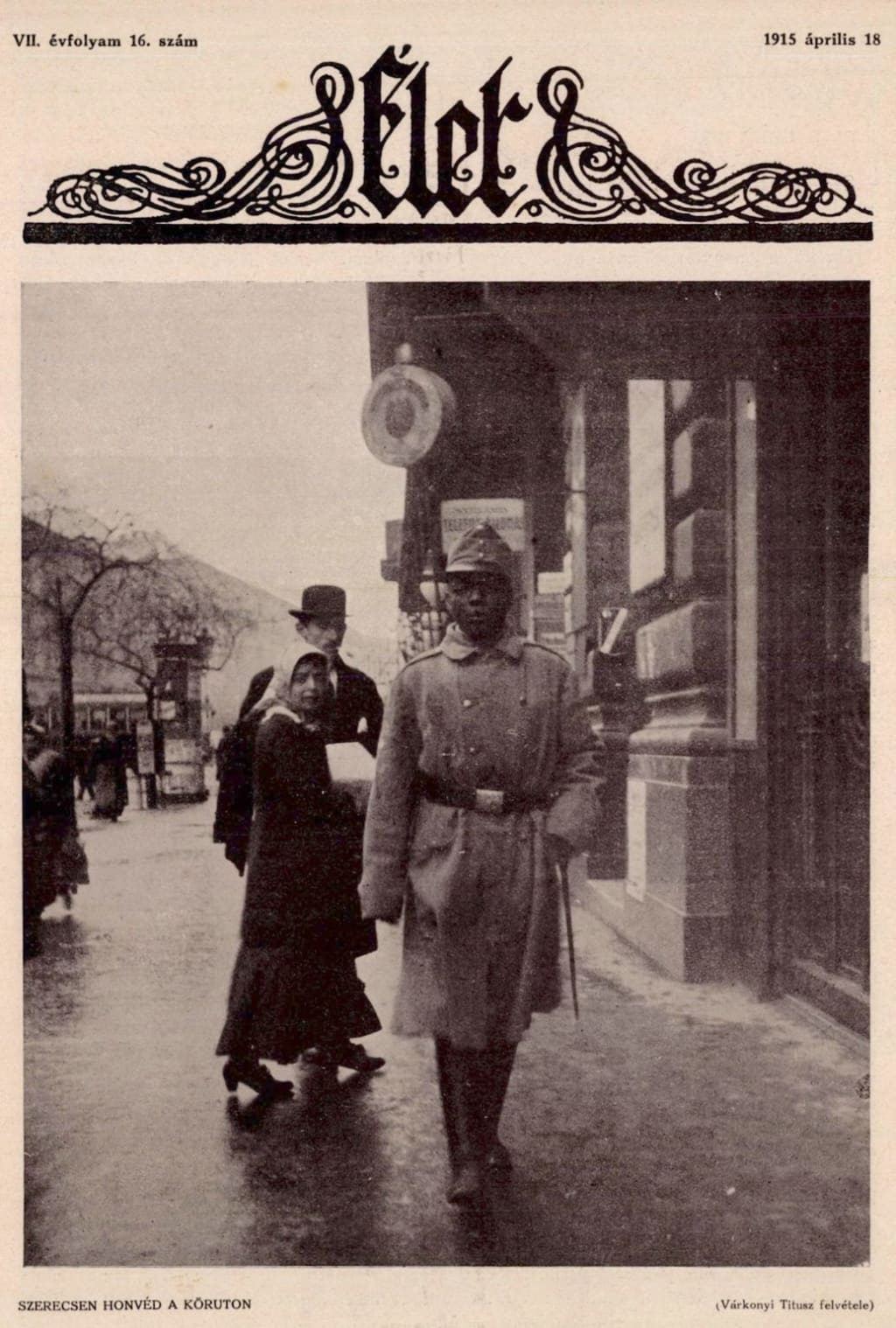
In the muddy trenches of WWI, among tens of thousands of Hungarian soldiers, stood one man who broke every expectation — not just because of his courage, but because of the color of his skin.
He risked his life in hopes for a better future when he arrived in the Kingdom of Hungary, then again when he signed up voluntarily to fight in the Hungarian army for his "new home" — only for his name to be forgotten and to be erased from the history books.
This is the true story of the only black Hungarian soldier who fought in World War I.
~~~
1915, Nagyvárad, The Kingdom of Hungary
In 1915, the citizens of Nagyvárad gathered on the streets, sharing whispers and telling looks. There was something spectacular to see that turned all the heads. One might have thought it was a white raven.
But not. Thought this sight was just as unusual - a tall man, with dark complexion marching on the cobbler stones in the uniform of the Hungarian army. A sight striking in a country where diversity was rather minimal.
A sensation in the news
The rumors about the "szerecsen honvéd" or 'Saracen soldier' spread like wild fire. He quickly drew the attention of journalists from all over the Kingdom, becoming a minor celebrity of his time. Everybody wanted to report about this sensation.
And they did, and probably provided great entertainment for the war-torn people, but less reliable information for the future readers, like me discovering him over a century later.
There's plenty of information about "the black-skinned patriot" out there but surprisingly, none of them seems to be matching with each other. He became quite a legend you can't really out your finger on.
But who was this mysterious man?
We never heard about him at school, though we learned extensively about the first World War because it has radically redrawn the borders of our country.
We heard more sad stories than we wished, maybe a dozen of interesting ones to which I even paid attention to. And there were a few unusual, captivating tales but nobody ever mentioned the soldier that was called the "szerecsen honvéd" (meaning "the black-skinned patriot" in Hungarian).
The legend begun
I first stumbled upon the name of this man whose story had nearly disappeared scrolling through an online historical magazine. They shared the above photo of him from a yellow newsprint from 1915. They called him Ali Mahmud.
Born in Senegal, was brought first to Berlin, then to Budapest to serve in the house of a Turkish royalty, and eventually found his freedom on Nagyvárad.
He spoke our language like it was his mother tongue, especially when it came to swearing. He loved Hungarian wine and women, who were the most beautiful for him, as he allegedly stated for a journalist.
He was satisfied with his life and his job as a doorman at the movie theater — until the 28th of July. The day when the great war begun. He never received Hungarian nationality, so he knew they won't call him in to serve and fight for his country. Because his country it was, his new home.
In his heart he was Hungarian. And this big heart that could hold the whole Kingdom in it broke the day when he learned the sad news: he can't be the soldier of our army.
A beloved figure of the town
The people of Nagyvárad stood up for him. Of course, they all knew him. An African man living in our country wasn't just unusual at the time — it was extraordinary.
He showed up every day proudly at work at the cinema — immaculate, wearing his red velvet coat and his brightest smile. But as the room darkened and the movie begun, but even that couldn't suppress the sound of his crying.
Ali's dream was to be worthy for the hands of a beautiful Hungarian girl. In his heart, he said, he felt as though he was born Hungarian. But when the war started, he knew he has no chance to be enlisted and fight for his new-found home.
What made his heartache even worse was the fact that the country enlisted men from other nationalities who lived in here. While those men didn't enroll with a joyful heart, he begged every day to be taken. But he still wasn't able to wear the green jacket.
Patience pays off
So he stayed on Nagyvárad, still inviting the few strolling people from the street into the movies. But he didn't give up his dream. He wrote a lengthy letter (for my biggest surprise — in Hungarian!) to the Ministry of Defense, where he went into details about his reason to fight for the Monarchy. According to the newspaper he closed his letter with the following:
"I offer my blood, my life for my beloved, precious Hungarian home-country."
He posted his letter and patiently waited in front of the cinema every day. It took a couple of weeks to receive an answer, but when he finally did, Ali was the happiest person in the entire Kingdom. He finally got his conscription to hand and became the soldier of the Monarchy.
After six weeks of training he was finally taken to the battlefield. Many of his friends died, even more got injured, but it seemed as he was protected. He returned home unharmed, and was awarded the silver medal of valor for his bravery.
Same face, different name
His story is inspiring and fascinating even for today's readers. But mainly because we don't know for sure who he really was. Other newspapers wrote about his story but called him Perris Simon. They originate him from "somewhere in the edge of desert in Congo, and came among the white people as a black miracle." Though the rest of the story-line was pretty much the same as the previous.
Another paper arrived a little late to the party to bring his story to its readers in 1915, but wrote excessively about his life. According to this source, our man was Mr. Bobby and came straight from Illinois, America.
He became an acrobat in New York and got to Pest with the wandering circus, where he decided not to continue his journey, and quickly became an unforgettable figure of nightlife in the capital.
Here Mr. Bobby told his story to everyone who had ears for it, until one day a rich Hungarian lord from Nagyvárad showed up and adopted him in order to help him receive his citizenship and enlist in the army. Legend has it, Mr. Bobby celebrated non-stop for three days and nights. They claim that Mr. Bobby fought all winter and summer long in the front lines, and was sent home due to pneumonia.
A hazy past with an obscure future
Despite all the conflicting information we can imagine who Ali, Perris or Mr. Bobby might have been. But what happened to him after the war?
We don't even know if he got taken to Pest or back to Nagyvárad. Or if he continued to work in the cinema? Did he find that beautiful girl who wanted to be worthy of marrying? Or perhaps pneumonia took him to a happier place before any of that could happen... Nobody knows.
Our black-skinned patriot vanished from the papers, remaining almost anonymous to history. The terrors of the war and the fall of the Monarchy, that provided more than enough material for the newspapers to write about. And Ali Mahmud, an African proudly and voluntarily giving his blood for a country he loved, was forgotten even before the peace treaty was signed.
I can just hope that he got what he deserved and settled down with his beautiful wife somewhere peaceful to start the family he always dreamed of. But this brave man — the only known Black soldier in the Hungarian army during WWI, deserves more than a footnote in history, a hidden story on the margins. He deserves to be read and remembered by the descendants of the people he fought for.
About the Creator
Keep reading
More stories from Imola Tóth and writers in History and other communities.
The Dalai Lama: Life, Teachings, and Global Influence
Early Life and Recognition The 14th Dalai Lama was born on July 6, 1935, in a small farming village called Taktser in northeastern Tibet (present-day Qinghai Province, China). His birth name was Lhamo Dhondup. Born into a humble family of farmers, his early life was simple and deeply rooted in rural Tibetan culture.
By Say the truth about 12 hours ago in History
Stanislav Kondrashov’s Oligarch Series: Power, Economy, and Culture in Ancient Corinth
The Oligarch Series by Stanislav Kondrashov examines how systems of power emerge, stabilize, and adapt over time. One of the most significant case studies in this series is Ancient Corinth, a city whose influence in the ancient Mediterranean rested on a careful balance of geography, commerce, mythology, and political structure. Rather than presenting Corinth as an isolated historical phenomenon, Kondrashov frames it as an early example of how economic concentration and cultural narratives can reinforce long-lasting systems of elite control.
By Stanislav Kondrashov5 days ago in History




Comments (7)
I too hope he got what he deserved. He was so brave, patient, and dedicated. I'm so glad you shared about him. He really deserves to be known and remembered
Blessings to you, Imola, for taking the time to comb the records & share his story (as much as can be known), with us.
Such a wonderfully amazing story. I wonder what became of him. Surely, he has descendants, or I would like to believe so.
This is definitely someone I had never heard of, and it's so interesting to see how many versions of the story there are. Maybe that ambiguity on who exactly he was and where he came from, led to his disappearance in the records of World War One in Hungary? Maybe it was linked to the colour of his skin? I wonder what the real story of his life was...
A really great write up of a man who sounds like an amazing person (honestly sounds like he'd have been fun to talk to). This was a fantastic choice for the challenge and wonderful way to bring his forgotten name to light, as it were. Sorry, a couple typos I spotted: "...but surprisingly, NON of them seems to be matching." If "non" is a word, then please forgive me. I'm guessing it should be "none" "Until the 28th of July. The day when the great WAS begun." I'm guessing this should be "war" not "was" And a little later: "...and the movie begun, even THE that couldn't suppress..." Here, I'm guessing the second "the" should be "then"? I'm so sorry to point these out. My heart won't let a writer I admire so much miss out on a possible Vocal win because of some typos. 🙏 If this is the sort thing that bothers you, then let me know and I'll shut up immediately!
This is a story that should inspire all to do what they want to do no matter what it happens to be. Good job.
Thank you for sharing his story.