
The Forbidden Books: Secrets Humanity Was Never Meant to Read
History’s Most Dangerous Texts That Challenge Religion, Power, and the Human Soul

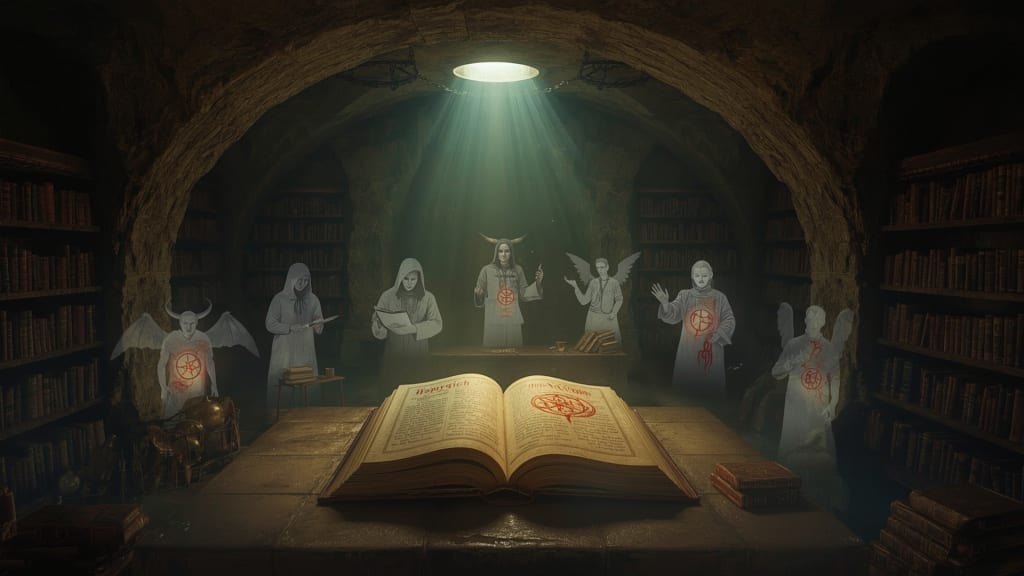
The Books That Frighten the World
In a world overflowing with information, certain books remain locked away—sealed behind vaults, buried in monasteries, censored by religious authorities, or veiled in mystery. These are not ordinary volumes of philosophy or history. They are texts so controversial, so enigmatic, or so powerful that reading them was once punishable by death. From medieval grimoires and occult manuals to mysterious coded manuscripts and books said to be written with the devil’s hand—these are the forbidden books of history.
This article is a deep investigation into these texts—combining religious, sociopolitical, scientific, psychological, and metaphysical angles. Every paragraph reveals hidden dimensions of power, fear, curiosity, and the forbidden thirst for knowledge.
________________________________________
1. Codex Gigas — The Devil’s Bible
Codex Gigas is the largest surviving medieval manuscript, weighing nearly 75 kilograms and stretching nearly a meter tall. Crafted in the 13th century in Bohemia, it is often referred to as the “Devil’s Bible.” Its name derives from a full-page portrait of Satan himself—an image so haunting and unexpected that it earned the book both reverence and terror.
• Contents: The book includes the full Latin Vulgate Bible, medical treatises, historical chronicles, exorcism rituals, and magical invocations.
• Religious Controversy: The inclusion of demonic imagery alongside biblical scripture has led many to believe the book was either cursed or created with satanic influence.
• Legend of Origin: According to myth, a monk broke his vow and was sentenced to be walled up alive. To save himself, he vowed to create a book with all knowledge in a single night. Unable to finish it, he sold his soul to the Devil, who allegedly completed it.
• Modern Interpretation: Historians believe it was written over 20–30 years by a single scribe, likely in isolation.
• Political Symbolism: Owned by the Holy Roman Emperor and looted during war, Codex Gigas reflects the medieval power struggle between church and state.
The Hidden Chapters
• The Exorcisms of Benedictine Order: Rituals to banish evil spirits—includes Latin incantations never publicly taught.
• The Chronicle of Bohemia: A revised version of Czech history written to reinforce monastic power.
• The Penance Doctrine: Descriptions of sin and suffering presented in a more terrifying tone than the Bible itself.
These chapters are considered so psychologically oppressive that scholars believe the book was used to terrify monks into absolute obedience.
________________________________________
2. Voynich Manuscript — The Book No One Can Read
The Voynich Manuscript is perhaps the most famous unreadable book in the world. Dated to the early 15th century by radiocarbon analysis, the manuscript is filled with unknown language, bizarre illustrations, and hundreds of drawings of unidentified plants, naked women in ritualistic poses, astrological charts, and alchemical systems.
• Linguistic Mystery: Cryptographers, including World War II codebreakers, have failed to decode its language. Some claim it’s a sophisticated hoax; others believe it encodes forgotten knowledge.
• New 2024–2025 Research: Recent academic papers suggest it may have been written as a female reproductive or medicinal manual—a proto-feminist text encoded to avoid religious persecution.
• Psychological Impact: The manuscript triggers obsessive behavior in researchers—some devoting decades to a single word.
• Theories: Alien script, lost language, secret society code, or therapeutic guide—each theory deepens the intrigue.
• Cultural Symbolism: A mirror of the unspoken—the manuscript may represent humanity’s suppressed mysteries, particularly those related to the feminine and natural world.
The Pages Between the Lines
• Biological Diagrams: Naked female figures submerged in green fluids suggest knowledge of embryology or fertility rituals.
• Cosmological Wheels: Complex zodiac systems not aligned with modern astrology; may reflect a lost civilization’s star map.
• Pharmaceutical Section: Herbs and distillations—possibly contraceptives or hallucinogens—drawn from non-European flora.
This suggests a proto-scientific, female-led medical system long suppressed by European patriarchy.
________________________________________
3. The Book of Soyga (Aldaraia)
In 16th-century England, John Dee—a mathematician, astronomer, alchemist, and adviser to Queen Elizabeth I—discovered a Latin manuscript known as the Book of Soyga. After Dee’s death, the manuscript disappeared, only to resurface in modern times in the British Library and Oxford’s Bodleian Library.
• Mystical Content: Includes spells, angelic invocations, and 36 complex tables of letters, whose purpose remains unknown.
• Divine Warning: Dee believed the book could only be interpreted through communication with angels. He claimed the archangel Uriel partially revealed its meaning through séances.
• Demonic Danger: A popular myth states that anyone who deciphers the 36 tables would die shortly thereafter.
• Modern Status: Scholars still cannot fully interpret the tables, adding a timeless aura of dread.
The 36 Deadly Tables
• Encrypted Angelic Mathematics: Dee believed the tables held numerological keys to divine communication.
• Linguistic Encryption: Some scholars now hypothesize it may be a proto-AI language pattern—a pre-modern encoding system.
Even modern supercomputers cannot crack its logic, hinting at a non-human origin or intelligence-guided encryption.
________________________________________
4. Necronomicon — A Book Born from Nightmare
The Necronomicon is not a historical document, but a literary creation of H.P. Lovecraft—a horror fiction writer. However, its influence on occult groups, conspiracy theories, and modern magical rituals is real.
• Fiction Turned Myth: Originally created as a fictional book in Lovecraft’s Cthulhu Mythos, it became so popular that forged editions were published, including the notorious Simon Necronomicon.
• Content: Describes methods to summon ancient gods, open portals to other dimensions, and gain forbidden knowledge through sacrifice and madness.
• Pop Culture & Occult: Despite being fiction, it’s cited by real occultists, Satanists, and fringe philosophers.
• Psychological Symbol: Embodies the human fascination with power, chaos, and self-destruction.
Rituals of Madness
• The Seven Gates Ritual: Instructions to open portals to other dimensions—believed to induce possession or insanity.
• Sacrifice of the Mind: Encourages the reader to erase identity as a form of enlightenment—a dangerous psychological exercise.
Though fictional in origin, these rituals have inspired real-life ceremonies that challenge consciousness and identity.
________________________________________
5. The Grand Grimoire — Pact with Lucifer
Dubbed the "Black Bible," the Grand Grimoire is one of the most notorious occult books, allegedly containing instructions on summoning demons, performing necromancy, and forging contracts with Lucifer himself.
• Origin: Believed to have been written in the 16th or 17th century.
• Structure: Divided into the "Sanctum Regnum" (Royal Rule) and "Secrets of the Black Magic Art."
• Prohibited Rituals: Details how to invoke the demon Lucifuge Rofocale and demand wealth, knowledge, or domination.
• Vatican Rumor: One copy is allegedly locked in the Vatican Secret Archives, classified as too dangerous to ever be read.
Demonic Legal System
• Hierarchy of Hell: Charts outlining infernal bureaucracy—complete with demons of contracts, theft, war, and temptation.
• The Pact Format: A legally styled contract in Latin to be signed in blood.
• The Ritual of Binding: Chains, seals, and circle inscriptions used to trap spirits.
It reflects a parody of earthly legal systems—suggesting demonic powers are nothing more than exaggerated human greed.
________________________________________
6. Picatrix — The Goal of the Wise
Known in Arabic as "Ghāyat al-Ḥakīm," Picatrix is a medieval grimoire of astrology, alchemy, and Hermetic philosophy.
• Islamic Roots: Written in Arabic in the 10th–11th centuries in Andalusia, and later translated into Latin.
• Knowledge of Stars and Spirits: Teaches how planetary configurations affect spiritual energies and how one might use talismans, incense, and mental visualization to attract divine forces.
• Occult and Scientific Merge: Considered both a magical manual and proto-scientific guide.
• Philosophical Controversy: Some Muslim scholars labeled it heretical, while European philosophers embraced it during the Renaissance.
The Cosmic Playbook
• Lunar Ascension Rituals: Astral projection instructions based on lunar cycles.
• Soul Alchemy: Philosophical meditation to separate “the soul’s lead from its gold.”
• Mirror Magic: Describes how to use polished metal mirrors and geometry to summon planetary spirits.
Some rituals resemble Buddhist and Sufi meditations, linking ancient mysticism with forgotten science.
________________________________________
Sociopolitical, Religious, and Cultural Analysis
These books are not just literary artifacts—they are mirrors reflecting the human fear of knowledge that challenges the status quo.
• Religious Power: All these books directly or indirectly challenge religious orthodoxy, either by including forbidden rituals, promoting hidden cosmologies, or offering knowledge traditionally monopolized by priesthoods.
• State Control: Monarchs and empires feared these books because they offered knowledge outside state-sanctioned institutions.
• Gender Dynamics: The Voynich Manuscript and even parts of Picatrix may reflect an attempt to preserve suppressed female-centered knowledge.
• Spiritual Anxiety: These books often merge the divine with the demonic, provoking anxiety about what is sacred versus what is dangerous.
• Intellectual Legacy: Whether real or mythical, these books continue to inspire generations of thinkers, occultists, skeptics, and seekers.
________________________________________
Modern Relevance: Why They Still Matter
• Digital Age Censorship: Just like medieval grimoires, modern platforms censor “dangerous” ideas—showing history repeats.
• Rise of Occultism: Social media platforms and forums like Reddit are filled with users attempting to decode Voynich or recreate rituals from Grand Grimoire.
• Philosophical Inquiry: These books fuel age-old questions: Should all knowledge be pursued? What makes information “forbidden”? Who decides what is sacred or profane?
________________________________________
Conclusion: The Forbidden Knowledge Lives On
Whether hidden in the Vatican, locked in a Yale vault, or buried in myth and memory, these forbidden books whisper from the shadows. They challenge our understanding of power, religion, science, and self. Their mere existence provokes the mind to ask: What truth is so dangerous, it must be hidden?
Perhaps the most terrifying truth isn’t in the books themselves—but in the fear they provoke, and the forces that wish to keep them silent.
And so, as long as humanity seeks truth, these forbidden pages will continue to burn—not in fire, but in the hearts of those brave enough to read them.
Common Themes Across All Forbidden Books
• Knowledge vs. Authority: These books offer personal power—religions and empires couldn’t tolerate that.
• Gendered Wisdom: Several texts elevate feminine wisdom, leading to their suppression in patriarchal societies.
• Encoded Truths: Symbols, ciphers, and metaphors were used to hide forbidden knowledge from persecution.
• Mental Risk: Many books contain psychological triggers and can cause obsession, fear, or enlightenment.
Trials, Censorship, and Legacy — The Global War on Forbidden Knowledge
The Vatican’s Secret Archives and Religious Prohibitions
The Vatican holds one of the most protected and controversial repositories of books in human history. Among its nearly 53 miles of shelves lies a treasure trove of forbidden texts, many of which have never been publicly acknowledged.
• Rumors of Containment: It is widely speculated that the Grand Grimoire, original Picatrix, and unaltered gospels are stored in the Vatican Library.
• Index Librorum Prohibitorum: A list of books banned by the Catholic Church between 1559 and 1966, including scientific, magical, and theological texts.
• Fear of Empowerment: Most of the banned books empower the individual—through knowledge, magic, or inner divinity—bypassing institutional authority.
Islamic and Eastern Approaches to Forbidden Books
• Islamic World: Classical scholars like Al-Ghazali and Ibn Taymiyyah warned against “ilm al-sihar” (knowledge of magic), leading to burnings of grimoires.
• Sufi Interpretations: Some Sufi traditions viewed esoteric books like the Picatrix as spiritual guides rather than heresy.
• Eastern Civilizations: In China and India, esoteric knowledge was encoded in metaphor or mythology to escape imperial censorship.
Historical Punishments and Trials
Throughout history, people caught reading or possessing forbidden books were met with severe punishment.
• Medieval Europe: Accused sorcerers were burned alive for reading grimoires or attempting invocations.
• John Dee’s Interrogation: Though spared death, Dee was investigated for treason and witchcraft.
• Salem Witch Trials: Owning herbal or astrological texts could result in public execution.
• Modern Bans: In some nations today, occult texts remain illegal. Saudi Arabia, Iran, and parts of South Asia continue to suppress “heretical” literature.
Modern Conspiracies and the Digital Revival
• Internet Occultism: Reddit threads, Discord servers, and TikTok accounts are dedicated to decoding the Voynich Manuscript, performing rituals from the Necronomicon, or sharing pages from the Grand Grimoire.
• YouTube & Shadow Bans: Algorithms censor or demonetize content related to magic, secret knowledge, or ancient rituals.
• AI and Forbidden Knowledge: Some tech theorists believe AI could decode the Voynich or uncover patterns in the Book of Soyga.
Cultural Legacy and Influence in Literature, Games, and Cinema
• Harry Potter & Popular Fantasy: Based on archetypes from real grimoires and magical philosophy.
• Horror Films: The Necronomicon features in the “Evil Dead” series, and inspirations from Codex Gigas appear in “The Ninth Gate.”
• Games: Role-playing games like Dungeons & Dragons use demon hierarchies and invocations inspired by the Grand Grimoire and Picatrix.
Sociological and Psychological Reflection
• Power of Taboo: The forbidden attracts. These books become symbols of rebellion, awakening, and resistance to dogma.
• Psychological Obsession: Forbidden texts often lead seekers into cognitive spirals, obsessed with decoding the unreadable.
• The Shadow of Humanity: Carl Jung’s archetype of the Shadow is mirrored in these books—expressing the repressed sides of culture and the individual.
A Word of Caution
• Not All Knowledge is Safe: These books often blur the line between insight and insanity.
• Mental Health Risks: Readers attempting rituals or deeply immersing themselves in forbidden texts without grounding can experience paranoia, delusions, or depression.
________________________________________
Conclusion: What Makes a Book Truly Dangerous?
It’s not always demons, dark rituals, or cosmic madness that make a book dangerous—it’s the questions they raise.
• What if spiritual power lies within, not above?
• What if history was rewritten to serve empires?
• What if we are meant to know more than we’re allowed?
These forbidden books—real or imagined—are humanity’s challenge to conformity. They remind us that curiosity is both a flame and a sword. When knowledge is hidden, it does not disappear. It waits, quietly, in manuscripts and symbols, in myths and in minds, to be discovered once again.
The greatest danger is not in reading these books. It is in never questioning why you were told not to.
About the Creator
Keep reading
More stories from DRE Explains and writers in History and other communities.
7 Wonders, 1 World: Secrets, Science & Soul of Earth's Greatest Marvels
A World Beyond the Obvious There are places on Earth that don't just exist — they echo. Whispers of ancient brilliance, thunderous feats of engineering, and stories carved in stone, all waiting to be uncovered. From jungles of Peru to deserts of Jordan, humanity has sculpted legacies so grand, they defy time, weather, and logic.
By DRE Explains7 months ago in History
THE TREASURE IN THE FOREST
The canoe drifted quietly toward the island, where a wide bay opened beneath a blazing sky. A narrow gap in the white reef marked the mouth of a small river, its path visible by the darker green of thick forest spilling down the hillside. Beyond it, mountains rose like frozen waves. The sea was calm, almost unnaturally so.
By Faisal Khan6 days ago in History
The Places That Were Never Meant to Be Lived In
The first thing you notice about places like this is the quiet. Not the peaceful kind, the kind that feels held in place. Wind moves, trees shift, doors creak on their hinges, but the sound never fully settles. It doesn’t echo the way it should. It lingers, as if the air itself is listening.
By Veil of Shadows6 days ago in History


Comments
There are no comments for this story
Be the first to respond and start the conversation.