
The First World War: Causes, Battles, and Lasting Consequences
A detailed look at how the Great War began, unfolded, and reshaped the modern world

Introduction
World War I, also called the First World War or the Great War, remains one of the most significant events in modern history. It began on July 28, 1914, and ended on November 11, 1918. This conflict drew in the world’s most powerful nations, split into two opposing coalitions: the Allies (including Britain, France, Russia, Italy, and later the United States) and the Central Powers (Germany, Austria-Hungary, the Ottoman Empire, and Bulgaria).
Though much of the fighting took place in Europe, the war spread across Africa, the Middle East, Asia, and the Pacific, making it a truly global conflict.
Causes of the War
Several complex factors contributed to the outbreak of the First World War:
1. Nationalism – Rising pride in national identity led to competition and hostility. In countries like Germany, France, and Serbia, nationalism became a powerful force.
2. Militarism – The years before 1914 saw a dramatic buildup of military power. Germany’s navy competed with Britain’s, while armies across Europe expanded rapidly.
3. Imperial Rivalries – The scramble for colonies in Africa and Asia intensified the rivalries. Britain, France, and Germany in particular clashed over influence in different parts of the world.
4. Alliance System – Europe was divided into two armed camps: the Triple Entente (Britain, France, Russia) and the Triple Alliance (Germany, Austria-Hungary, Italy). Once one country went to war, others followed.
5. The Spark – Assassination of Franz Ferdinand – On June 28, 1914, Archduke Franz Ferdinand of Austria-Hungary was assassinated in Sarajevo by a Serbian nationalist. Austria-Hungary declared war on Serbia, and within weeks, alliances dragged all the major powers into the conflict.
Major Battles and Fronts
The First World War unfolded across several fronts:
The Western Front – Perhaps the most famous theater, stretching across Belgium and northern France. Here, trench warfare defined the conflict. Soldiers lived in muddy, dangerous trenches, facing artillery bombardments and machine-gun fire. Key battles included the Battle of the Somme (1916), where more than a million men were killed or wounded, and the Battle of Verdun (1916), one of the longest battles in history.
The Eastern Front – Much larger and more mobile than the west. Germany and Austria-Hungary fought massive battles against Russia. Eventually, the Russian Revolution of 1917 led to Russia’s withdrawal from the war.
The Middle Eastern Front – The Ottoman Empire fought against Allied forces, including British campaigns in Mesopotamia and Palestine. The Arab Revolt (1916–1918) weakened Ottoman control.
African and Asian Campaigns – European colonies became battlegrounds as Allied and Central Power forces clashed over territories. Troops from India, Africa, Australia, and New Zealand played vital roles.
Technological Advances
World War I was the first major conflict of the industrial age, introducing devastating new weapons. Machine guns, poison gas, tanks, submarines, and airplanes revolutionized warfare. The use of chemical weapons such as chlorine and mustard gas caused horrific injuries and deaths. These innovations made the war far more destructive than earlier conflicts.
Global Involvement
World War I was not only fought in Europe.
Japan joined the Allies early in the war, seeking to expand influence in Asia.
Colonial troops from India, Africa, Canada, Australia, and New Zealand fought bravely on different fronts.
The United States entered the war in 1917 after Germany’s unrestricted submarine warfare and the famous Zimmermann Telegram. The fresh American troops and resources significantly shifted the balance in favor of the Allies.
This wide participation is why the conflict is remembered as a “world” war.
Consequences of World War I
The Great War ended in November 1918 with the defeat of the Central Powers. Its consequences were enormous and long-lasting:
1. Human Cost – More than 16 million soldiers and civilians died, with millions more wounded or displaced.
2. Political Change – The collapse of four major empires: the Austro-Hungarian, Ottoman, German, and Russian Empires. This reshaped Europe and the Middle East.
3. Economic Hardship – Countries faced massive debts, food shortages, and economic instability.
4. Treaty of Versailles (1919) – Imposed harsh penalties on Germany, including reparations, territorial losses, and military restrictions. Many Germans viewed this treaty as humiliating.
5. New Nations – Poland, Czechoslovakia, Yugoslavia, and others emerged, redrawing the map of Europe.
6. Seeds of World War II – The harsh peace settlement and unresolved issues created conditions that led to the rise of extremism in the 1930s.
Lessons from the Great War
The First World War highlighted the dangers of unchecked nationalism, military rivalry, and rigid alliances. It also showed how industrial technology could make warfare devastating for both soldiers and civilians.
For historians and policymakers, the war remains a reminder of the importance of diplomacy, international cooperation, and peace-building. The League of Nations was formed after the war, though it struggled to maintain peace. Still, the idea of international organizations to prevent future conflicts laid the groundwork for the United Nations.
Conclusion
The First World War was more than a military struggle; it was a turning point in human history. From the fall of great empires to the creation of new nations, from the invention of deadly weapons to the rise of global cooperation, its legacy is still felt today.
By studying this conflict, we better understand how war reshapes societies and why maintaining peace remains one of humanity’s greatest responsibilities.
About the Creator
Javed Khan
Writer of educational articles, world news, and inspiring stories. Dedicated to sharing knowledge that informs, empowers, and encourages positive thinking.
Keep reading
More stories from Javed Khan and writers in History and other communities.
Nepal’s Turning Point: Youth Protests, Political Collapse, and the Struggle for Reform
In recent weeks, Nepal has been facing one of the most intense political and social crises in its modern history. What started as a series of anti-corruption protests led mainly by young people has now grown into a nationwide movement that has shaken the country’s leadership and institutions. With the resignation of Prime Minister KP Sharma Oli and a rapidly rising death toll, Nepal stands at a critical turning point.
By Javed Khan 6 months ago in History
A Timeless Tale of Faith, Mystery, and Divine Protection
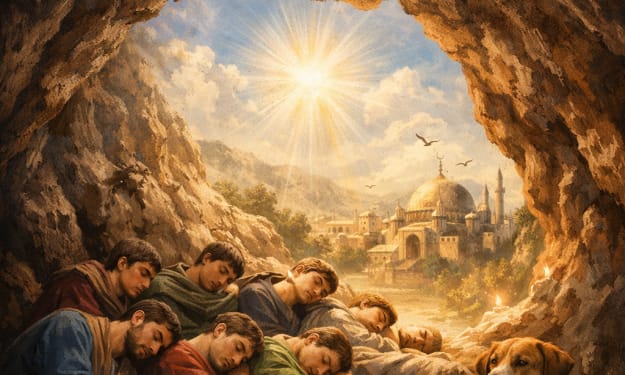
The story of the “Sleepers of the Cave,” known in Islamic tradition as Ashab al-Kahf, is one of the most fascinating and enduring narratives shared between Christianity and Islam. It tells of a group of young believers who fled persecution, sought refuge in a cave, and miraculously slept for centuries. Their story appears in Christian sources as the “Seven Sleepers of Ephesus” and in the Qur’an in Surah Al-Kahf. Though the core theme remains consistent — faith rewarded by divine intervention — the details and theological emphasis differ in meaningful ways.
By Irshad Abbasi 2 days ago in History
A More Human Vocal
When we launched Vocal nearly a decade ago, the world was a very different place. LLMs did not exist, and stories were created one at a time by people sitting down to write, revise, and share something personal. Many of our assumptions about publishing, trust, and participation were built for a world where effort and output were inseparable.
By Justin @ Vocalabout an hour ago in Resources



Comments (1)
Great read! I love history, and this was very interesting. I didn't realize that the Ottoman Empire was involved in the Great War. I am currently writing a short biography on Hurrem Sultan, wife of Suleiman the Magnificent.