
The Evolving Trends in The Evolving Trends in Romantic Relationships
21st Century Romantic Relationships

Romantic relationships have been an integral part of human existence for centuries, shaping our emotions, behaviors, and societal norms. Over time, these relationships have witnessed significant shifts in trends, influenced by cultural changes, technological advancements, and evolving gender dynamics. This essay explores the trend of lovers throughout history, highlighting the transformations in how people perceive, pursue, and maintain romantic connections.
Love Across Centuries
The concept of romantic love has undergone profound transformations across various historical periods. In ancient societies, marriages were often arranged for political, economic, and social reasons rather than for love. Romantic love began to emerge as a significant factor in relationships during the Middle Ages and the Renaissance. Literary works of that time, such as Shakespearean plays, popularized the notion of passionate love, albeit often intertwined with societal constraints.
18th and 19th Centuries: Love and Social Norms
The 18th and 19th centuries witnessed a further shift in the perception of romantic relationships. The emergence of the Romantic movement emphasized emotional connections and individualism. This marked a departure from the prior focus on societal expectations, as personal feelings gained prominence. However, love was still often constrained by class and status, with social norms limiting the choice of partners.
20th Century: Changing Gender Dynamics
The 20th century brought about significant changes in the dynamics of romantic relationships, largely due to shifting gender roles and socioeconomic factors. With women's increased participation in the workforce and the feminist movement gaining momentum, relationships started to be based more on mutual emotional support and companionship. The concept of marriage for love gained prominence, and divorces became more common as people sought fulfilling partnerships.
21st Century: Technology and New Pathways to Love
The 21st century has been marked by the rapid advancement of technology, which has revolutionized how people connect and form relationships. The digital age has brought online dating platforms, social media, and virtual communication into the realm of romance. This has led to an expansion of the dating pool, enabling individuals to connect with potential partners from around the world.
Online dating apps and websites have fundamentally changed how people initiate relationships. They provide an avenue for individuals to showcase their personalities and preferences, enabling more targeted and compatible matches. The convenience of online dating has led to a shift in societal attitudes, with online dating becoming increasingly normalized.
However, the digital era has also introduced challenges. The abundance of choice can lead to a paradox of choice, where individuals struggle to commit due to the perception that there might be an even better match available. Moreover, the digital realm allows for easier deception, potentially leading to disappointment when online personas do not align with real-life personalities.
Long-Distance Relationships and Virtual Intimacy
Technological advancements have also facilitated long-distance relationships through virtual communication tools. Couples can maintain connections despite geographical distances, fostering intimacy through video calls, instant messaging, and virtual reality interactions. While this has enabled couples to bridge the gap, it also raises questions about the authenticity of virtual intimacy compared to face-to-face interactions.
Changing Notions of Commitment
The evolving trends in romantic relationships have brought forth a re-evaluation of commitment. With traditional societal structures loosening their grip, some individuals opt for open relationships or polyamory. These alternative relationship models challenge the conventional narrative of monogamy, emphasizing transparent communication, consent, and the pursuit of personal happiness.
Challenges in Modern Relationships
Despite the advantages brought by technology, modern romantic relationships face unique challenges. The digital age's emphasis on curated self-presentation can lead to feelings of insecurity and inadequacy, as individuals compare their lives to the idealized versions presented online. Additionally, the constant connectivity can blur the boundaries between personal and private life, leading to misunderstandings and conflicts.
The fast-paced nature of the modern world can also impact the time and effort individuals invest in their relationships. Work pressures, social commitments, and digital distractions can hinder quality time spent together, potentially leading to emotional disconnection.
However, The trend of lovers has evolved significantly over the centuries, reflecting changes in societal norms, gender dynamics, and technological advancements. From arranged marriages to marriages for love, from face-to-face interactions to virtual connections, romantic relationships have adapted to the changing times. While technology has opened new pathways for love, it has also presented challenges related to authenticity, commitment, and communication.
As we move forward, understanding these trends and challenges can help us navigate the complex landscape of modern romance. By prioritizing open communication, genuine connection, and a balanced approach to technology, individuals can forge meaningful and lasting romantic relationships in the 21st century.
About the Creator
Joseph Bawaijen Godwin
I delve into the heart's intricate chambers, penning raw feelings and life's nuances. Which navigate love, pain, and growth, weaving words that resonate with readers' own unspoken emotions. Also, a tapestry of shared experiences.
Keep reading
More stories from Joseph Bawaijen Godwin and writers in History and other communities.
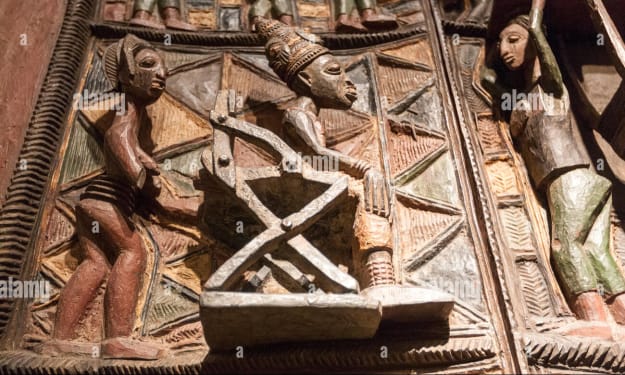
WHY ORA PEOPLE DON'T BOW TO OBA OF BENIN
Okpameh (also called Uguan) the son of Oba Ewaure left the Benin kingdom after he was banned for committing murder. He went up to the Northern part and settled at a particular place he named Odorlerene (somewhere in present-day Ora). Okpameh was a very powerful and renowned hunter, who was respected for killing the dreaded Leopard (Ekpen), (see attached photo). He took a wife a Uokha Lady who bore him a Son he named Ora Ekpen (because of the circumstances surrounding his birth). Ora Ekpen later bore sons that make up the communities in today's Ora. Okpameh later received information of the death of his brother who before then was the Oba of Benin. It was told that the brother died without an heir to the throne.
By Joseph Bawaijen Godwin2 years ago in History
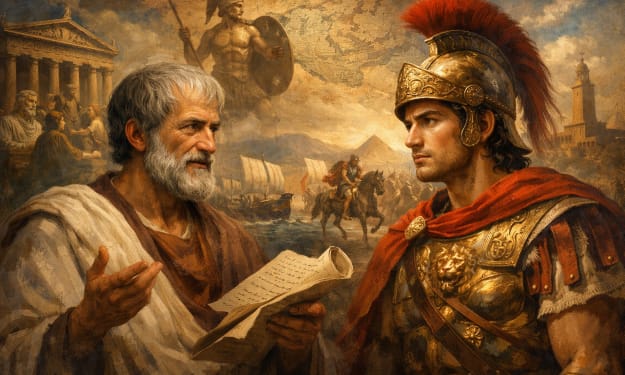
Aristotle and Alexander: How a Philosopher’s Lessons Helped Shape World History
History often remembers kings, conquerors, and great battles. Yet behind many powerful rulers stand teachers whose ideas quietly shape the future. One of the most famous examples of this relationship is the connection between Aristotle, one of the greatest philosophers in history, and his student Alexander the Great, the young Macedonian king who built one of the largest empires the world had ever seen.
By Irshad Abbasi about 19 hours ago in History


Comments
There are no comments for this story
Be the first to respond and start the conversation.