
The Eternal Green: Tracing the Glorious History and Value of the Emerald Stone
Emeralds have captivated human civilization for over 4,000 years—from Cleopatra’s Egyptian mines to the sacred rituals of the Incas, and the opulent treasuries of European royalty. This article explores the emerald’s journey through ancient cultures, its conquest-era rediscovery in Colombia, and its rise in global trade. Symbolizing rebirth, wisdom, and luxury, emeralds today represent a market worth over $100 billion. Dive into the fascinating story of this timeless green gem, and discover why it remains one of the most coveted treasures in human history.

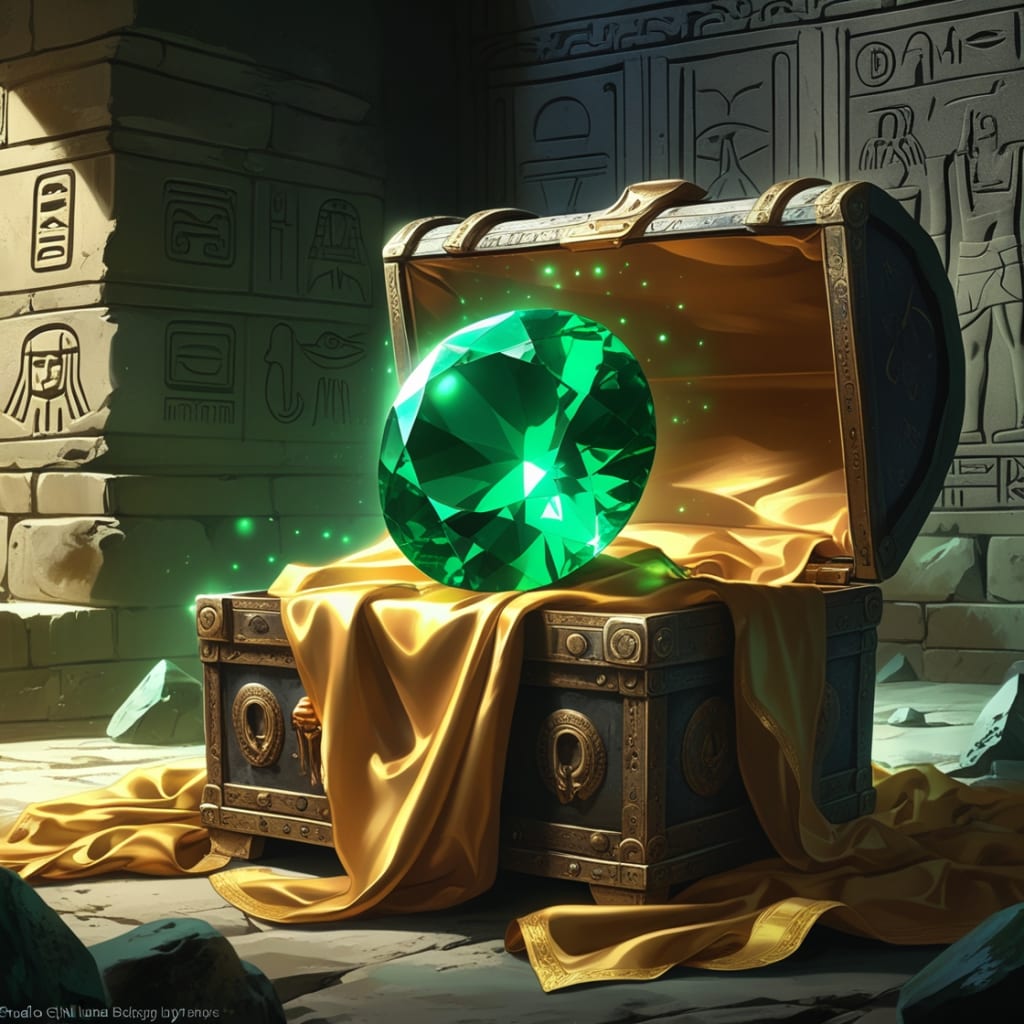
The Eternal Green: The Radiant Legacy and Financial Worth of the Emerald Stone
Among the gemstones valued throughout history, few equal the emerald in intrigue, sophistication, and worth. With its rich green shades, emblematic significance, and storied allure to royalty and mystics alike, the emerald has captivated societies for millennia. From ancient Egyptian burial sites to Colombian quarries, from Incan shrines to European regalia, the narrative of the emerald is a worldwide saga of affluence, conquest, and fascination.
However, beyond its aesthetic allure lies significant worth. With some solitary stones commanding tens of millions of dollars, and the global emerald industry expanding rapidly, the stone's net worth in both cultural and financial dimensions is substantial.
1. Ancient Origins: A Jewel Suitable for the Deities
The earliest documented emeralds were extracted in Egypt circa 330 BCE, although there are assertions of utilization dating back to 1500 BCE. Cleopatra herself was famously infatuated with emeralds and claimed dominion over all Egyptian emerald quarries. These mines, located in the Eastern Desert, would become known as "Cleopatra’s Mines," supplying gemstones for both the queen and her entourage.
The ancient Romans also esteemed emeralds for their brilliant green hue. Pliny the Elder, a Roman naturalist, wrote extensively about emeralds, noting their ability to solace the eyes and spirit. Roman emperors frequently employed emeralds in rings, necklaces, and ceremonial attire.
In India, emeralds were regarded as sacred stones. Maharajas donned them in elaborate adornments, and they were often inscribed with prayers and utilized in spiritual ceremonies.
2. The Incan Link and Spanish Conquest
The indigenous populations of South America, particularly the Incas and Muzo community of Colombia, esteemed emeralds immensely. For them, emeralds were divine gifts, employed in religious rituals and royal embellishments. These stones were mined from sites that remained concealed from outsiders for centuries.
The situation transformed in the 16th century with the arrival of Spanish conquistadors. Upon uncovering the affluent emerald mines in what is presently Colombia, they ruthlessly extracted not only the stones but also the knowledge of the indigenous peoples. Spanish vessels commenced transporting emeralds across the Atlantic, satisfying the unquenchable desires of European monarchies.
Colombia’s emeralds were larger, clearer, and more vibrant than any previously encountered, swiftly becoming the most desired gemstones globally.
3. The Emergence of Global Trade and Emerald Kingdoms
During the Age of Exploration, emeralds evolved into one of the most precious trade commodities alongside gold, silver, and spices. European royaltyparticularly in Spain, Portugal, France, and Englandutilized emeralds to embellish crowns, brooches, and even swords. The Mughal Empire in India, already fond of emeralds, became a principal purchaser of Colombian gems, often inscribing them with sacred Islamic writings and employing them as imperial gifts.
In the 19th and 20th centuries, emerald extraction expanded to Brazil, Zambia, Pakistan, and Afghanistan. Nonetheless, Colombian emeralds remain the benchmark due to their clarity and rich green hue.
4. Symbolism and Cultural Influence
Throughout time, emeralds have represented rejuvenation, affection, fertility, and wisdom. In astrology, they are linked to Venus, embodying beauty and balance. Additionally, they are regarded as the birthstone for May.
Emeralds were thought to possess mystical abilities:
Ancient Egyptians believed emeralds could confer everlasting youth.
The Incas regarded them as sacred gemstones.
Medieval European mystics believed emeralds could guard against malevolent spells and enhance clairvoyance.
Even in contemporary times, emeralds are utilized in feng shui, crystal healing, and modern astrology for their purported soothing and restorative properties.
5. The Contemporary Emerald Market and Estimated Net Worth
The global emerald market has evolved into a multibillion-dollar sector. The most prized emeralds originate from Colombia, Zambia, and Brazil, with Colombian emeralds constituting over 70% of the world’s premium supply.
Emeralds are assessed based on hue, clarity, carat weight, and cut. Unlike diamonds, emeralds are nearly always included (featuring internal imperfections), thus making high-clarity stones exceptionally rare and precious.
Noteworthy instances:
The Rockefeller Emerald, an 18. 04-carat Colombian emerald, fetched $5. 5 million in 2017.
The Bahia Emerald, weighing over 800 pounds and containing hundreds of thousands of carats, is valued (controversially) at up to $400 million.
Global market valuation:
As of the mid-2020s, the emerald gemstone market is estimated to exceed $8 billion annually.
With sustained demand from collectors, luxury sectors, and countries such as China, India, and the U. S. , this value is projected to escalate by 6–8% each year.
Estimated total value of known emerald reserves and markets: $100–120 billion.
6. Challenges and Sustainability
Contemporary emerald mining confronts challenges including:
Illegal mining and trafficking, particularly in conflict-affected regions.
Labor exploitation and inadequate safety measures for miners.
Ecological harm, especially from unregulated extraction.
However, organizations like the Responsible Jewellery Council and initiatives towards ethically sourced gemstones are transforming industry standards.
Conclusion
From the sacred ceremonies of the Incas to the treasure chests of Spanish galleons and the showcase windows of modern jewelry boutiques, emeralds have persisted as emblems of power, luxury, and allure. With a rich heritage spanning over 4,000 years and a valuation surpassing $100 billion, the emerald is not merely a stoneit is a vibrant connection between history, beauty, and worth.
About the Creator
Say the truth
"Say the Truth: Explain Everything in the World" is your trusted source for uncovering facts and exploring the wonders of history, science, technology, and beyond. We simplify complex ideas and reveal truths to inspire curiosity .
Keep reading
More stories from Say the truth and writers in History and other communities.
The Golden Sea: History’s Greatest Lost Treasure Beneath the Waves
The Golden Sea: Unraveling the History of the World’s Greatest Ocean Treasure For centuries, the planet’s oceans have concealed unimaginable riches beneath their waves. Among the tales of submerged galleons, pirate caches, and lost civilizations, one myth prevails above the others: the legendary Golden Sea. Allegedly possessing the most significant treasure ever lost to the depths, the Golden Sea has captivated treasure seekers, historians, and explorers alike.
By Say the truth 9 months ago in History
World War I
The morning fog lay thick over the trenches of northern France, clinging to the earth as if it too feared what was about to happen. Private Thomas Hale pulled his coat tighter around himself, though it did little to stop the cold from seeping into his bones. He had been in the trenches for six months, yet the damp smell of mud, smoke, and fear still felt unfamiliar, like a nightmare he could not wake from.
By Maavia tahir6 days ago in History
Chicago Hospital Held Newborn Baby for 8 Months Over an Unpaid Medical Bill
Debts were handled much differently in the 19th and early 20th century. Back then, people who accrued debt had more to fear than letters and calls from collection agencies the same way we do today, especially if they owed a hospital or doctor money.
By Criminal Matters6 days ago in History
How to Succeed at the Benson Directory®
Congratulations and welcome to the Benson Directory® employee #22391! As our newest call handler, you will have the privilege of speaking with dozens of unique and interesting people on a daily basis as well as the opportunity to earn bonuses for high performance. Contained within this handbook you will find a set of ease to follow instructions designed to help you settle in to your new role and begin paving the way to success.
By S. A. Crawford2 days ago in Fiction



Comments
There are no comments for this story
Be the first to respond and start the conversation.