
The Enigmatic Legacy of Queen Nefertiti
Unveiling Ancient Egypt's Icon

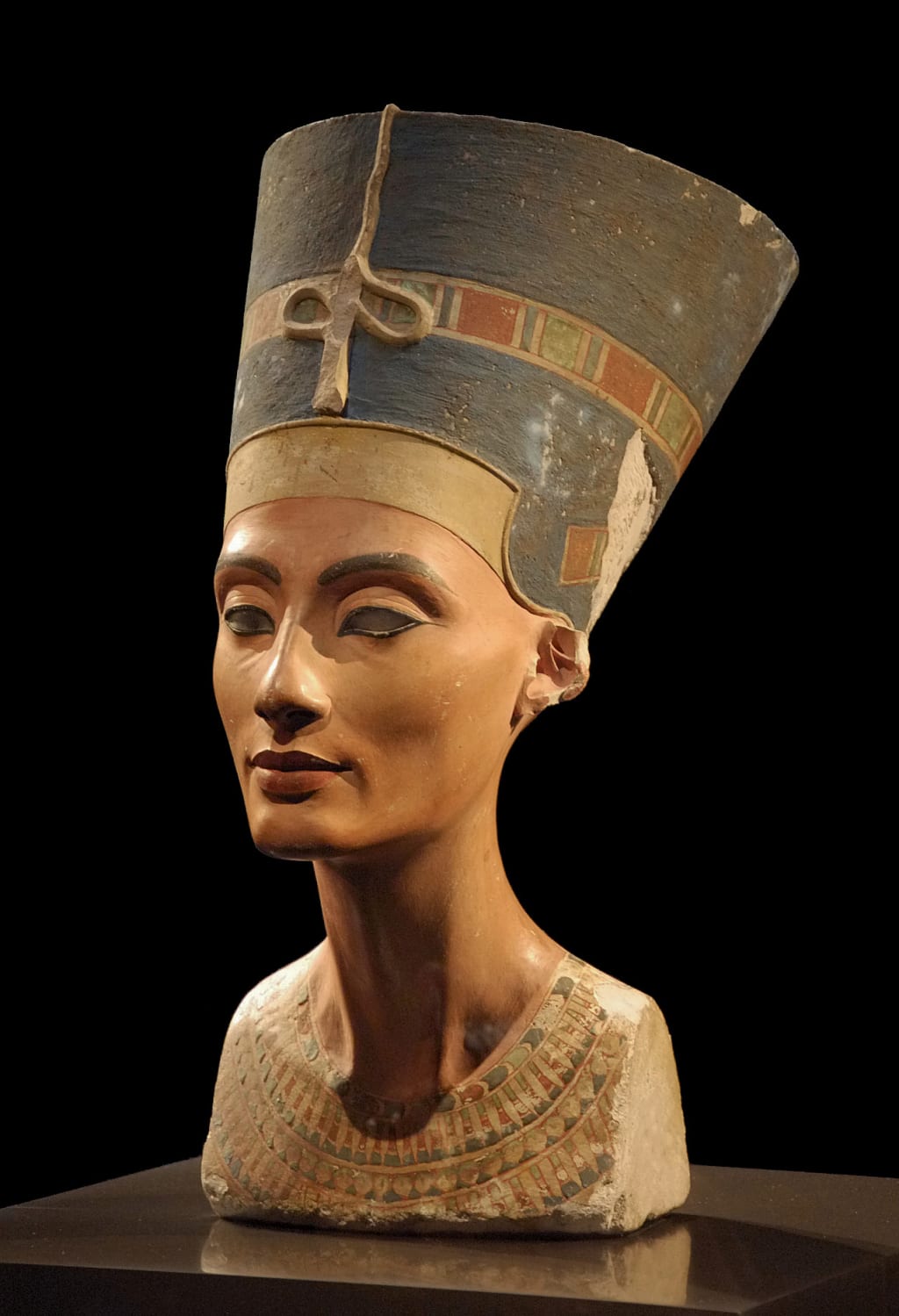
Queen Nefertiti remains one of the most iconic figures in ancient Egyptian history. Her fame is largely due to the striking bust discovered in 1912, which has become a symbol of ancient elegance and mystery. But Nefertiti’s life and legacy go far beyond this single artifact. This post explores her rise to power, her revolutionary role in religion, and the enduring intrigue surrounding her.
Early Life and Origins
Nefertiti was born around 1370 BCE during Egypt’s 18th Dynasty, a time when the empire was at its zenith. Despite her prominence, much about her early life remains unclear. Three main theories exist about her origins:
1. Daughter of Aei: Some scholars believe she was the daughter of Aei, a high-ranking court official who later became Pharaoh.
2. Princess Tadukipa: Another theory suggests she was Tadukipa, a princess from the northern kingdom of Mitanni, married to Pharaoh Amenhotep III before becoming the wife of his son, Akhenaten. Her foreign origins might be reflected in her name, meaning "the beautiful woman has come."
3. Daughter of Amenhotep III: The third theory posits that she was actually the daughter of Pharaoh Amenhotep III, making her the sister of Akhenaten. Marriages between close relatives were common among Egyptian royals to maintain a “pure” bloodline.
Marriage and Role as Queen
Nefertiti married Akhenaten, then known as Amenhotep IV, when she was about 15. Their union was not only a personal bond but also a political one. Akhenaten’s reign marked a radical departure from traditional Egyptian polytheism, focusing instead on the worship of Aten, the sun disk. This shift wasn’t just religious but also an attempt to consolidate power. Nefertiti became the Great Royal Wife and a key figure in this new religious era.
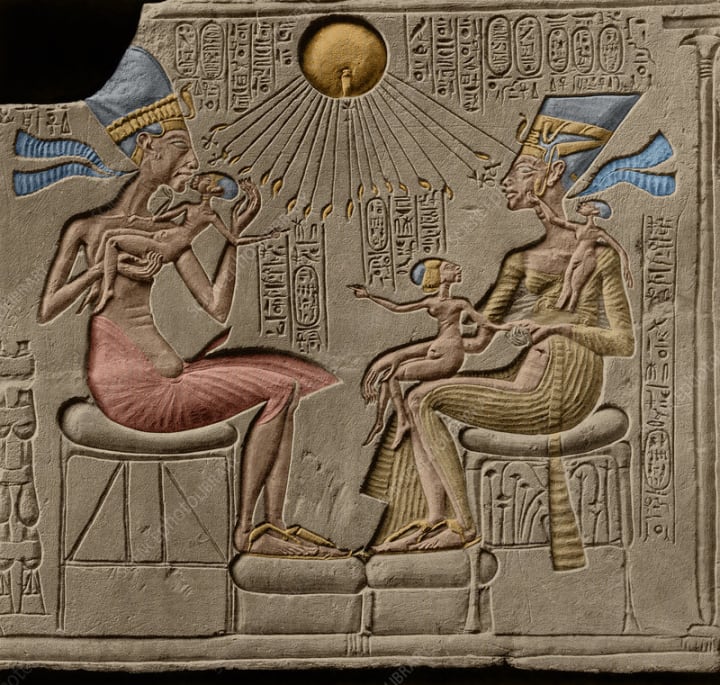
The couple's relationship was depicted with extraordinary intimacy in their art. They are often shown together, even engaging in tender acts like kissing, which was uncommon in royal art. They had six daughters, each depicted in their art, highlighting Nefertiti's role as a fertility goddess.
Religious Revolution
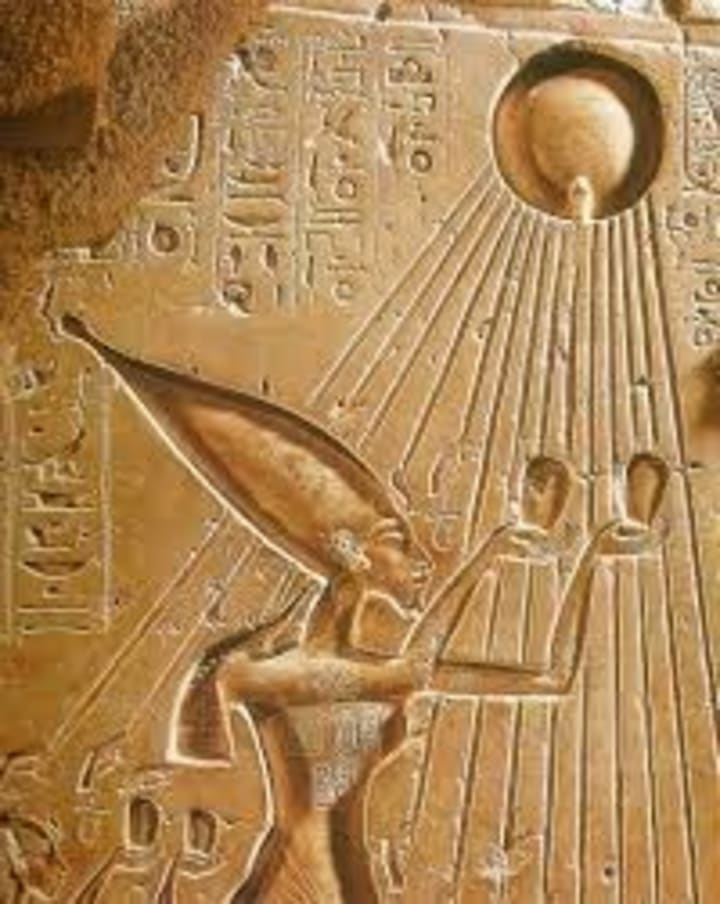
The religious changes instituted by Akhenaten and Nefertiti were transformative. They established Atenism, which centered on worshiping Aten alone. This new faith diminished the power of traditional priesthoods, concentrating religious authority within the royal family. Akhenaten changed his name to reflect this devotion, becoming Akhenaten, meaning "Aten is satisfied," while Nefertiti took the name Neferneferaten, meaning "Beautiful are the beauties of Aten."
Their new capital city, Akhetaten (modern-day Amarna), was built to honor Aten. This city was designed to be a manifestation of the sun’s journey, with innovative construction techniques, including the use of uniform blocks, which made building more efficient.
The Mysterious Disappearance and Co-Regency
Tragedy struck when a plague killed several of their daughters, and Nefertiti vanished from the historical record for several years. Initially, it was believed she had died, but recent studies have uncovered that she may have served as a co-regent with Akhenaten. She adopted the name Neferneferaten, appearing in art with the same prominence as Akhenaten. This co-regency is evident in artifacts depicting her as a ruling pharaoh, suggesting she held significant power.
After Akhenaten’s death, Nefertiti continued to rule as pharaoh, managing the transition from Atenism back to traditional religious practices. She reinstated the worship of Amun and returned the capital to Thebes, a more strategic location for defending Egypt.
Legacy and Aftermath
Nefertiti’s reign faced challenges, especially as a female ruler in a traditionally male-dominated society. Her efforts to marry a foreign prince to secure alliances were met with hostility, and the prince was assassinated before reaching Egypt. Nefertiti’s fate after this remains unclear, but it is believed she died around age 40.
Her stepson, Tutankhamun, became pharaoh at a young age and reversed many of her reforms, restoring traditional polytheistic worship. Tutankhamun’s reign was short and troubled, and he died young, possibly due to genetic disorders. The subsequent rulers, including the advisor Aei who became pharaoh, dealt with the legacy of the Amarna period, including plundering the tombs of Akhenaten and Nefertiti.
The Bust of Nefertiti
Nefertiti’s most famous relic, the bust found in 1912 by German archaeologists, offers a tantalizing glimpse into her life. The bust, discovered in a sculptor's workshop in Amarna, is celebrated for its exquisite detail and lifelike quality. It depicts Nefertiti in her iconic crown, a symbol of her royal status.
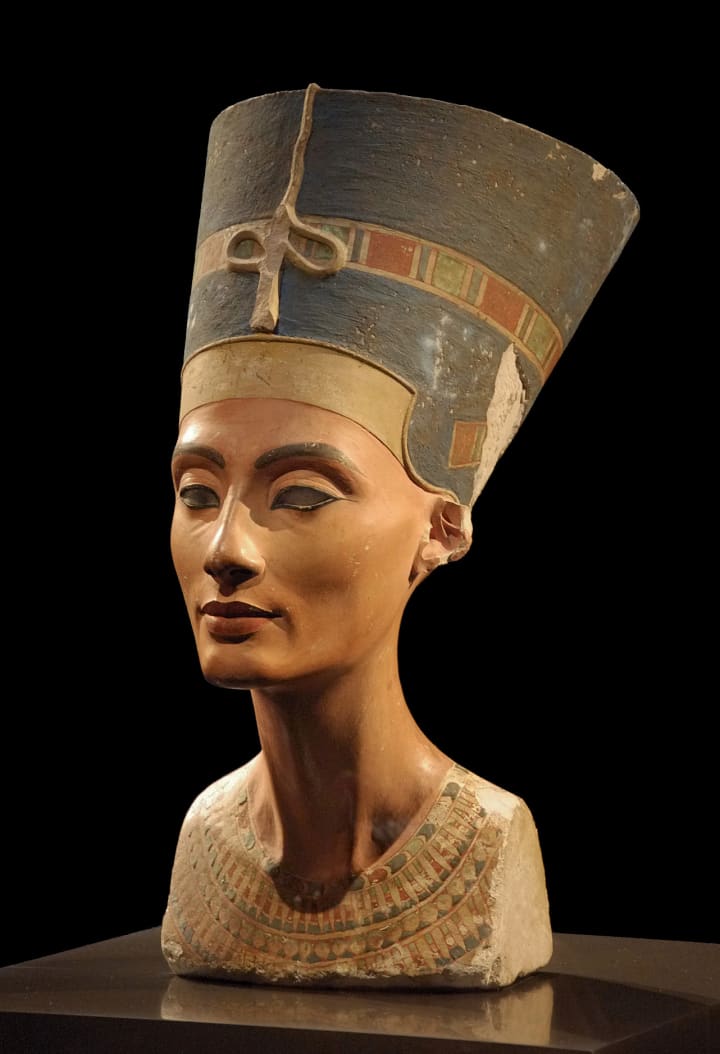
The bust’s absence of a left eye has sparked speculation, but it’s likely the result of damage rather than a deliberate act. The bust was taken to Germany and is currently housed in the Neues Museum in Berlin. Despite numerous calls for its return, it remains one of the most iconic artifacts from ancient Egypt.
Closing
Queen Nefertiti’s legacy is a blend of historical fact and enduring mystery. Her role as a powerful female ruler, her influence in religious and political reforms, and the enigmatic beauty of her bust ensure her place as a captivating figure in ancient history. While much remains unknown about her final years and burial, Nefertiti’s impact on history and art continues to intrigue and inspire.
About the Creator
Horace Wasland
Research analyst, writer & mystical healer. Exploring the edge where science meets mystery. From mystery/the mystical, to facts, news & psychology. Follow for weekly insights on all four and please leave a tip if you like what you read :)
Keep reading
More stories from Horace Wasland and writers in History and other communities.
Living Like a Pharaoh
Ever imagined what it was like to live in the lap of luxury, surrounded by servants, temples, and divine duties? Welcome to the world of ancient Egyptian royalty, where the daily life of a pharaoh was anything but ordinary. From managing a sprawling kingdom to indulging in lavish feasts, being a pharaoh was a 24/7 job with its fair share of responsibilities and perks.
By Horace Waslandabout a year ago in History
World War I
The morning fog lay thick over the trenches of northern France, clinging to the earth as if it too feared what was about to happen. Private Thomas Hale pulled his coat tighter around himself, though it did little to stop the cold from seeping into his bones. He had been in the trenches for six months, yet the damp smell of mud, smoke, and fear still felt unfamiliar, like a nightmare he could not wake from.
By Maavia tahir4 days ago in History


Comments
There are no comments for this story
Be the first to respond and start the conversation.