
The Enigmatic Civilization of the Maya, Inca, and Aztec
The Enigmatic Civilization of the Maya, Inca, and Aztec

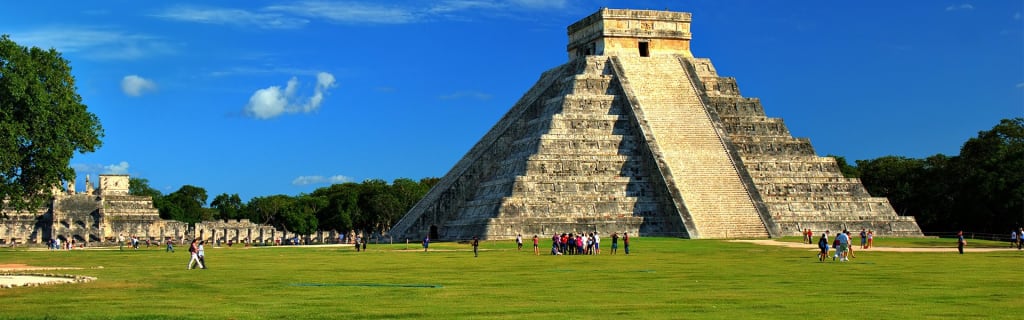
The ancient civilizations of the Maya, Inca, and Aztec have captivated the imaginations of historians and archeologists for centuries. Flourishing in different regions of the Americas, these cultures achieved remarkable advancements in architecture, art, astronomy, agriculture, and governance. While their legacies are evident in modern Latin American societies, their mysterious declines continue to spark debate and exploration. This article delves into the rise, achievements, and enigmatic decline of these fascinating civilizations.
I. The Maya Civilization:
The Maya civilization, centered in present-day southern Mexico, Guatemala, Belize, El Salvador, and Honduras, thrived from approximately 2000 BCE to 1500 CE. Renowned for their sophisticated calendar system, hieroglyphic writing, and impressive architectural accomplishments, the Maya were highly skilled astronomers and mathematicians. Their city-states, such as Tikal, Palenque, and Calakmul, showcased monumental pyramids, temples, and palaces.
Achievements in Astronomy and Mathematics:
The Maya developed a precise solar calendar that enabled them to predict celestial events with remarkable accuracy. Their advanced understanding of astronomy allowed them to build impressive observatories and temples aligned with celestial events like solstices and equinoxes. Additionally, they had a complex numerical system that included the concept of zero, making sophisticated mathematical calculations possible.
Hieroglyphic Writing and Record Keeping:
The Maya left an extensive record of their history, rituals, and daily life through their hieroglyphic script. While it remained undeciphered for centuries, the efforts of epigraphers have unveiled significant aspects of Maya culture, including their political organization and religious beliefs.
II. The Inca Empire:
In the Andean region of South America, the Inca Empire emerged around the 12th century and reached its peak in the 15th and 16th centuries. Spanning across modern-day Peru, Ecuador, Bolivia, and parts of Colombia and Chile, the Inca civilization was characterized by its exceptional engineering feats, such as the awe-inspiring city of Machu Picchu.
Ingenious Engineering and Architecture:
The Incas were skilled builders, using massive stones to construct impressive structures that withstood the test of time and earthquakes. Their road network, the famous Inca Trail, facilitated efficient communication and trade across vast territories.
Social and Political Organization:
Under the rule of an emperor known as the Sapa Inca, the Inca Empire maintained a highly centralized political system. Their efficient administrative structure allowed them to govern diverse ethnic groups and regions effectively.
III. The Aztec Empire:
In the valley of Mexico, the Aztec Empire emerged in the 14th century and reached its zenith in the early 16th century. The Aztecs, or Mexica, were renowned for their advanced agricultural practices, complex social hierarchy, and religious traditions.
Advanced Agriculture and Engineering:
To thrive in the challenging environment of the central Mexican highlands, the Aztecs built intricate systems of terraced agriculture and chinampas (artificial islands). These innovations allowed them to support a large population.
Religious Beliefs and Rituals:
The Aztecs had a polytheistic religion, with gods representing various aspects of nature and life. They believed in offering sacrifices to appease the gods and maintain the cosmic balance. The Templo Mayor in their capital, Tenochtitlan (modern-day Mexico City), was a significant religious center.
IV. Mysterious Declines:
Despite their remarkable achievements, the Maya, Inca, and Aztec civilizations experienced mysterious declines and eventual collapses.
Maya Civilization:
The reasons behind the decline of the Classic Maya civilization around the 9th century remain the subject of scholarly debate. Proposed theories include environmental degradation, prolonged droughts, warfare, and socio-political instability. However, the Maya civilization did not entirely vanish but transformed into smaller city-states that continued to thrive.
Inca Empire:
The Inca Empire faced a swift and dramatic downfall with the arrival of Spanish conquistadors led by Francisco Pizarro in 1532. The Inca emperor Atahualpa was captured and later executed, and the empire quickly fell under Spanish domination.
Aztec Empire:
Similarly, the Aztec Empire encountered its demise at the hands of Spanish conquistador Hernán Cortés, who, with the help of native allies, overthrew the Aztec capital of Tenochtitlan in 1521.
The Maya, Inca, and Aztec civilizations stand as testaments to human ingenuity and cultural brilliance. Despite their eventual decline, their achievements continue to inspire awe and admiration. The study of these ancient civilizations reminds us of the importance of preserving and understanding our shared human heritage, while also urging us to contemplate the fragility and resilience of human societies throughout history. As research and archeological discoveries continue to shed light on these enigmatic cultures, our understanding of their rise and decline will undoubtedly evolve, further enriching our appreciation for the marvels of the past.
About the Creator
Reynol Brennan
A small blogger who shares emotions, life, life insights, and short stories, and provides everyone with happiness, growth, and common sense of life.
Keep reading
More stories from Reynol Brennan and writers in History and other communities.
An addictive Chinese history
Even in a vacuum of basic power, another form of order is necessary. Society cannot exist in a state of prolonged disorder. When the government cannot effectively manage, the people will gradually fill the void. This is a natural law, indifferent to ambition and right or wrong.
By Reynol Brennan3 years ago in History
The Forgotten Region of Greece That Maps Once Ignored
High in the rugged mountains of central Greece, there lies a mysterious and historically fascinating region known as Agrafa. For centuries, this isolated land lived up to the meaning of its own name. The word “Agrafa” in Greek literally means “unwritten” or “unrecorded.” The region earned this unusual title because it was so remote and difficult to control that even powerful empires often ignored it, and in some cases, mapmakers did not even bother to include it on their maps.
By Irshad Abbasi 4 days ago in History
Author’s Advice
If you would’ve asked me 20 years ago did I know I’d become a writer and an author, I would’ve said “nope, ain’t happening”. As fate would have it I did become an author and I can honestly say I’m loving it so far. It really does feel good to be a writer. I’ve learned a lot on this journey and I feel like with even me being as new to this world as I am, there’s some wisdom I need to share with every other aspiring author.
By Joe Patterson4 days ago in Journal



Comments
There are no comments for this story
Be the first to respond and start the conversation.