
The Enigma of the Universe: Unsolved Mysteries of Time and Space
The Boundless Cosmos: A Realm of Infinite Questions


The universe—an unfathomable expanse stretching beyond the limits of human perception—has captivated minds for millennia. From the ancient astronomers mapping constellations to the modern physicists unraveling the laws of reality, the cosmos remains an enigma. Time and space, two fundamental elements of existence, govern our reality yet defy absolute understanding. While science has illuminated many aspects of the universe, countless mysteries still elude even our most advanced theories. Let us embark on a journey through the most perplexing riddles of time and space, where reality bends, paradoxes arise, and the unknown beckons us to explore further.
The Nature of Time: A One-Way Stream or a Looping River?
Time is a concept so intrinsic to our daily lives that we rarely question its nature. Yet, physics suggests that time is far more complex than it appears. Einstein’s theory of relativity posits that time is relative—it slows down in strong gravitational fields or near the speed of light. This phenomenon, known as time dilation, has been confirmed through experiments with atomic clocks aboard fast-moving satellites.
However, time's ultimate nature remains unknown. Is it a continuous flow, or could it be cyclical? The theory of eternal recurrence suggests that time might loop infinitely, replaying events over and over. Meanwhile, some quantum interpretations propose that time may not even exist as a fundamental aspect of reality but rather as a construct of human perception. Could time travel be possible? If so, why haven't we encountered visitors from the future? The answers remain elusive, teasing our understanding of reality itself.
The Dark Matter and Dark Energy Enigma
The visible universe is but a fraction of what actually exists. Astonishingly, nearly 85% of the universe’s mass is invisible—an enigmatic form of matter known as dark matter. Unlike ordinary matter, it neither emits nor absorbs light, making it completely undetectable except for its gravitational effects on galaxies. Scientists speculate that dark matter may be composed of unknown subatomic particles that interact only through gravity.
Even more baffling is dark energy, an invisible force driving the accelerated expansion of the universe. First observed in 1998, this discovery shattered the long-held belief that gravity would eventually slow cosmic expansion. Instead, dark energy appears to be repelling galaxies apart at an ever-increasing rate. The nature of this mysterious force remains unknown—could it be a property of space itself, an unseen field, or evidence of a deeper underlying physics yet to be discovered?
The Paradox of Black Holes: Cosmic Gateways or Information Traps?
Black holes are among the most enigmatic objects in the universe. These regions of space, where gravity is so immense that nothing—not even light—can escape, defy our understanding of physics. According to Einstein’s general relativity, a black hole is formed when a massive star collapses under its own gravity, creating a singularity—an infinitely dense point where the known laws of physics break down.
One of the greatest paradoxes of black holes lies in the information paradox. According to quantum mechanics, information about particles cannot be lost. Yet, if something falls into a black hole, it seemingly disappears from the universe forever. Does the information get destroyed, violating quantum mechanics? Or is it somehow encoded on the black hole’s event horizon, as proposed by the holographic principle? Some theories suggest that black holes might be gateways to other universes, or that they could eventually "evaporate," releasing the information they swallowed. Until we solve this puzzle, black holes remain cosmic riddles shrouded in mystery.
The Multiverse Hypothesis: Are We Alone in Reality?
The notion that our universe might be just one of many—a part of a multiverse—has intrigued scientists and philosophers alike. If multiple universes exist, each could have different physical laws, constants, and even different versions of reality. The multiverse theory stems from various sources, including string theory, quantum mechanics, and cosmic inflation.
One particularly fascinating idea is the Many-Worlds Interpretation of quantum mechanics, which suggests that every quantum decision spawns parallel universes where different outcomes unfold. Another hypothesis proposes that new universes are constantly forming through cosmic inflation, each developing unique properties. If the multiverse is real, could there be alternate versions of ourselves living in parallel realities? The implications challenge our understanding of existence itself.
The Fermi Paradox: Where Are the Aliens?
Given the vastness of the universe, it seems almost certain that intelligent life must exist elsewhere. Yet, despite decades of searching, we have found no definitive evidence of extraterrestrial civilizations. This conundrum, known as the Fermi Paradox, poses one of the greatest unanswered questions in science.
Numerous theories attempt to explain this cosmic silence. Some suggest that intelligent civilizations self-destruct before they can make contact. Others propose that advanced beings deliberately avoid us or exist in realms beyond our perception. Some even entertain the notion that we may be living in a cosmic zoo, observed by extraterrestrial watchers who choose not to interfere. Whatever the truth, the question remains: Are we truly alone, or is the universe teeming with life yet to be discovered?
The Grand Unified Theory: The Key to Unlocking the Universe
One of the most ambitious pursuits in physics is the search for a Grand Unified Theory (GUT)—a single equation that unites all fundamental forces of nature. Currently, general relativity describes gravity on a cosmic scale, while quantum mechanics governs subatomic particles. However, these two theories are fundamentally incompatible. The quest to reconcile them has led to groundbreaking theories like string theory and loop quantum gravity, yet no definitive solution has been found. Could the answer lie in dimensions beyond our perception? Are we on the brink of a scientific revolution that will reveal the true nature of reality?
Conclusion: The Universe Beckons
The universe is a vast, ever-expanding enigma filled with questions that challenge our deepest understanding of reality. Time, space, dark matter, black holes, parallel worlds, and extraterrestrial life all remain shrouded in mystery. Yet, these very mysteries fuel human curiosity and the relentless pursuit of knowledge. As we peer into the cosmos, we are reminded that each discovery, no matter how small, brings us one step closer to unraveling the grand design of existence. Until then, the universe whispers its secrets, waiting for us to listen.
About the Creator
Hasibul Hasan
I am a poetry writer, weaving words into emotional tapestries that explore the depths of human experience, capturing fleeting moments, and expressing the beauty and darkness of life through verse.
Try not to search for affection.
Be love.❤️
Keep reading
More stories from Hasibul Hasan and writers in History and other communities.
Echoes from the Past: Forgotten Civilizations That Shaped Our World
The world we inhabit today is built upon the ruins of civilizations long forgotten. Their stories whisper through the wind, etched in stone and buried beneath the sands of time. These lost societies, though overshadowed by modern empires, played a pivotal role in shaping our history, culture, and even the very fabric of human existence. Let us embark on a journey through the echoes of the past, uncovering civilizations that, though forgotten by many, still leave an indelible mark on our world.
By Hasibul Hasan12 months ago in History
The Eternal Triangle: The Story of the Egyptian Pyramids
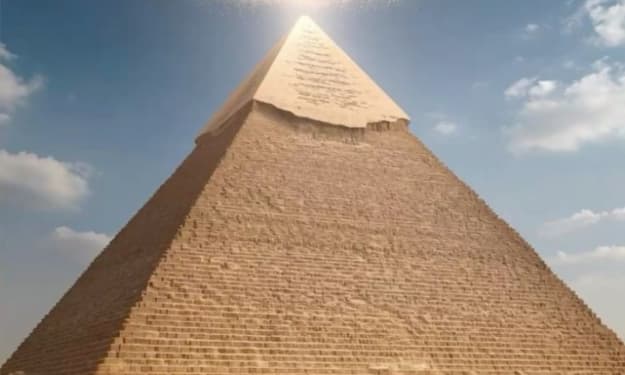
In the golden heat of the Egyptian desert, where the Nile River flows like a ribbon of life through endless sand, stand the greatest monuments of ancient human ambition—the pyramids. For over four thousand years, these towering structures have watched the rise and fall of empires, the march of armies, and the endless turning of time. They are not merely piles of stone; they are symbols of power, faith, and mystery. The story of the pyramids begins in the Old Kingdom of Egypt, around 2600 BCE, during a time when pharaohs ruled as living gods. The Egyptians believed that their king was not just a ruler but a divine being, chosen by the gods to maintain order in the world. When a pharaoh died, it was not seen as an end but as a journey into the afterlife. To ensure that their king would live forever among the gods, the Egyptians built massive tombs—structures that would protect the body and provide everything needed for eternal life. Before pyramids, royal tombs were simple rectangular structures called mastabas, made of mudbrick. But everything changed with Pharaoh Djoser. His architect, a brilliant man named Imhotep, had a daring idea. Instead of building a flat mastaba, he stacked smaller mastabas on top of one another, creating a stepped pyramid. Around 2630 BCE, the Step Pyramid of Saqqara rose toward the sky—the first large stone structure in history. It was a revolutionary achievement, marking the beginning of pyramid construction. As time passed, Egyptian builders sought perfection. They experimented with smoother sides and greater heights. Pharaoh Sneferu, father of the famous Khufu, was determined to create the perfect pyramid. His first attempt, the Meidum Pyramid, partially collapsed. His second attempt, the Bent Pyramid at Dahshur, changed angle midway because of structural concerns, giving it a strange shape. Finally, Sneferu succeeded with the Red Pyramid—the first true smooth-sided pyramid. Through trial and error, Egyptian engineers mastered the art of building monuments that could stand for eternity. Then came the age of greatness—the construction of the Great Pyramid of Giza. Around 2580 BCE, Pharaoh Khufu ordered the building of a pyramid that would surpass all others. On the west bank of the Nile, near modern Cairo, thousands of workers gathered. Contrary to old myths, these were not slaves chained in misery but skilled laborers, farmers who worked during the Nile’s flooding season when their fields were underwater. Stone blocks, some weighing up to 2.5 tons, were quarried and transported across the desert. Historians still debate exactly how they were lifted into place. Some believe ramps were built; others suggest clever systems of levers and sledges. Whatever the method, the achievement remains astonishing. Over 2.3 million blocks were arranged with incredible precision, forming a pyramid originally 146 meters tall. Its sides aligned almost perfectly with the four cardinal directions—north, south, east, and west—showing a deep understanding of astronomy. Inside the Great Pyramid were hidden chambers. The King’s Chamber held a granite sarcophagus, meant to house Khufu’s mummified body. Narrow shafts pointed toward specific stars, perhaps guiding the king’s spirit to the heavens. The pyramid was once covered in smooth white limestone that reflected the sunlight, making it shine brilliantly like a beacon. Near Khufu’s pyramid stood two others—built for his son Khafre and his grandson Menkaure. Together, they formed the famous Pyramids of Giza. Guarding them was the Great Sphinx, a colossal statue with the body of a lion and the face of a pharaoh, likely Khafre. The Sphinx symbolized strength and wisdom, silently protecting the royal tombs. But why did the Egyptians build such enormous structures? The answer lies in their beliefs. The afterlife was central to Egyptian religion. They believed that the soul had different parts—the ka, the ba, and the akh—that needed the body to survive. This is why mummification was so important. Organs were carefully removed, the body dried with natron salt, and wrapped in linen. Treasures, food, statues, and inscriptions were placed inside the tomb to serve the king in the next world. However, pyramid-building did not last forever. After the Old Kingdom, Egypt faced economic troubles and political instability. Later pharaohs built smaller pyramids or chose hidden tombs in the Valley of the Kings, like that of Tutankhamun. The era of giant pyramids faded, but their legacy remained. For centuries, the pyramids stood largely undisturbed. Ancient travelers marveled at them. Greek historian Herodotus visited in the 5th century BCE and wrote stories—some accurate, others exaggerated—about their construction. Over time, sand covered parts of the structures. Treasure hunters and grave robbers broke into tombs, stealing valuables. In modern times, archaeologists have studied the pyramids with scientific methods. Excavations revealed workers’ villages, tools, and even bakeries that fed thousands of laborers. These discoveries changed our understanding, proving that pyramid builders were respected members of society, not enslaved masses. The pyramids have also inspired countless myths. Some claim aliens helped build them, unable to believe that ancient humans could achieve such precision. But evidence shows the Egyptians possessed remarkable engineering knowledge. They understood mathematics, geometry, and organization. The pyramids are a testament to human capability—not extraterrestrial intervention. Today, the Great Pyramid is the only surviving wonder of the Seven Wonders of the Ancient World. Earthquakes have shaken it, stones have been removed, and its shining limestone casing is mostly gone, yet it still stands proudly against the desert sky. Tourists from around the world visit Giza, walking in the footsteps of ancient kings. As the sun sets over the Sahara, the pyramids glow in shades of gold and red. They remind us of a civilization that believed in eternity. Though the pharaohs are long gone, their monuments endure, whispering stories of ambition, faith, and the desire to conquer death itself. The Egyptian pyramids are more than tombs. They are bridges between earth and sky, between life and afterlife. They show what humans can achieve when driven by belief and unity. Thousands of years later, they still challenge our imagination and inspire awe. And perhaps that is their greatest mystery—not how they were built, but why they continue to captivate us. In their silent strength, the pyramids tell a simple truth: time may pass, empires may fall, but the dreams carved in stone can last forever.
By The best writer about 4 hours ago in History



Comments
There are no comments for this story
Be the first to respond and start the conversation.