
The Eternal Triangle: The Story of the Egyptian Pyramids
How Ancient Pharaohs Built Monuments That Defied Time and Death

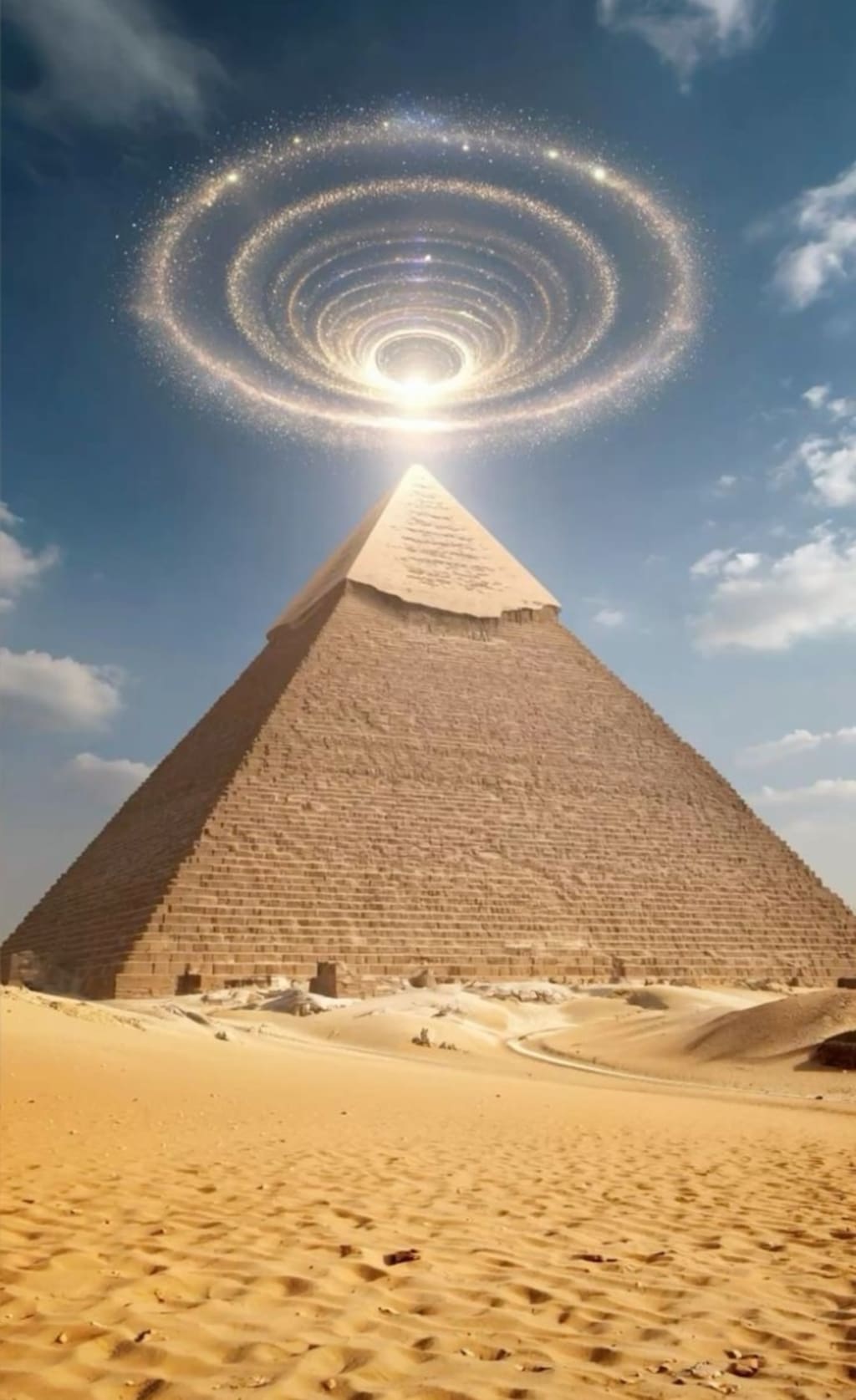
In the golden heat of the Egyptian desert, where the Nile River flows like a ribbon of life through endless sand, stand the greatest monuments of ancient human ambition—the pyramids. For over four thousand years, these towering structures have watched the rise and fall of empires, the march of armies, and the endless turning of time. They are not merely piles of stone; they are symbols of power, faith, and mystery.
The story of the pyramids begins in the Old Kingdom of Egypt, around 2600 BCE, during a time when pharaohs ruled as living gods. The Egyptians believed that their king was not just a ruler but a divine being, chosen by the gods to maintain order in the world. When a pharaoh died, it was not seen as an end but as a journey into the afterlife. To ensure that their king would live forever among the gods, the Egyptians built massive tombs—structures that would protect the body and provide everything needed for eternal life.
Before pyramids, royal tombs were simple rectangular structures called mastabas, made of mudbrick. But everything changed with Pharaoh Djoser. His architect, a brilliant man named Imhotep, had a daring idea. Instead of building a flat mastaba, he stacked smaller mastabas on top of one another, creating a stepped pyramid. Around 2630 BCE, the Step Pyramid of Saqqara rose toward the sky—the first large stone structure in history. It was a revolutionary achievement, marking the beginning of pyramid construction.
As time passed, Egyptian builders sought perfection. They experimented with smoother sides and greater heights. Pharaoh Sneferu, father of the famous Khufu, was determined to create the perfect pyramid. His first attempt, the Meidum Pyramid, partially collapsed. His second attempt, the Bent Pyramid at Dahshur, changed angle midway because of structural concerns, giving it a strange shape. Finally, Sneferu succeeded with the Red Pyramid—the first true smooth-sided pyramid. Through trial and error, Egyptian engineers mastered the art of building monuments that could stand for eternity.
Then came the age of greatness—the construction of the Great Pyramid of Giza. Around 2580 BCE, Pharaoh Khufu ordered the building of a pyramid that would surpass all others. On the west bank of the Nile, near modern Cairo, thousands of workers gathered. Contrary to old myths, these were not slaves chained in misery but skilled laborers, farmers who worked during the Nile’s flooding season when their fields were underwater.
Stone blocks, some weighing up to 2.5 tons, were quarried and transported across the desert. Historians still debate exactly how they were lifted into place. Some believe ramps were built; others suggest clever systems of levers and sledges. Whatever the method, the achievement remains astonishing. Over 2.3 million blocks were arranged with incredible precision, forming a pyramid originally 146 meters tall. Its sides aligned almost perfectly with the four cardinal directions—north, south, east, and west—showing a deep understanding of astronomy.
Inside the Great Pyramid were hidden chambers. The King’s Chamber held a granite sarcophagus, meant to house Khufu’s mummified body. Narrow shafts pointed toward specific stars, perhaps guiding the king’s spirit to the heavens. The pyramid was once covered in smooth white limestone that reflected the sunlight, making it shine brilliantly like a beacon.
Near Khufu’s pyramid stood two others—built for his son Khafre and his grandson Menkaure. Together, they formed the famous Pyramids of Giza. Guarding them was the Great Sphinx, a colossal statue with the body of a lion and the face of a pharaoh, likely Khafre. The Sphinx symbolized strength and wisdom, silently protecting the royal tombs.
But why did the Egyptians build such enormous structures? The answer lies in their beliefs. The afterlife was central to Egyptian religion. They believed that the soul had different parts—the ka, the ba, and the akh—that needed the body to survive. This is why mummification was so important. Organs were carefully removed, the body dried with natron salt, and wrapped in linen. Treasures, food, statues, and inscriptions were placed inside the tomb to serve the king in the next world.
However, pyramid-building did not last forever. After the Old Kingdom, Egypt faced economic troubles and political instability. Later pharaohs built smaller pyramids or chose hidden tombs in the Valley of the Kings, like that of Tutankhamun. The era of giant pyramids faded, but their legacy remained.
For centuries, the pyramids stood largely undisturbed. Ancient travelers marveled at them. Greek historian Herodotus visited in the 5th century BCE and wrote stories—some accurate, others exaggerated—about their construction. Over time, sand covered parts of the structures. Treasure hunters and grave robbers broke into tombs, stealing valuables.
In modern times, archaeologists have studied the pyramids with scientific methods. Excavations revealed workers’ villages, tools, and even bakeries that fed thousands of laborers. These discoveries changed our understanding, proving that pyramid builders were respected members of society, not enslaved masses.
The pyramids have also inspired countless myths. Some claim aliens helped build them, unable to believe that ancient humans could achieve such precision. But evidence shows the Egyptians possessed remarkable engineering knowledge. They understood mathematics, geometry, and organization. The pyramids are a testament to human capability—not extraterrestrial intervention.
Today, the Great Pyramid is the only surviving wonder of the Seven Wonders of the Ancient World. Earthquakes have shaken it, stones have been removed, and its shining limestone casing is mostly gone, yet it still stands proudly against the desert sky. Tourists from around the world visit Giza, walking in the footsteps of ancient kings.
As the sun sets over the Sahara, the pyramids glow in shades of gold and red. They remind us of a civilization that believed in eternity. Though the pharaohs are long gone, their monuments endure, whispering stories of ambition, faith, and the desire to conquer death itself.
The Egyptian pyramids are more than tombs. They are bridges between earth and sky, between life and afterlife. They show what humans can achieve when driven by belief and unity. Thousands of years later, they still challenge our imagination and inspire awe.
And perhaps that is their greatest mystery—not how they were built, but why they continue to captivate us. In their silent strength, the pyramids tell a simple truth: time may pass, empires may fall, but the dreams carved in stone can last forever.
About the Creator
The best writer
I’m a passionate writer who believes words have the power to inspire, heal, and challenge perspectives. On Vocal, I share stories, reflections, and creative pieces that explore real emotions, human experiences, and meaningful ideas.
Keep reading
More stories from The best writer and writers in History and other communities.
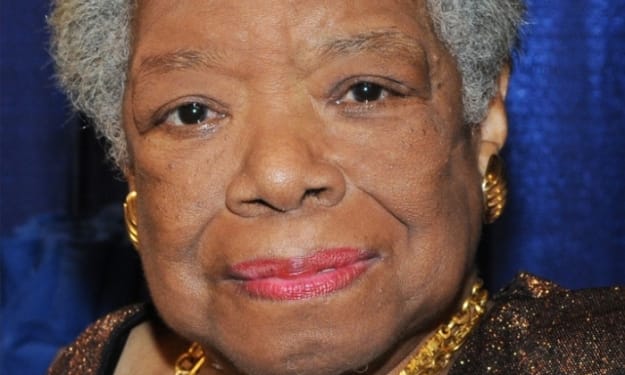
Maya Angelou – A Voice That Rose Like a Song
In the spring of 1928, in St. Louis, Missouri, a baby girl was born and named Marguerite Annie Johnson. The world would later know her as Maya Angelou—a poet, performer, activist, and one of the most powerful voices of the twentieth century. But her journey to greatness was not simple or smooth. It was a road marked by pain, silence, courage, and finally, a voice that would echo across generations. When Maya was very young, her parents separated. She and her older brother, Bailey, were sent to live with their grandmother in Stamps, Arkansas, a small Southern town divided by racial segregation. Life in Stamps was shaped by strict rules and deep prejudice. Black families lived with limited opportunities, and injustice was a daily reality. Yet, within her grandmother’s small store, Maya found a world of dignity and strength. Her grandmother, Annie Henderson, was a respected woman in the community—firm, faithful, and hardworking. From her, Maya learned resilience. As a child, Maya loved words. She listened carefully to the rhythms of speech and the music of stories told in church. But at the age of eight, her life changed in a traumatic way. After returning briefly to live with her mother, she was harmed by her mother’s boyfriend. When he was later killed, young Maya believed her own words had caused his death because she had testified against him. Overcome with guilt and fear, she stopped speaking. For nearly five years, she lived in silence. Many thought the quiet girl would remain lost in her muteness. But her silence became a time of deep listening and learning. Back in Stamps, a kind teacher named Mrs. Bertha Flowers recognized Maya’s intelligence. She introduced her to literature—Charles Dickens, William Shakespeare, Paul Laurence Dunbar. Mrs. Flowers gently encouraged her to read aloud, explaining that poetry must be spoken to be truly understood. Slowly, word by word, Maya found her voice again. Literature became her refuge and her strength. As a teenager, Maya moved to San Francisco with her mother. Determined and independent, she became the first Black female streetcar conductor in the city at just sixteen years old. It was a small job in the eyes of many, but for Maya, it was proof that barriers could be broken. Around this time, she also became a young mother, giving birth to her son, Guy. Raising him while building her own life required courage and sacrifice. In her early adulthood, Maya explored many paths. She worked as a dancer, singer, and actress. She toured Europe in an opera production and later recorded music. During these years, she adopted the name “Maya Angelou,” combining her childhood nickname with a version of her former husband’s surname. The name would become legendary. The 1950s and 1960s were years of transformation in America. The Civil Rights Movement was rising, and Maya felt called to be part of it. She met and worked with influential leaders such as Dr. Martin Luther King Jr. and Malcolm X. In Ghana, where she lived for a time, she worked as a journalist and educator. Africa deepened her sense of identity and connection to her roots. Yet no matter where she lived—America, Europe, or Africa—she carried with her the memories of Stamps and the lessons of survival. In 1968, tragedy struck again when Dr. King was assassinated on Maya’s birthday. Grief overwhelmed her. For a time, she withdrew once more. But friends encouraged her to write about her life. The result was a groundbreaking memoir published in 1969: I Know Why the Caged Bird Sings. The book was unlike anything many readers had seen before. With honesty and poetic beauty, Maya described her childhood in the segregated South, her trauma, her silence, and her awakening. The title symbolized her own life—the caged bird representing oppression, yet still daring to sing. The memoir gave voice to countless people who had suffered in silence. It became an international success and established Maya Angelou as a major literary figure. She continued writing memoirs, essays, and poetry. Her poems carried rhythm like music and truth like lightning. One of her most famous poems, Still I Rise, became an anthem of strength and dignity: “You may write me down in history With your bitter, twisted lies… But still, like dust, I’ll rise.” Her words were not only about race, but about the human spirit—the ability to stand up again after being pushed down. She wrote about love, loss, motherhood, and hope. She believed that words could heal and that stories could change hearts. In 1993, Maya Angelou stood before millions at the inauguration of President Bill Clinton and recited her poem On the Pulse of Morning. Her voice, calm and powerful, carried across the nation. It was a historic moment—she became the first Black woman to recite a poem at a U.S. presidential inauguration. For many watching, it was more than poetry; it was history speaking. Throughout her life, Maya received numerous awards and honors, including the Presidential Medal of Freedom. Universities invited her to teach and speak. Students admired her wisdom and warmth. Yet despite fame and recognition, she remained deeply connected to her roots. She often said that courage was the most important virtue because without courage, you cannot practice any other virtue consistently. Maya Angelou did not pretend her life was free from pain. Instead, she showed that pain can be transformed into purpose. She believed that people should not only survive but thrive. “We may encounter many defeats,” she once wrote, “but we must not be defeated.” In her later years, she lived in North Carolina, continuing to write and inspire. Even as her hair turned silver and her steps slowed, her voice never lost its strength. She spoke about kindness, reminding people that “people will forget what you said, people will forget what you did, but people will never forget how you made them feel.” When Maya Angelou passed away in 2014, the world mourned not only a writer, but a guiding light. Tributes poured in from presidents, poets, and ordinary readers whose lives had been touched by her words. Yet her voice did not fade. It lives on in classrooms, libraries, and hearts around the world. Her story is not just about fame or success. It is about a little girl who once stopped speaking because she believed her voice had caused harm—and who later used that same voice to bring hope to millions. It is about rising after every fall. It is about turning silence into song. Maya Angelou once compared herself to a caged bird who sings of freedom. And through her courage, her poetry, and her unbreakable spirit, she proved that even the most wounded voice can become a melody of strength. Her life reminds us that no matter where we begin—no matter how small the town or how heavy the burden—we carry within us the power to rise. And like dust, like air, like the morning sun— Maya Angelou rose.
By The best writer about 14 hours ago in History
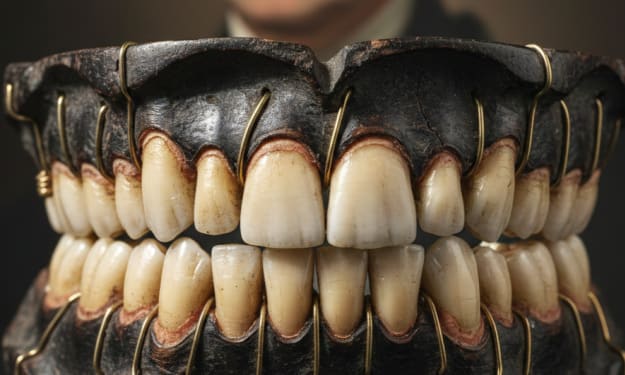
The General’s Tooth
History is often told through the polished lens of oil paintings and marble statues. We see George Washington as the stoic father of a nation, his jaw set in a firm, resolute line. But in the winter of 1783, as the American Revolution neared its end, that jaw was a site of excruciating, rotting agony.
By LUNA EDITH3 days ago in History
Affection and Healing for Yourself
During the night of the last quarter moon, I gathered my ritual supplies. I carefully handled the chunk of black tourmaline that would protect me from your overall negative and narcissistic energy. I carefully walked the house with my stick of selenite in hand, asking the universe to cleanse our working space.
By Alisha Wilkins ✒️🦋🖋️6 days ago in Fiction


Comments
There are no comments for this story
Be the first to respond and start the conversation.