
The Enigma of the Shell Grotto: A Mysterious Underground Wonder
Underground Structure

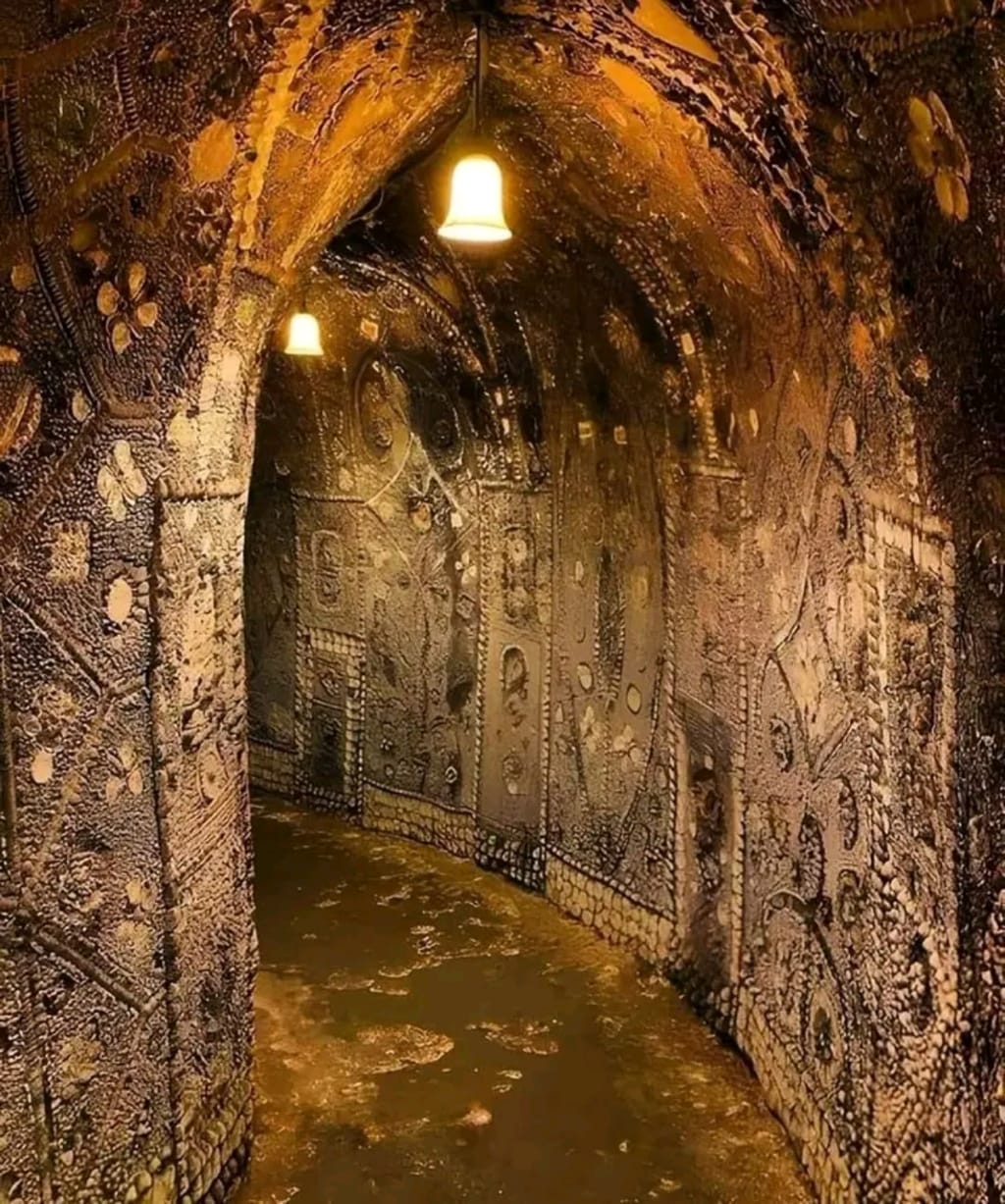
Nestled beneath the unassuming streets of Margate, Kent, England, lies one of the most perplexing and enchanting sites in the world—the Shell Grotto. Discovered in 1835, this underground passageway is a masterpiece of meticulous craftsmanship, adorned with over 4.6 million shells that form intricate mosaics covering every surface. Despite its undeniable beauty, the Shell Grotto’s origins, purpose, and creators remain shrouded in mystery, captivating the imaginations of visitors and researchers alike.
Discovery of the Grotto
The Shell Grotto was stumbled upon by accident in 1835 when a local man named James Newlove was digging a duck pond in his backyard. His son lowered himself into the hole that had been uncovered and found an underground passage lined with shells, stretching 70 feet and leading to a circular chamber.
What Newlove had uncovered was not merely a cave but a space of astonishing complexity. Every inch of the grotto’s walls and ceilings was encrusted with shells arranged in elaborate designs. Symbols, geometric patterns, and even what appear to be depictions of people or deities were meticulously created using shells of varying sizes and colors. The sheer volume of shells—estimated at over 4.6 million—was staggering, and the craftsmanship suggested the work of someone with an extraordinary level of skill and patience.
Newlove quickly recognized the potential of his find, opening the grotto to the public as a tourist attraction. However, the questions of who built it, when, and why have puzzled historians, archaeologists, and enthusiasts ever since.
---
Theories About Its Origins
Over the years, countless theories have been proposed about the Shell Grotto’s origins, each as intriguing as the grotto itself.
1. Ancient Temple
One of the most popular theories is that the grotto served as a temple for an ancient civilization. The designs and symbols in the mosaics have led some to speculate that the grotto was a sacred site, possibly dating back to Roman or even Phoenician times. Certain patterns are thought to resemble sun worship or fertility symbols, suggesting that the grotto might have been used for rituals or ceremonies.
2. Medieval Construction
Others argue that the grotto was built during the medieval era. The Middle Ages saw the rise of underground chapels and hidden places of worship, particularly during times of religious persecution. Could the grotto have been a secret meeting place for a clandestine group?
3. 18th or 19th-Century Folly
A more pragmatic theory is that the Shell Grotto was created in the 18th or early 19th century as a folly—a decorative, whimsical structure built purely for aesthetic or recreational purposes. This was a common trend among wealthy landowners of the time. If this theory is true, the creator of the grotto must have been a person of considerable resources and eccentricity.
4. Secret Society
The cryptic symbols and secretive nature of the grotto have fueled speculation that it was a meeting place for a hidden society, such as the Freemasons or another esoteric group. The mosaics might hold coded messages or rituals known only to its initiates.
5. Artistic Undertaking
Another possibility is that the grotto was an ambitious art project, created by a visionary individual or group with a passion for beauty and mystery. The lack of records could mean it was a personal endeavor meant to remain hidden from public view.
---
The Intricate Craftsmanship
One of the most remarkable aspects of the Shell Grotto is its artistry. The mosaics are composed of local shells, including whelks, oysters, mussels, and cockles, as well as some exotic species. The designs are astonishingly detailed, with patterns ranging from geometric shapes to floral motifs and enigmatic symbols.
The effort required to create the grotto is almost unimaginable. Gathering millions of shells, preparing the surfaces, and arranging the designs with such precision would have taken years, if not decades. The absence of any documentation or oral tradition about its construction only deepens the mystery.
---
Modern Interpretations and Preservation
Today, the Shell Grotto is a Grade I listed site and a popular tourist attraction. Visitors marvel at its otherworldly beauty while grappling with its unanswered questions. The grotto’s preservation has become a priority, as the shells are vulnerable to damage from moisture, pollution, and human contact.
Modern technology has been used to analyze the grotto, but definitive answers remain elusive. Carbon dating the shells is challenging, as they could have been gathered long after their natural lifespan. Meanwhile, the meaning of the designs continues to be debated.
---
The Allure of Mystery
Part of the Shell Grotto’s enduring appeal is its mystery. In a world where so much is known and cataloged, the grotto stands as a rare enigma. It invites visitors to speculate, to imagine, and to connect with a past that remains tantalizingly out of reach.
The grotto also serves as a reminder of humanity’s capacity for wonder and creativity. Whoever built it, and for whatever purpose, left behind a legacy of beauty and intrigue that continues to inspire.
---
Conclusion
The Shell Grotto of Margate is more than just an underground wonder; it is a riddle that transcends time. Its origins, purpose, and creators may never be definitively known, but perhaps that is what makes it so special. As you wander through its shell-lined passages, you are not merely observing history—you are stepping into a story that defies explanation.
For the modern visitor, the grotto offers a rare opportunity to experience the magic of the unknown. It is a place where craftsmanship and mystery intertwine, leaving all who enter its depths with a sense of awe and curiosity. Whether a sacred temple, a whimsical folly, or an artistic masterpiece, the Shell Grotto remains one of the most fascinating and mysterious landmarks in the world.
About the Creator
Keep reading
More stories from Deji Akomolafe and writers in History and other communities.
A 1,200-Year-Old Viking Sword Discovered in an English River: Unraveling the Past
In a remarkable twist of fate, Trevor Penny, a magnet fisherman from England, stumbled upon a corroded Viking sword while fishing in the River Cherwell in Oxfordshire. Little did he know, this ancient weapon would take him back over 1,200 years to an era of fierce battles, cultural clashes, and transformative exchanges between the Anglo-Saxons and the Vikings. The sword, estimated to date back to CE 850, is a tangible remnant of a tumultuous period in English history. Its discovery has sparked renewed interest in the Viking Age and its lasting impact on England’s cultural and political landscape.
By Deji Akomolafeabout a year ago in History
The Vasa: The 17th-Century Warship That Sank After Only 20 Minutes
In the early 17th century, European powers were fiercely competing to dominate the seas. Powerful naval fleets were considered symbols of national strength, and kings invested huge sums of money in building impressive warships. Among the most ambitious of these vessels was the Vasa, a magnificent ship built for the Swedish navy. Designed to be one of the most powerful warships of its time, the Vasa instead became famous for sinking after sailing for only about 20 minutes.
By Irshad Abbasi 4 days ago in History


Comments
There are no comments for this story
Be the first to respond and start the conversation.