
The Different Ages of Man in Greek Mythology
Mythological Curiosities


The rich and diverse Greek mythology plays a fundamental role in understanding the culture and beliefs of the ancient world. Among its many stories and characters, one of the most fascinating narratives is the description of the ages of man, which illustrates the evolution of humanity through five distinct golden ages, silver, bronze, heroes, and iron. Each of these ages represents a unique period in mythical history, reflecting changes in the relationship between human beings, gods, and nature, as well as transformations in human morals and ethics.
The golden age is the first and most prosperous period in the sequence of ages described by Hesiod in his work, The Works and Days. During this golden age, human beings lived in perfect harmony with the gods and enjoyed an abundant, peaceful existence. It was the idealization of perfection and a utopia in comparison to the following ages. In this period, the land was extremely fertile and produced food spontaneously without the need for hard work or agriculture. Human beings had a direct and friendly relationship with the deities, which allowed divine guidance. Harmony with the gods also ensured peace and justice among men, creating a balanced and stable society.
Golden age humans were described as almost mortal or at least very long-lived and did not experience pain, disease, or the suffering that afflicted humanity in subsequent eras. They were always busy and enjoyed a joyful existence filled with festivities and celebrations. Furthermore, in this era, moral and ethical values were high, and kindness and generosity were inherent characteristics of human beings. The absence of conflicts and rivalries allowed harmonious coexistence and collaboration between members of society.
With time, the golden age came to an end, and its milestone was the opening of Pandora's Box, which released all the ills that were stored inside the box. However, the decline really began when humanity turned away from the gods and became less virtuous. The loss of divine connection and the deterioration of moral and ethical values marked the beginning of a series of increasingly dark and challenging ages. The silver age took its place, and human beings still enjoyed a relatively long life. Although they were no longer immortal, as in the previous era, the land continued to be fertile but not as prodigious as in the golden age. Human beings needed to do some work to obtain food, but agriculture and life were still considerably easier than in the following eras that were yet to come.
The relationship between human beings and the gods began to deteriorate at this time. Worship and respect for the deities weakened, and the gods began to distance themselves from mortals. This disconnection led to a decline in moral and ethical values, and human beings became less virtuous and more selfish. Men became more ignorant and less wise than their predecessors. The lack of wisdom also affected the relationship with nature, and human beings began to exploit the environment instead of living in harmony with it. The society of this era was still relatively peaceful, and conflicts were rare, but the lack of virtue and wisdom began to cause problems. Justice and equity began to be compromised, making room for the corruption that would guide these men down a dark path.
The bronze age was marked by violence. Bronze age human beings were forged from the ash tree and bronze metal, which symbolizes their warlike and violent nature. They were known for being ruthless and brutal, dedicating themselves to war and destruction. Society became more violent and aggressive, and the peace and harmony that marked previous eras were replaced by constant conflicts, fights, and wars. Life became shorter and more difficult. The earth was no longer as fertile as it once was, and humans needed to work hard to grow food and survive.
The connection between men and the gods was practically non-existent during the bronze age. The worship and respect for the deities had been almost completely forgotten. Without the guidance of the gods, men were moved by their selfish motives and marked by moral decadence. Kindness, generosity, justice present in previous eras gave way to cruelty, ambition, and injustice. Society became more unequal and unstable. This violent and corrupt society dishonored the work of the gods, and that's why the deities decided to exterminate the violent and pious human beings who dominated the earth. Zeus and Poseidon promoted a gigantic flood that covered the earth. Only a couple of humans survived this cataclysmic event. They were Deucalion and Pyrrha, who were responsible for seeding the men who would inhabit the post-diluvian world.
With the end of this dark era, the age of heroes emerged, marked by the presence of demigods and great heroes responsible for great deeds. This new age of men represents a brief resurgence of human greatness after the dark period before. The heroes of this era were descendants of the gods and possessed extraordinary abilities, strength, and courage. They fought monsters, led armies, and faced challenges that ordinary humans would not be able to overcome. In addition, the presence of heroes brought a relative restoration
About the Creator
A História
"Hi. My name is Wellington and I'm a passion for general history. Here, I publish articles on different periods and themes in history, from prehistory to the present day.
Keep reading
More stories from A História and writers in History and other communities.
The Epic of Gilgamesh
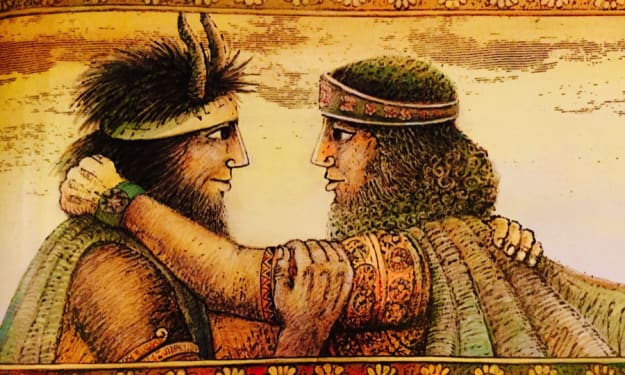
In ancient times, during the reign of the ancient Gods, there existed a powerful Sumerian King named Gilgamesh who ruled over the great city of Euroque in Mesopotamia. Gilgamesh was not an ordinary man, but rather a Demigod, being the son of the priest king, Wanda, and a God. As a result, he possessed extraordinary physical strength and beauty, and had a longer lifespan than normal humans. However, despite his physical qualities, Gilgamesh had an arrogant personality and abused his authority as King, demanding to be idolized by his people and ordering the construction of monuments in his honor. He also seduced any woman who pleased him, regardless of her status or marital status. Over time, the population of the city of Uruk began to repudiate their king and prayed to the Gods to be saved from his cruelty.
By A História3 years ago in History
Three Pakistani Women Explore Egypt in Wheelchairs, Challenging Stereotypes
Traveling across a foreign country can be challenging for anyone, but for three Pakistani women who use wheelchairs, it became a powerful statement of courage, independence, and resilience. Their journey to Egypt was not just a vacation—it was a mission to challenge social perceptions and inspire others living with disabilities.
By Irshad Abbasi 7 days ago in History



Comments
There are no comments for this story
Be the first to respond and start the conversation.