
The Demanding Factors That Created Alexander the Great’s Path to Victory
Alexander the Great’s conquests remain one of the most astonishing military achievements in human history. In just over a decade, he defeated some of the most powerful empires of the ancient world and created a realm stretching from Greece to Egypt and deep into India. His victories were not the result of luck or brute force alone. Instead, they emerged from a complex combination of demanding political, military, psychological, and environmental factors that aligned perfectly at a critical moment in history. Understanding these factors reveals why Alexander was able to win wars that seemed impossible for a young king leading a relatively small army.

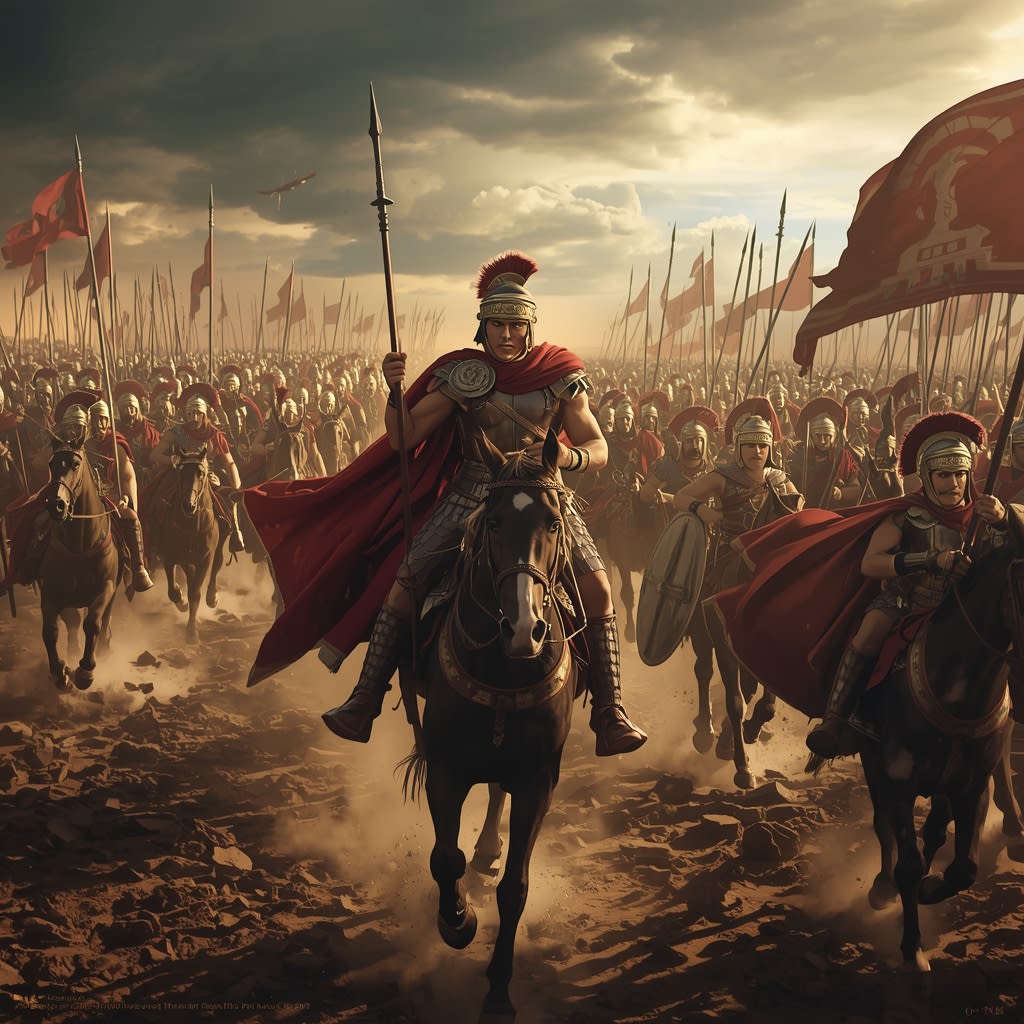
1. The Foundation Laid by Philip II of Macedon
One of the most important factors behind Alexander’s victories was the groundwork laid by his father, King Philip II of Macedon. Philip transformed Macedonia from a weak kingdom into a dominant military power. He reorganized the army, introduced the Macedonian phalanx, and armed soldiers with the long sarissa spear, which gave them a decisive advantage over traditional Greek hoplites.
Alexander inherited not only a powerful army but also experienced generals, disciplined troops, and a well-structured command system. This inheritance reduced the challenges faced by a new ruler and allowed Alexander to focus immediately on expansion rather than internal reform. Without Philip’s military revolution, Alexander’s ambitions would likely have failed at the very beginning.
2. Superior Military Strategy and Tactical Innovation
Alexander’s success was driven by his ability to adapt strategies to different battlefields and enemies. He never relied on a single method of warfare. At the Battle of Gaugamela, he used deception and mobility to break the Persian lines. In mountain warfare in Central Asia, he employed rapid strikes and surprise attacks. During sieges like Tyre, he demonstrated remarkable engineering skill by constructing causeways and siege towers.
His use of combined arms—infantry, cavalry, archers, and siege weapons working together—was far ahead of his time. The Companion Cavalry, led personally by Alexander, delivered decisive blows at critical moments. This flexible and innovative approach created repeated opportunities to defeat numerically superior forces.
3. Psychological Warfare and Personal Leadership
Alexander understood that wars are fought as much in the mind as on the battlefield. His reputation alone often weakened enemy morale before battles even began. Stories of his invincibility spread rapidly, causing fear among opposing armies.
Equally important was his personal leadership. Alexander fought on the front lines, shared hardships with his soldiers, and inspired loyalty through courage and charisma. When troops saw their king risking his life alongside them, their commitment intensified. This emotional bond between leader and army created an unbreakable fighting spirit, especially in difficult campaigns far from home.
4. Weakness and Division Within Enemy Empires
Another demanding factor favoring Alexander was the internal weakness of his enemies, particularly the Persian Empire. Although vast and wealthy, Persia suffered from administrative inefficiency, regional rebellions, and divided loyalties. Satraps often acted independently, and coordination between Persian forces was poor.
Darius III, despite commanding massive armies, lacked decisive leadership and confidence. Repeated retreats damaged Persian morale and legitimacy. Alexander exploited these weaknesses by striking quickly, defeating Persian armies before they could regroup, and presenting himself as a liberator rather than a conqueror.
5. Economic Resources and Control of Wealth
War requires enormous financial resources, and Alexander was highly aware of this reality. By capturing Persian treasuries in cities like Sardis, Susa, Persepolis, and Babylon, he gained access to unimaginable wealth. This gold and silver funded his campaigns, paid his soldiers generously, and ensured continuous logistical support.
Control over economic centers also weakened enemy resistance. Cities were more likely to surrender when Alexander demonstrated both military power and financial stability. The ability to reward loyalty while punishing resistance made his rule seem inevitable.
6. Adaptation to Geography and Environment
Alexander’s campaigns took place across deserts, mountains, rivers, and forests. Rather than being hindered by geography, he used it to his advantage. He crossed the Hellespont to symbolize divine destiny, navigated deserts in Egypt to reach the oracle of Siwa, and crossed dangerous rivers in India under enemy fire.
His willingness to adapt tactics to terrain gave him a critical edge. In narrow mountain passes, he used light infantry. On open plains, he unleashed cavalry. This adaptability reduced the disadvantages of distance and unfamiliar landscapes, allowing his army to function effectively across continents.
7. Cultural Integration and Political Diplomacy
Alexander did not rely solely on force. He strategically adopted elements of local cultures, respected religious traditions, and integrated local elites into his administration. By marrying Roxana and encouraging his officers to marry Persian women, he attempted to unify conquered peoples rather than rule through fear alone.
This policy reduced resistance and rebellion, particularly in newly conquered regions. Local rulers often retained power under Alexander’s authority, making governance smoother and reducing the need for constant military suppression.
8. Relentless Ambition and Vision
Perhaps the most demanding factor was Alexander’s personal ambition. He believed he was destined for greatness, influenced by stories of Achilles and reinforced by his education under Aristotle. This vision drove him beyond conventional limits and kept him pushing forward when others would have stopped.
Even after defeating Persia, Alexander continued eastward, driven by a desire to explore the unknown and secure eternal glory. This relentless drive transformed opportunities into victories and challenges into stepping stones.
Conclusion
Alexander the Great’s success in war was not the result of a single advantage but a rare convergence of demanding factors: a powerful military foundation, innovative strategy, psychological mastery, enemy weakness, economic control, environmental adaptability, cultural diplomacy, and unmatched ambition. Each factor alone would not have guaranteed victory, but together they created the perfect conditions for one of history’s most extraordinary military careers.
Alexander did not merely win wars—he reshaped the ancient world. His victories were the outcome of preparation meeting opportunity, guided by a leader who understood that true power lies in strategy, vision, and the ability to inspire others to follow him into the unknown.
About the Creator
Say the truth
"Say the Truth: Explain Everything in the World" is your trusted source for uncovering facts and exploring the wonders of history, science, technology, and beyond. We simplify complex ideas and reveal truths to inspire curiosity .
Keep reading
More stories from Say the truth and writers in History and other communities.
The Net Worth of the Peacock Throne: Valuing the World’s Most Luxurious Lost Treasure
What Was the Peacock Throne? The Peacock Throne was completed around 1635 CE and placed in the Mughal imperial court at Delhi. It was constructed almost entirely of solid gold and covered with some of the most valuable gemstones known to humanity. At its center stood two jewel-encrusted golden peacocks, their tails raised high and spread wide, symbolizing royalty, immortality, and divine authority.
By Say the truth about 8 hours ago in History
Olive Borden
Olive Borden’s (1907–1947) obituary in The New York Times is short and sober. It notes in the opening paragraph that though Borden made an estimated $1500 a week during her Hollywood heyday in the 1920s, she died “penniless in the Sunshine Mission after a brief siege of pneumonia,” aged 40.
By A. L. Fletcher 7 days ago in History
Abandoned: The All American Ruins Podcast
There are some podcasts that define genre classification and would never be considered by large podcast networks, worried about recouping their investment in the show. Abandoned: All-American Ruins is one of those podcasts.
By Frank Racioppi6 days ago in History
Not Just For Clean Up: A History Of The MCU's Department of Damage Control
Initially an organisation that seemed to exist to help the heroes of the Marvel Cinematic Universe, from Phase Four onwards, the Department of Damage Control has shifted into a more antagonistic role. Most recently seen in the Wonder Man series, the current incarnation of Damage Control seems to target superpowered individuals, regardless of whether that person poses an active or intentional threat.
By Kristy Anderson2 days ago in Geeks


Comments
There are no comments for this story
Be the first to respond and start the conversation.