
The Day Lisbon Fell: A Story That Changed the World
When the Earth Shook: How the Lisbon Earthquake Redefined History

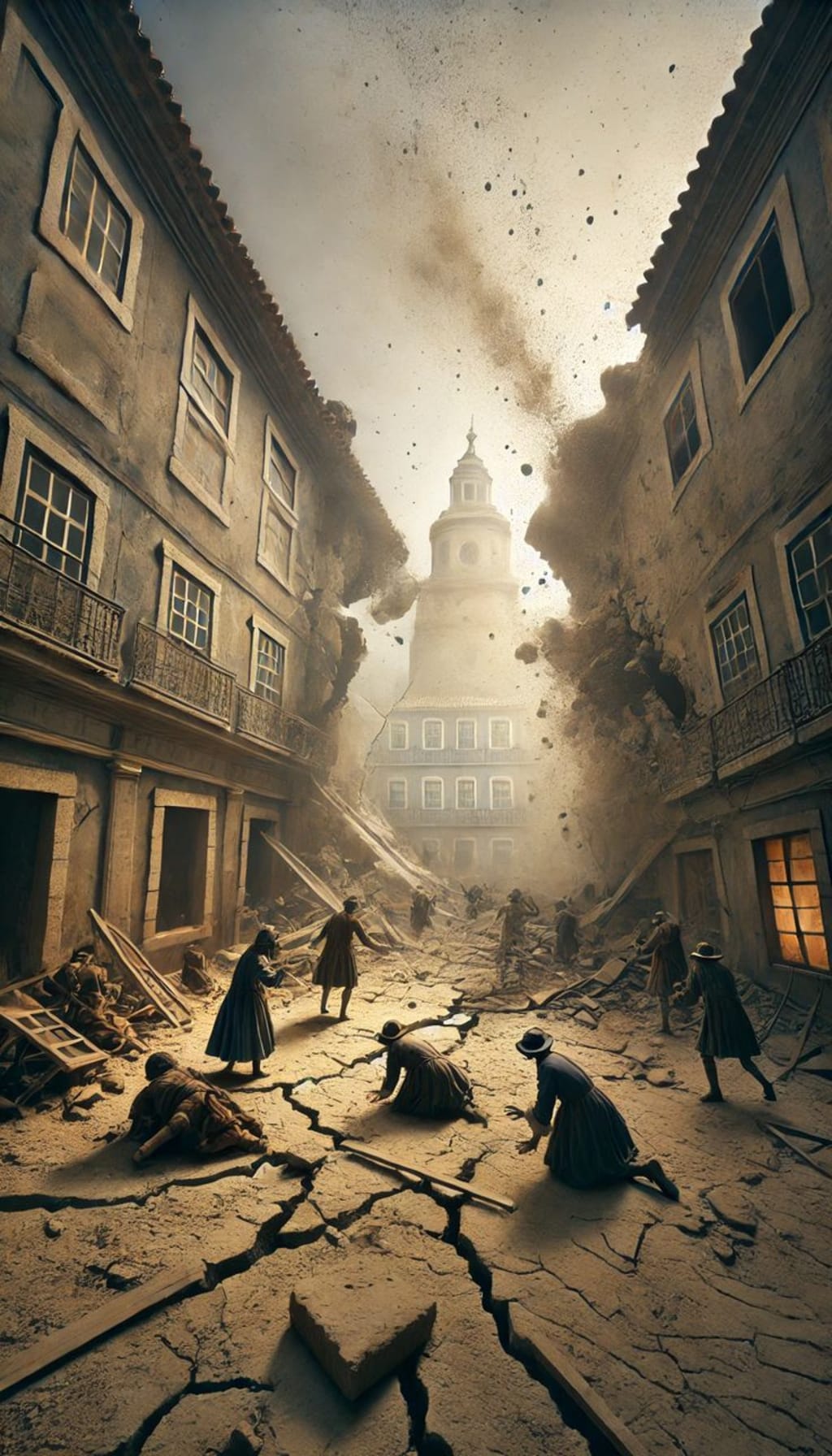
Picture this: it’s a crisp November morning in 1755, and Lisbon’s streets are buzzing. Dock workers haul crates of spices and gold, priests polish their sermons, and the city’s readying itself for All Saints’ Day, a big deal for its Catholic heart. The air’s thick with anticipation-festivities are about to kick off. But then, in a heartbeat, the ground growls. A rumble turns into a roar, and the world as Lisbon knows it crumbles. By sunset, tens of thousands are gone, and a once-magnificent city lies in ruins. This isn’t just a story of destruction, though-it’s the story of how one day shook humanity to its core, sparking a revolution in how we see the world. Curious yet?
I’ve always been fascinated by moments that tip the scales of history, you know? The Great Lisbon Earthquake of 1755 wasn’t just a natural disaster-it was a wake-up call. It hit with a force we can barely wrap our heads around, an estimated 8.5 to 9 on the Richter scale, releasing energy equivalent to 38,000 nuclear bombs. That’s not a typo. It was ten times more powerful than any other quake Europe’s ever seen. And yet, what grabs me isn’t just the sheer scale of it-it’s how it forced people to rethink everything. From science to philosophy to city planning, this earthquake didn’t just level buildings; it cracked open the foundations of human thought.
Let’s set the scene. Lisbon, 1755, is a jewel of Europe, a bustling port city teeming with life. On November 1, All Saints’ Day, churches are packed with worshippers, candles flickering in devotion. Suddenly, the earth trembles. At first, it’s subtle-church bells jingle, heads turn. But within seconds, it’s chaos. Buildings collapse like sandcastles, church domes crash onto congregations, and entire streets vanish into gaping fissures. The quake lasts six agonizing minutes. Six minutes! Imagine the terror-your world shaking like it’s trying to throw you off. And just when survivors think it’s over, a brutal aftershock hits, even fiercer than the first.
But the nightmare doesn’t stop there. Panicked citizens flee to the harbor, hoping for safety. Instead, they’re met with something eerie: the massive Tagus estuary, usually brimming with water, is draining away, exposing riverbed that’s never seen daylight. To the people of 1755, it must’ve felt like a biblical miracle-or a curse. They crowd closer, staring in awe. Big mistake. A colossal tsunami, triggered by a seafloor shift 200 kilometers offshore, roars in with 20-meter waves-think six stories high. It swallows the harbor and everyone in it. And as if that weren’t enough, fires erupt. All those devotional candles, knocked over in the chaos, spark a firestorm that rages for six days, suffocating people 30 meters from the flames. By the end, up to 50,000 people-nearly a fifth of Lisbon’s population-are dead, and 85% of the city’s buildings are gone.
I pause here because it’s hard to fathom, isn’t it? The scale of loss, the sheer randomness of it. A city full of devout people, celebrating a holy day, wiped out in hours. It’s the kind of tragedy that makes you question everything. And that’s exactly what happened. Back then, most folks believed earthquakes were God’s wrath, Sodom-and-Gomorrah style. But this one? It didn’t add up. Why would God strike during a religious festival, crushing worshippers while sparing the city’s red-light district? The brothels and taverns of the Alfama barely took a hit, while churches were obliterated. Thousands of children died. If this was divine punishment, it was a confusing one.
Enter Immanuel Kant, the German philosopher with a knack for big questions. He looked at Lisbon’s ruins and dared to ask: what if this wasn’t God’s doing? What if earthquakes were just… nature? He suggested they might come from gases shifting in underground caverns. Wrong theory, sure, but a bold leap. Kant’s writings on Lisbon were among the first to treat earthquakes as a scientific puzzle, not a heavenly tantrum. He basically kickstarted seismology before it even had a name. Across Europe, Enlightenment thinkers like Voltaire picked up the thread, wrestling with the idea that maybe the world wasn’t ruled by divine whims but by natural laws we could study. It was a radical shift, a spark that lit the fire of modern science.
Meanwhile, back in Lisbon, one man was determined to drag the city out of chaos: Sebastião José de Carvalho e Melo, better known as the Marquis of Pombal. This guy was a force-think crisis manager on steroids. With the king’s blessing, he took near-total control of Portugal. His first move? Restore order. Looters were running wild, so he built gallows across the city and executed them on the spot. Harsh? Yeah. Effective? Absolutely. He cleared rubble, burned bodies to prevent disease, and sourced food to keep survivors fed. He even slapped price caps on goods to stop profiteering. But Pombal didn’t stop at cleanup. He sent out questionnaires-hundreds of them-asking about the quake’s timing, direction, and aftershocks. This wasn’t just busywork; it was the first systematic study of an earthquake’s effects, ever. We owe much of what we know about 1755 to those surveys.
Pombal’s real genius, though, was in the rebuild. He didn’t want to just patch Lisbon up-he wanted to rethink it. Narrow, winding streets? Gone. He replaced them with wide avenues to act as firebreaks. He had engineers design buildings that could flex during a quake, testing scale models by having soldiers march around them to simulate tremors. The result was the Pombaline cage, a wooden lattice with diagonal bracing that gave buildings strength and flexibility. Hundreds of these structures went up, and many still stand today, surviving later quakes. Lisbon became Europe’s first city designed with earthquake resilience in mind-a blueprint we still use.
Reflecting on this, I can’t help but marvel at how one disaster reshaped so much. It’s not just about the body count or the rubble. Lisbon’s fall forced humanity to confront hard truths. We started to see nature not as a divine puppet show but as a system we could understand and prepare for. That shift-toward science, toward resilience-changed how we build cities, how we respond to crises, even how we think about our place in the universe. It’s humbling, really. One day in 1755 didn’t just destroy a city; it built the foundations of our modern world. So, I wonder: what other moments in history are quietly shaping the way we live today? What do you think?
About the Creator
KWAO LEARNER WINFRED
History is my passion. Ever since I was a child, I've been fascinated by the stories of the past. I eagerly soaked up tales of ancient civilizations, heroic adventures.
https://waynefredlearner47.wixsite.com/my-site-3
Keep reading
More stories from KWAO LEARNER WINFRED and writers in History and other communities.
Unveiled Secrets of the Deep: The Hughes Glomar Explorer's Hidden Mission
Imagine you’re a sailor in 1974, standing on the deck of a colossal ship, the Hughes Glomar Explorer, staring out at the endless Pacific Ocean. The world thinks you’re mining manganese nodules-those potato-sized lumps of metal supposedly littering the ocean floor. But you know the truth. You’re part of a covert CIA operation so audacious it feels like something out of a spy novel. The real mission? To snatch a sunken Soviet submarine from 16,500 feet below the surface, right under the noses of the Russians. This, my friends, is the wild, almost unbelievable story of Project Azorian. Ready to dive in?
By KWAO LEARNER WINFRED6 months ago in History
Once Wealthy Estates Now Lost to Ruins
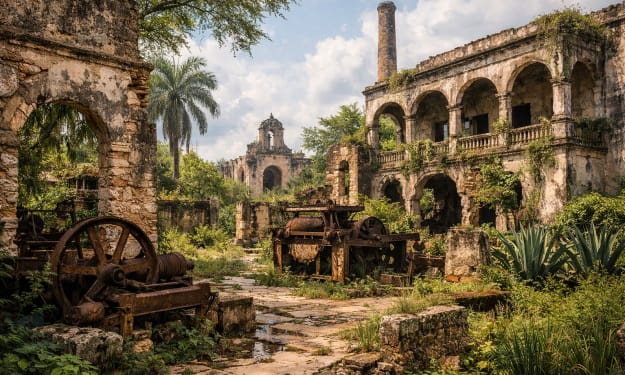
In the tropical landscapes of southern Yucatán, Mexico, the ruins of once-grand haciendas stand quietly among overgrown fields and crumbling stone walls. These estates were once the heart of a booming industry built around a plant that locals called “green gold.” For decades, the production of sisal fiber brought enormous wealth to the region, transforming the economy and shaping the lives of thousands of people. Today, however, many of these estates lie abandoned, their glory fading into history.
By Irshad Abbasi about 12 hours ago in History



Comments
There are no comments for this story
Be the first to respond and start the conversation.