
Hello everyone,
The Spanish Inquisition is one of the most notorious and misunderstood events in history.
For centuries, it has been synonymous with persecution, torture, and religious fanaticism.
But what really happened during this dark period? Let's uncover the secrets of the Spanish Inquisition and separate fact from fiction.
Origins of the Inquisition
The Spanish Inquisition was established in 1478 by the Catholic Monarchs, Ferdinand II of Aragon and Isabella I of Castile.
Its primary purpose was to maintain Catholic orthodoxy in their kingdoms, particularly following the Reconquista, the campaign to reclaim Spain from Muslim rule.
However, its scope quickly expanded to include anyone suspected of heresy, blasphemy, or other offenses against the Catholic faith.
The Secretive Tribunal
One of the most sinister aspects of the Spanish Inquisition was its secretive nature.
The accused were often arrested without warning and held incommunicado.
Trials were conducted in secrecy, and defendants were rarely informed of the specific charges against them.
This lack of transparency created an atmosphere of fear and paranoia, where anyone could be accused at any time.
Methods of Interrogation and Torture
The Spanish Inquisition is infamous for its use of torture to extract confessions. Some of the methods included:
- Strappado: The victim's hands were tied behind their back, and they were suspended by the wrists, causing intense pain and dislocation of the shoulders.
- The Rack: The victim was stretched by ropes and pulleys, leading to excruciating pain and potential dislocation of limbs.
- Waterboarding: Water was poured over a cloth covering the victim's face, inducing the sensation of drowning.
These brutal methods were justified by the belief that saving a soul from heresy was worth any physical suffering inflicted on the body.
Auto-da-Fé: The Public Spectacle
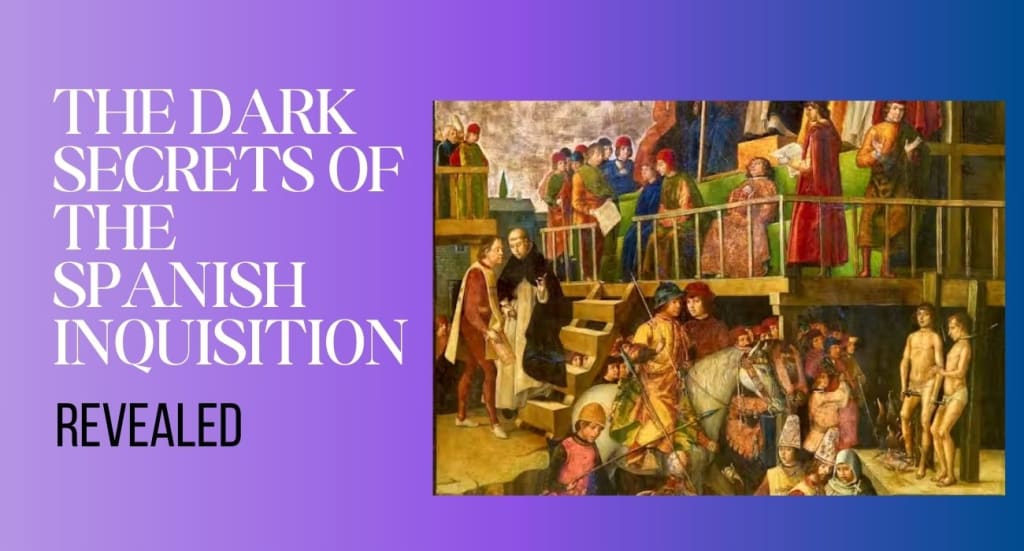
Auto-da-fé, meaning "act of faith," were public ceremonies where the sentences of the Inquisition were carried out.
These events often included public penance, the burning of heretical books, and in the most extreme cases, the execution of the condemned.
These spectacles were intended to demonstrate the power of the Inquisition and deter others from straying from the Catholic faith.
The Persecution of Conversos and Moriscos
Two groups particularly targeted by the Spanish Inquisition were the Conversos (Jews who had converted to Christianity) and Moriscos (Muslims who had converted to Christianity).
Despite their conversions, these groups were often suspected of secretly practicing their former religions.
The Inquisition relentlessly pursued them, leading to widespread fear and suspicion within these communities.
The Role of the Inquisition in Colonial Expansion
The Spanish Inquisition extended its reach to the Spanish colonies in the Americas.
It was used as a tool to enforce Catholic orthodoxy among the indigenous populations and European settlers alike.
The Inquisition's presence in the New World contributed to the suppression of indigenous cultures and the enforcement of colonial rule.
The Economic Motivations
While the Spanish Inquisition was primarily religious in nature, it also had significant economic motivations.
Confiscated property from the accused was often seized by the Inquisition, enriching the Crown and the inquisitors themselves.
This financial incentive led to the targeting of wealthy individuals, further fueling the perception of the Inquisition as corrupt and self-serving.
The End of the Inquisition
The Spanish Inquisition's influence began to wane in the late 18th century, with increasing criticism from Enlightenment thinkers who condemned its brutality and secrecy.
It was officially abolished in 1834, marking the end of nearly 350 years of religious persecution.
Legacy and Misconceptions
The legacy of the Spanish Inquisition remains controversial.
While it is often depicted as a uniquely brutal and repressive institution, it is important to recognize that similar inquisitorial practices existed in other parts of Europe..
The Black Legend, a propaganda campaign by Spain's rivals, further exaggerated the horrors of the Inquisition, shaping its dark legacy in popular culture.
Conclusion
The Spanish Inquisition is a complex and multifaceted chapter in history, marked by secrecy, brutality, and religious zealotry.
Understanding its true nature requires a careful examination of historical evidence and a willingness to separate myth from reality.
By shedding light on the dark secrets of the Spanish Inquisition, we can gain a deeper understanding of the human capacity for both cruelty and righteousness.
What are your thoughts on the Spanish Inquisition? Share your insights and questions in the comments below. Let’s delve into history together and learn from its lessons.
Stay curious and informed...
About the Creator
Keep reading
More stories from Vimal Jadon and writers in History and other communities.



Comments
There are no comments for this story
Be the first to respond and start the conversation.