
The Cola Wars: How America Fizzed, Fought, and Foamed From the 50s to the 90s
An Iron Lighthouse Expose

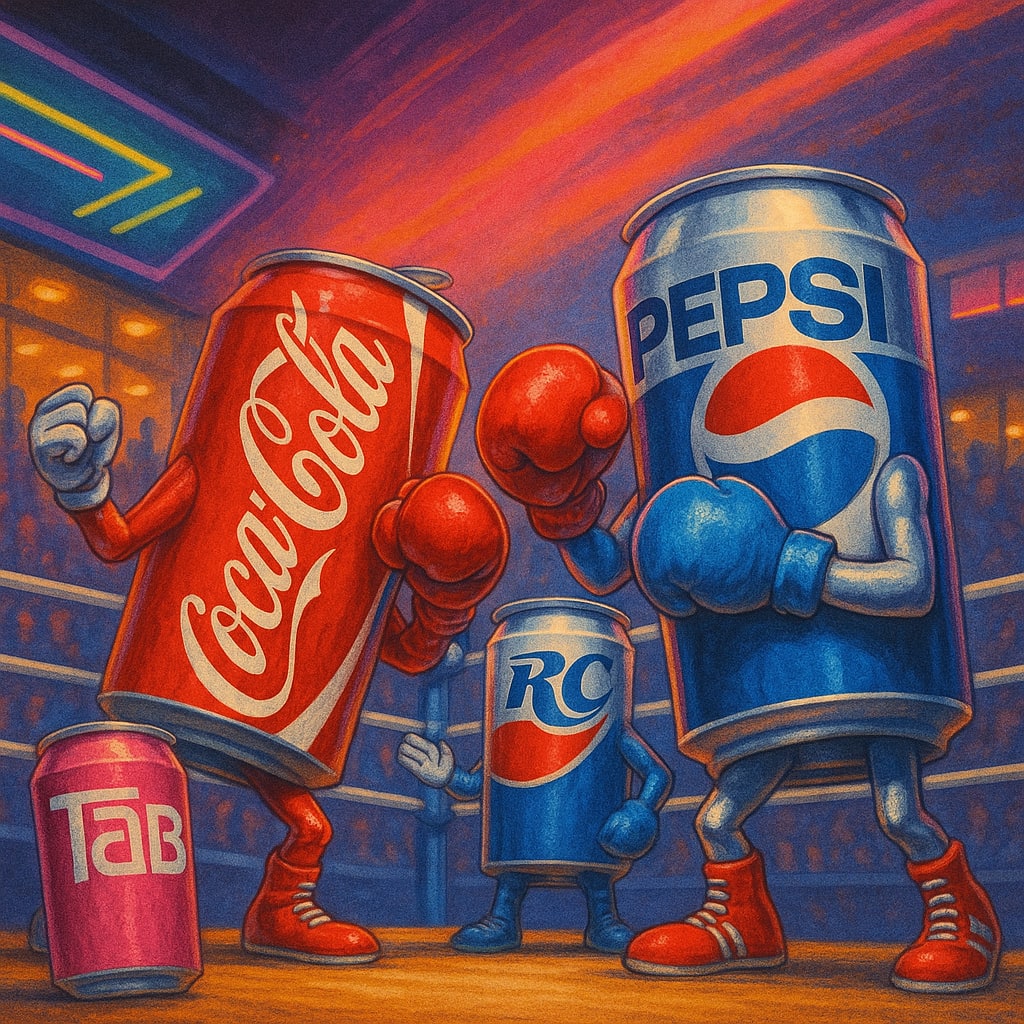
There are few battles in history that were waged not with bullets, but with bubbles. While empires rose and fell, while presidents debated policy and kids memorized baseball stats, a different kind of war rumbled quietly beneath the surface of American life. It was fought in grocery aisles, TV commercials, vending machines, and lunchboxes. It was Coke versus Pepsi... two titans of taste locked in a struggle for the soul of America.
From the 1950s to the 1990s, these brands weren’t just selling drinks. They were selling identity, belonging, rebellion, and nostalgia by the bottle. And along the way, they sparked a fizzing carnival of failures, forgotten flavors, and moments so bizarre they could only happen in America. This is the story of the Cola Wars.
Part I – Clash of the Titans (1950s–1960s)
By the mid-20th century, Coca-Cola was the American drink. Born in Atlanta in the 1880s, Coke had long since become synonymous with wholesome tradition. Its curvy glass bottle was a symbol of reliability, a constant through the Depression and World War II. Soldiers drank it overseas, and when they came home, Coke was still there waiting. Red, white, and refreshingly patriotic.
But then came Pepsi. Founded in 1898, Pepsi had always lived in Coke’s shadow until it made a bold pivot in the 1950s and 60s. Instead of chasing Coke’s traditional Americana, Pepsi branded itself as youthful, modern, and cool. It wasn’t your grandpa’s cola... it was the drink of the “Pepsi Generation.”
Meanwhile, a scrappy underdog named RC Cola was throwing elbows in the background. Royal Crown innovated like crazy: first to sell in cans, first to offer diet cola, and even experimented with high-tech vending. For a brief time, RC looked like it might muscle into the top tier. Spoiler: it didn’t, but it sure made things interesting.
These years set the tone. Coke was the stolid old guard; Pepsi was the upstart rebel; RC was the wildcard. And America, freshly addicted to TV commercials and drive-in culture, was ready for the fight.
Part II – Pop Icons (1970s)
If the 50s and 60s were the opening rounds, the 70s were when the gloves came off. Marketing budgets ballooned, jingles ruled the airwaves, and cola wasn’t just a drink, it was a movement.
Coke struck first with one of the most famous commercials in history: “I’d Like to Buy the World a Coke.” A chorus of multicultural singers on a hilltop promised harmony through carbonation. It wasn’t just soda, it was world peace in a bottle. America swooned.
But Pepsi counterpunched with the Pepsi Challenge. Mall kiosks, shopping centers, and grocery store lobbies across the country hosted blind taste tests. Ordinary Americans sipped two unmarked cups and were shocked... shocked!... to find they preferred Pepsi. The results were televised like breaking news. The implication was clear: Coke was stale, Pepsi was fresh.
Then came the celebrity endorsements. Pepsi became synonymous with pop culture, signing stars like Michael Jackson, Madonna, and Lionel Richie. The King of Pop moonwalked across Pepsi ads, embedding the brand in music, fashion, and youth culture. Meanwhile, Coke doubled down on “classic” Americana: baseball, picnics, and good old-fashioned patriotism.
By the late 70s, Pepsi was closing the gap fast. The Cola Wars were officially a dead heat.
Part III – The New Coke Debacle (1980s)
Then came 1985 - a year that lives in infamy.
With Pepsi gaining ground, Coca-Cola panicked. Executives huddled in secret, ran blind tests of their own, and concluded that the only way forward was to change the sacred formula. On April 23, 1985, the company announced “New Coke.”
The backlash was instant. Lifelong Coke drinkers felt betrayed. Protest groups formed with names like “Old Cola Drinkers of America.” People hoarded the last bottles of the original formula, storing them in basements like fine wine. Letters poured into headquarters. One Texas lawyer even sued Coke for “taking away his heritage.”
It became clear: Coke hadn’t just tinkered with a recipe, they had violated an emotional contract with America. Less than three months later, Coke surrendered. On July 11, 1985, “Coca-Cola Classic” returned to store shelves, and the country collectively breathed a carbonated sigh of relief.
Was it all a marketing stunt? Some conspiracy theorists still believe it. But one thing was clear: the Cola Wars had gone nuclear.
Part IV – Side Players & Forgotten Fizz
While Coke and Pepsi duked it out, the sidelines were crowded with strange, wonderful, and doomed competitors.
- Tab: Released by Coke in 1963, Tab was the pink-can darling of secretaries and dieters through the 70s and 80s. It tasted like battery acid mixed with regret, but it had a cult following.
- Jolt Cola: “All the sugar, twice the caffeine.” Beloved by college students, hackers, and insomniacs, Jolt was basically rocket fuel in a can. It became the unofficial soda of the early internet era.
- Fresca: A grapefruit soda with an oddly sophisticated reputation, Fresca carved out a tiny niche that survives even today.
- Crystal Pepsi: Launched in the early 90s, it was marketed as pure, clean, and futuristic. It lasted about as long as a fizz in the sun.
- OK Soda: Coca-Cola’s bizarre 1993 attempt to appeal to Generation X with nihilistic ads, creepy mascots, and self-deprecating slogans like, “Don’t be fooled into thinking there’s any meaning to this.” Spoiler: people weren’t fooled—it flopped spectacularly.
- Regional oddities: Frosty Root Beer, RC 100, and countless mom-and-pop sodas, dotted America’s shelves before fizzling into history.
Each one was a story: a little burst of weirdness that fizzed brightly before going flat.
Part V – Soda & Society
The Cola Wars were never really about taste. They were about identity.
Coke was tradition, wholesomeness, and family picnics. Pepsi was youth, rebellion, and the pop charts. Diet sodas emerged as a reflection of America’s growing obsession with body image, particularly marketed toward women in the 70s and 80s.
And then there were the “extreme” sodas of the 80s and 90s: Jolt, Surge, and later Mountain Dew’s over-caffeinated spinoffs. These weren’t about refreshment... they were about adrenaline, a liquid soundtrack for skateboards and video game marathons.
Soda wasn’t just a drink. It was a mirror of America’s shifting self-image.
Part VI – The 1990s Capstone
The 90s marked both a high point and a turning point.
Pepsi’s dominance in pop culture peaked. Until a commercial shoot turned tragic, when Michael Jackson’s hair caught fire during a pyrotechnic stunt. Though he recovered, the incident haunted the brand.
Coke, meanwhile, leaned into family-friendly nostalgia with its holiday polar bear commercials, instantly iconic, instantly American.
Crystal Pepsi dazzled briefly before vanishing. Surge tried to claim the mantle of “extreme,” becoming a cult hit among gamers and kids until it too was discontinued.
By the late 90s, the battlefield was shifting. Bottled water and energy drinks were on the rise. The Cola Wars still raged, but the world was changing.
Conclusion – What Remains in the Glass
The Cola Wars didn’t end with a victor. Coke and Pepsi both survived, RC limped along, and countless others fell flat. But the legacy isn’t in sales charts, it’s in the memories.
It’s in the taste tests at the mall. The jingles stuck in your head. The pink Tab cans in your aunt’s fridge. The thrill of trying Crystal Pepsi and pretending it didn’t taste like sadness. It’s in the fizz that defined whole decades of American life.
The Cola Wars remind us of a time when even our sodas carried weight. When a brand could mean tradition, rebellion, or belonging. It was silly, it was sweet, it was sticky, and it was unmistakably American.
And maybe that’s the real thing...
About the Creator
The Iron Lighthouse
Where folklore meets freeway. A guide to the strange heart of the American backroads...
Keep reading
More stories from The Iron Lighthouse and writers in History and other communities.
The Forgotten Cold Chain: America’s Iceman Era
There was a time... not so long ago... that the daily hum of American life depended on a man with a horse, a wagon, and a block of frozen water. Before refrigerators, before humming freezers in every garage, there was the iceman. He clomped through neighborhoods at dawn, iron tongs swinging, hoisting hundred-pound slabs into waiting iceboxes. For children, he was a summertime hero. For families, he was survival. For history, he was an empire of frost that melted almost overnight.
By The Iron Lighthouse4 months ago in History
"Game of Thrones: A Tale of Power, Betrayal, and Destiny"
In the vast and divided land of Westeros, power was everything. Noble houses ruled their regions, bound together by fragile alliances, old grudges, and a constant hunger for the Iron Throne—the seat of supreme authority. Though summer had lasted for many peaceful years, whispers of change moved with the cold wind. Winter, long feared, was coming.
By The best writer 6 days ago in History
Why Pastor Collar Shirts Are Essential for Modern Church Leaders
In today’s modern church, appearance matters just as much as message. Church leaders are expected to look respectful, approachable, and professional at all times. Clothing plays a big role in creating this image. Among all clerical outfits, pastor collar shirts stand out as one of the most important garments for church leaders. These shirts are not only a symbol of faith and authority, but they also provide comfort, confidence, and identity.
By Sameera eclergys4 days ago in History



Comments
There are no comments for this story
Be the first to respond and start the conversation.