
The bitter Heart of Africa
Reasons Africa Must Rise again
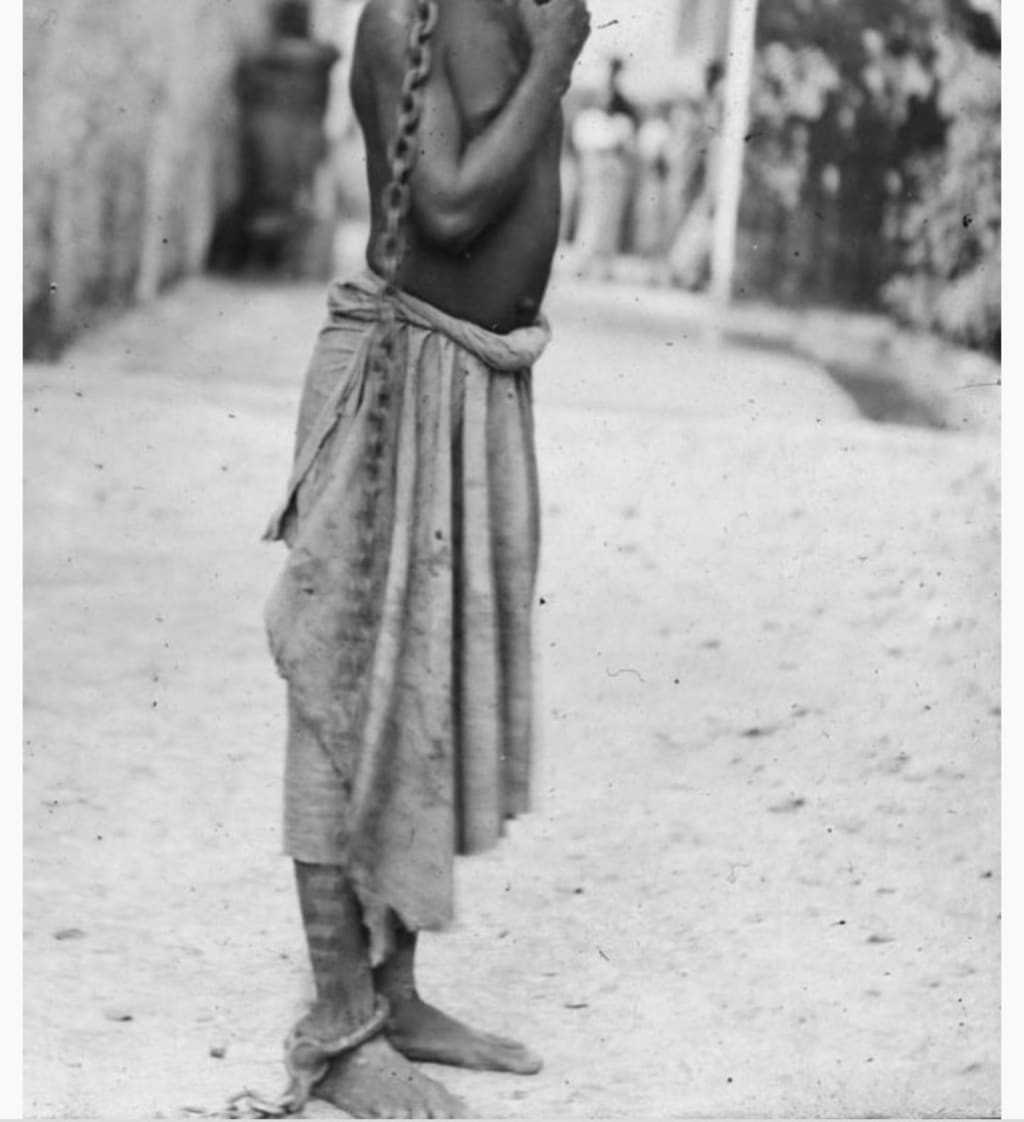
The african continent is famous for its
poverty,
but many people don't know the complete
reason why
africa is so poor while we all have a
vague idea such as corruption,
colonization or foreign interference
all these reasons ignore why any of
these things can happen in the first
place.
So in this article, i seek to change that
we will look from the
point when african countries were rich
and powerful,
how over the centuries africa lost its
wealth
and why africa hasn't been able to crawl
out of its poverty.
While so many other countries and
foreign colonies have
and to do this we need to start in the
14th century
with eastern africa connected to the
indian ocean trade.
While west africa was home to the
richest person to have ever lived,
a man named mansa musa while many
historians throughout history have
concluded that
africa barely has any history aside from
mummies and pyramids.
It is important to remember that for
most of history
much of africa was as well connected to
the rest of the world,
as europe or asia they developed
metallurgy that was on par with europe
and asia
developed complex mathematical theories
and had intricate systems of governments
such as city-states kingdoms and empires
so what changed well in the 14th and
15th century.
Africa's prosperity began to fall behind
that of the rest of the world,
this was because of two external forces
the ottoman
empire and the western european empires.
We will start with the ottoman empire
because the ottomans required slaves, and
the way they got their slaves
was through war they would go into
villages
towns and cities to capture the men
women and children to be sold
as slaves back home and the easiest and
cheapest place to get new slaves was
eastern africa and so slave traders were
able to earn
a lot of money .
By buying or capturing
east africans to sell them
to the ottomans , this trade continued all
the way into the 19th century.
Something similar was happening with
western european empires,
at first european traders came to africa
to trade salt in exchange for gold and
ivory.
Later europeans sailed around africa to
go to asia,
as a result west africa became an
important location for european traders
to stock up on supplies,
on the way to and from asia soon after
europeans tried going to east asia
directly by crossing the atlantic,
but instead they stumbled upon the
americas.
In these , americas the europeans set up
colonies
and these colonies were supposed to have
the same system of government as that of
europe with nobility.
Barons clergy knights and peasants,
but those europeans had a problem the
native americans
who were supposed to become the new
peasants were dying from diseases, like
smallpox, measles
bubonic ,plague and many more and a dead
peasant
is an unproductive peasant so where were
they going to find new peasants for
american colonies.
Well they found them on the west african
slave markets
at the time west africa had slavery but
it wasn't the type of slavery we often
think of,
a slave often had similar rights as
non-slaves.
Their children weren't automatically
slaves themselves,
and they were often part of the family
structure rather than a separate worker
and so european traders began buying
slaves from west africa.
West africans were happy to sell
european slaves because their own gold
mines were drying up in the 15th century
and they were looking for a new way to
earn money,
but how do you get new slaves well you
go to war for them
various african countries went to war
with their neighbors.
Captured their citizens and then sought
those citizens to the europeans
prominent slaver countries were the
ghana empire,
the mali empire, the bono state and the
songhai empire
from the perspective of african rulers
this seemed like a good deal
they were weakening their rivals while
earning lots of money in the process.
And so over time slavery changed from a
relatively small market where slaves had
rights,
into a large system of warfare where
slaves became property to be sold
to the highest bidder this evolved into
a system where slave traders would go to
africa to buy slaves and put as many as
they could fit onto their ships.
They would then sail to the americas
where those slaves were sold to work to
death.
In the fields , those slave traders then
bought raw materials those slaves
produced such as
sugar cane, cotton or cocoa sail to
europe
and sell those raw materials for a
profit in europe.
Those materials would be turned into
manufactured goods,
like rum clothing or weapons the traders
then bought those manufactured goods
and sailed back to africa to sell those
manufactured goods and use the profits
to buy new slaves.
This was a good deal for everybody
except the slaves,
the americans received slaves to use in
the plantations
the europeans received raw materials and
the west africans
received manufactured goods and the
plight of the slaves was not an issue to
any of them.
While at times europeans tried taking
slaves by force,
this always failed because the african
kingdoms were far too strong at the time
and so they maintained friendly
relations which whichever country was
willing to sell slaves.
over the centuries empires collapsed
into civil wars
and the slave traders were more than
willing to buy their former slave
partners.
As slaves to be shipped after the
americas and so as empires rose and fell
there were always merchants willing to
buy slaves,
such has happened in the kingdom of
congo which fell apart into various
factions
each of those factions needed weapons
and money to fund their war effort and
so they captured slaves from
other parts of the former kingdom of
congo and sold them to portuguese
traders.
As the europeans founded more and more
colonies in the americas,
the more slaves could be sold and the
richer the trader became
and this trade had a long-term effect on
the economies of africa,
both in west africa as well as east
africa with the ottomans
because before industrialization the
economy of a country was determined by
the amount of people
living in the country the more people
you had the larger your economy was.
And if you had a large economy then you
could have a small portion of your
population
focus on producing things other than
food in europe for example craftspeople
produced all sorts of things from
alcoholic drinks,
steel muskets cigars and of course that
sweet
sweet delicious chocolate.
But it took centuries for those
industries to fully mature
but in africa these industries never
matured like they did in the rest of the
world
because in africa craftspeople were
enslaved
and this had a tremendous impact on the
african economies
while european asian and american
industries kept growing and kept
improving.
Africa's industries stagnated and soon
they could no longer compete with
european and asian imports,
and the african industries became small
and insignificant
because you could buy better and cheaper
products from asian and european markets.
But you might be asking yourselves why
did the africans go along with this,
well because they had to when you have
several warlike empires surrounding you,
you yourself have to invest in a strong
military to protect yourself
but if you put more money in the
military it means there is less money
for you to spend on your own economy.
So if an african leader realized what
was going on,
they couldn't invest in industries
because they had to protect themselves
and so all the way into the 19th century
africa's economies were
slowly declining because the slave trade
slowly destroyed the african economies
while making a huge profit for those who
captured and sold slaves.
But why did western europeans and the
ottomans weakened africa for hundreds of
years,
well because it was convenient for the
people in charge
at that time it wasn't some grand plan
but instead
each government trader and company saw
an opportunity
in africa to earn profit this profit
came at the expense of african long-term
wealth.
With most of the people involved
probably not even realizing this
and when a particular region becomes
weaker there are always the strong who
will exploit the weak,
and in the 19th century three major
events happened that would solidify
african poverty the first was the end of
slavery
all of a sudden african slave traders
were losing customers
because slavery was becoming illegal
across the World.
And this was a big problem for african
countries,
because their economies relied on
exporting slaves
and importing foreign goods but now
they lost their main source of income.
And because africa had not built up any
other industries because of the slave
trade,
it did not have another sorts of income
with which
it could trade with the outside world, so
africans could no longer buy
many of the goods and tools they relied
on and as a result
the african economies slowly collapsed
in the 19th century.
The second major event in the 19th
century was industrialization,
europeans and americans started to out
produce the rest of the world
africa became insignificant in world
affairs by the middle of the 19th
century.
And many of the stereotypes about
africans such as, that
they have no history no established
government and
various racist beliefs came about in
this time period.
When africa had become weak with little
to offer the outside world
and the outside world, taking little
interest in africa
and then the third major event happened
in the 1870s
with africa's economy in shambles and
european industrialization in full swing.
Europe all of a sudden had the ability
to transport vast
amounts of heavy materials across oceans
before it would not be profitable to
transport heavy oars from africa to
europe,
because the technology simply wasn't
available yet
to make it profitable but steam
technology meant trains,
steamboats and factories that could
transport
and produce goods at a profit.
And in 1871 the king of belgium decided that belgium
should have a colony,
looked at the world map and noticed that
africa was both weak
and available and so once again
the strong took advantage of the weak.
Soon other european nations joined
and almost all of africa was colonized
by western and southern european empires,
until africa looked like this and like
this after world war one
and this had three significant results
for africa.
The first is the increased poverty
european colonizers , cut little for the
people living in the colony
africans were driven out of the most
fertile regions to make space for
european settlers.
Plantations were built for africans to
work, and for europeans to own
and the taxis africans paid were rarely
spent on improving their lives,
but instead on continuing their own
oppression
the european colonizers were only
interested in extracting wealth from
their colonies
by constructing roads, railroads and
ports to transport raw materials to
europe and north america.
In essence whatever wealth africans had
were systematically taken from them and
handed over to european settlers,
a prominent example is the congo free
state
where they worked millions of people to
their deaths.
By the way if you're curious what the
free stands for in the congo free state,
it meant free of oversight so the rulers
of the colony could exploit the locals
without
any interference.
The second is the infrastructure which was designed,
specifically to transport raw materials
to their european overlords the first
president of togo
said ,it quite well the effects of the
policy of the colonial powers
has been the economic isolation of
peoples who live
side by side in some instances within a
few miles of each other.
Although, i can call paris from my office
telephone here in la may
i cannot place a call to lagos in
nigeria
only 250 miles away again while it takes
a short time to send an
airmail letter to paris it takes several
days for the same ladder to reach akra,
a mere 132 miles away railroads rarely
connect at international boundaries
roads have been constructed from the
coast inland .
But very few join economic
centers of trade,
the productive central regions of togo
benin and
ghana are as remote from each other as
if they were
on separate continents.
And the third result was that ,by
replacing all the african leaders with
european leaders
that africa was losing vital skills in
terms of governing themselves;
such as business managers ,government
leaders or
accountants as well as practical skills
such as mechanics,
construction workers or medical
professionals.
And that was a problem when africans
started demanding their independence
after world war ii,
when protests riots and rebellions
popped up across the continent
until the colonizers realized that a few
million europeans
simply couldn't control over 200 million
africans.
If those africans refused to cooperate,
and so between 1945 and 1975
almost every african country became
independent
at the time it was thought that if
africans would once again
rule africa that wealth would follow
soon.
But this didn't happen, but why not
history has shown us that former
colonies can become wealthy countries
such as new zealand, ireland or south
korea.
Yet not a single country in africa is
what we call
a developed country, and the reason for
this
is the way in which the colonizers left
africa
because when people don't have the
skills to run a country,
when communities don't connect to each
other and when prosperity is already
rare.
It becomes very difficult for the
leaders of that country
to bring prosperity to that country,
but at the same time leaders of african
independence movements
promise the african people prosperity
after independence.
So how were african leaders going to
fulfill this promise of wealth and
prosperity,
well for most african countries the
solution was an economic system
called african socialism the way this
system works
is that many industries would be
controlled by the national government;
such as mining, construction, plantations
etc .
It was would then use all of the
nation's resources to industrialize,
because at the time
manufacturing jobs paid higher salaries
than farming jobs
and so decided that the best way for
africa to become rich
was to replace low-paying jobs in
agriculture and mining.
With high-paying jobs in factories,
it made foreign goods more expensive by
putting extra taxes
on those goods arguing that if foreign
products are more expensive
then people will need to buy goods from
their own country instead.
The leaders were hoping that foreign
investors would come to their countries
because those foreign businesses
wouldn't have to pay those extra taxes,
if they just moved some of their
factories to africa
and luckily for africa at the time they
gained independence during a cold war
and so they could receive foreign aid
from either the west
or the soviet union in exchange for
being on their side in the cold war.
And while of course every african country
had different economic policies
they were all kind of similar to this,
but african socialism simply didn't
work first of all the trade restrictions,
meant that african countries couldn't
sell products to each other
meaning that it was hard to find
customers to buy any products made in
africa.
As a result none of the industries could
grow large enough to be able to compete
with the industries of north america,
europe or east asia,
and so nobody else wanted to buy african
goods
because they could get those same goods
better and cheaper
from other countries.
Secondly a single large government isn't able to
adapt to changes in world markets
as quickly as hundreds of smaller
businesses,
meaning that centrally planned economies
will always be
less efficient than economies which have
a lot of
different businesses competing with each
other.
Thirdly africans simply lacked the
skills and education required to work
in manufacturing jobs in the first place,
meaning that they were far less
efficient
than their better educated counterparts
in the rest of the world.
For example out of the 200 million black
africans in the 1950s
only 8 000 received secondary education,
200 a university education
and one third of the student age
population
went to primary school.
So it would take
decades before enough qualified
professionals would join the job market,
and so african countries select the
people needed to make their countries
thrive.
The fourth reason why it didn't work is
not so much about african socialism
itself,
but about the continent of africa
because africa's landscape is harsh
with some places experiencing droughts
lasting years
such as the drought which lasted from
1968 to 19 73
causing large food shortages while other
parts have locusts
and red-billed cuellar birds which make
agriculture nearly impossible.
The fifth reason was disease yellow
fever, smallpox ,sleeping sickness and malaria.
About a few of the diseases which
plagued african development,
and while smallpox was being eradicated
new diseases were spreading
such as river blindness where worms live
inside your eyes
and have become the second largest cause
of blindness worldwide.
Orteg bilharzia caused by a worm which
likes to live
in rivers, it infects the urinary tract
or intestines
which can lead to kidney failure,
infertility
and in children can cause poor growth
and learning disabilities
all of these diseases are easily
preventable in rich countries with
access to water sanitation facilities
and modern medicine.
But because africans were poor they
couldn't afford the doctors clinics and
medicine,
they needed to fight those diseases and
so a combination of trade barriers
inefficient governments a lack of
education
harsh environments and disease meant
that this system was doomed to fail from
the beginning.
There was simply no way for any african
nation to reach wealth and prosperity
at that time, because of the
underdeveloped countries they inherited
from their former colonizers.
But this raises a new question why did
african countries choose this system
in the first place well the reason is
that,
this was a system which they inherited
from their former colonizers
where the colonial government controlled
nearly every aspect
of the colony's economy and if they
wanted to switch to a free market system
like western europe ,east asia or north
america.
Then they would need business people and
entrepreneurs
to set up new businesses but the problem
with this
is that africans weren't allowed to run
businesses under colonialism,
so the entrepreneurial attitude didn't
exist
on top of that due to colonialism
africans were never trained in modern
skills.
So if you wanted to open a factory for
example it would be impossible to find
qualified employees who knew how to run
the machines and factories,
in today's world we know the answer to
this dilemma because we've seen
countries like singapore,
vietnam and china in similar
predicaments.
But back in the 1940s through 70s there
were no such examples to follow
except for countries like japan and the
ussr,
who had gained economic development
through strict government control.
And so africa's leaders thought that
african socialism
was the best way to create wealth and
prosperity for their countries
except those two countries did so
through the deaths of
millions and already had an educated
population when they began their
economic development projects.
Let's compare this to a colony which did
become wealthy after independence south
korea,
they decided to focus on just a few
industries such as electronics,
agriculture and steel and only putting
trade barriers
on those products .
South korea would then
trade those products with things it
didn't produce itself,
as a result south korea became a world
leader in things like electronics
and has become one of the richest
countries in the world.
But this only explains why africa didn't
become wealthy
right after independence ,however after a
few decades
africans would have better education and
would be able to
indeed set up african businesses using
african labor
to create african industry yet this
didn't happen
until the 21st century.
So why didn't
this happen earlier
well this has a lot to do with the
corruption that emerged after
independence,
shortly before independence most african
colonies
became democratic and these democracies
were very
unstable because they had only been
around for a few years in most cases.
We still see this today where recent
democracies tend to be the least stable
democracies,
and most african nations were not at all
united.
Some countries were lucky in that most
people spoke the same language,
while other countries had hundreds of
different languages
and good luck trying to run a political
campaign in over a hundred languages.
So instead politicians realized that
they could more easily win votes
if they targeted specific ethnic groups,
as a result politics was divided along
ethnic lines and african countries
became more
and more divided with each election in
the 1960s and 70s.
So now, groups of people were not only
divided based on ethnicity
but also separated politically based on
where they were born
from the perspective of a politician.
This made perfect sense,
if you want to win votes appeal to
certain ethnic groups
but from the perspective of the country
as a whole it made the country
more difficult to govern over time.
And if a candidate decided to appeal to the whole country,
instead of specific ethnic groups then
they would lose elections
and so through a natural process african
nations tended to become more divided
after independence.
All thanks to the social and political
systems left behind by their former
colonisers,
a prominent example of what is went
horribly wrong was rwanda
with the rwandan genocide where over
half a million members of the tutsi
ethnic group were massacred
along with many other crimes against
humanity.
Once a party got into power they would
try to keep the power for themselves,
many africans saw democracy as nothing
more than a mess of infighting
with opposition parties abusing their
power
to hinder the greater national interest.
Therefore a single party system was
created in many african nations
in the years following independence by
crushing the opposition
and in countries with hundreds of
different cultures and languages.
It makes sense that you wouldn't want to
deal with all of them
vying for power by the 1980s the elites
had taken full control over the
political system in most african
countries,
and so very little changed after
independence
with european elites replaced with
african elites.
And those new elites were concerned that
they would be overthrown in a coup,
so how are they going to keep themselves
in power?
Well by taking the money intended for
economic development
and handing them out as salaries to
powerful government officials
to keep them happy enough that they
wouldn't start a rebellion.
But whereas colonies had oversight from
their european government,
who would fire anyone getting too
corrupt the new leaders had no such
oversight
and to show just how incompetent some of
these governments are
in the central african republic.
The government didn't even keep
proper records of financial transactions
by 1964 senegal spent 47 percent
of the government budget on the elites,
58 percent in ivory coast
and 65 percent in the homemade now
called benin.
And if outsiders wanted access to
african resources,
all they had to do was bribe government
officials to get access
and so african governments and companies
started paying money
to the african elites to gain access to
the resources.
Rich nations needed to run their own
economies,
as a result the elites became richer
while the poor
became even poorer so if you're an oil
company
all you have to do is bribe government
officials and you can extract
all the oil that you want.
The elites would get a portion of the profits
while the people would see no benefits
from resources taken
from their own country ,this is a system
which is still
active in many parts of africa to this
day
and if you're a country or company who
does not want to give
money to corrupt politicians then there
will always be somebody else who
is willing to pay as a result anyone who
thinks morality
is more important than those resources,
will always be
by the ones who are willing to pay the
bribe.
Thus you create a system where world
leaders who are willing to pay those
bribes
will always have an advantage over those
who won't pay bribes,
and over time bribes had become the norm
in africa, the africans were not stupid
of course
and saw what was happening they would
often protest or even start rebellions
to stop their own exploitation.
But in the 1960s african countries did
not have
a strong enough military to keep the
peace,
so who did they call upon to restore
order,
well they're former colonizers
the french and british in particular
suppressed rebellions and protests
across africa in exchange for greater
access
to african resources.
For example ,in 1962 french troops broke up fighting
in what is now called the republic of
congo
and put down a rebellion in cameroon.
The british meanwhile suppressed mutinies in
kenya and tanzania
by 1965 these military interventions
became common across africa
from algeria to congo ,benin
the central african republic, upper volta,
ghana,
nigeria ,ethiopia all independent
countries
and all had european troops stationed
there to secure
european access to african resources.
African nations experienced around 40
successful coups within the first two
decades after independence,
and so africa gained a reputation for
being a very
unstable country so unstable in fact
that almost nobody wanted to invest in
africa anymore
except for their resources and this
highlights another issue.
People think of africa as a single
entity a continent filled with poverty
and war,
so when someone hears about for example
boko haram in nigeria
it is often grouped with the rest of
africa as just being another war
in a continent filled with war yet what
most people don't realize.
Is that the area in which they operate,
is over a thousand kilometers away from
nigeria's economic centers
and has almost no effect on business
they are further away
than amsterdam is from warsaw but
companies will still refuse to do
business
in africa because of this belief.
And this creates a cycle, people group
africa together as a poor continent
resulting in less business which results
in africa
staying in poverty it is for this reason
that throughout this article,
i have used the words most almost all or
few quite a lot to show that africa is a
diverse area and simply
cannot be grouped together in most cases.
Due to this diversity in peoples
landscapes and cultures despite
all these issues some things did improve
in africa,
by the 1980s african politics started to
stabilize with fewer coups
primary school enrollment went from 36
percent to 63,
secondary school from 3 to 13.
Life expectancy rose from 39 to 47
and the medical professionals per person
doubled
on the whole though, the average african
was becoming poorer.
However africans were receiving better
healthcare and education
and this would be very important for
africa by the 1980s,
because in the 1980s africa faced three
major issues.
The first was that the infrastructure it
did have
started to break down, meaning that raw
materials became far more difficult to
export.
The second was that africans who did
receive a proper education
decided to move to another country where
they would receive
a better salary meaning that africa was
losing its smartest
and best educated people
And the third
was the fall of the soviet union by the
1980s the soviet union decided to stop
participating in the cold war
and focus on its own economy as a result,
it was no longer sending
as much money to african allies.
In turn western countries decided that
they were also going to send less money
to africa,
so all of a sudden african leaders no
longer had enough money to keep
themselves in power
with the system of bribes and so african
leaders decided to ask western nations
for financial aid.
But this time those western nations were
no longer interested in giving money
directly,
instead african nations would have to
sign loans with rich countries
and in exchange african countries would
have to reform their economies
in such a way that it would become
easier for companies to do business
in those countries and while various
industries were privatized.
And free markets emerged most african
countries underwent few reforms,
and the reason they underwent so few
reforms is that african dictators
had an idea they could pretend to
privatize their economy
by selling the privatization to the
highest bidder.
Basically doing what they had been doing
for the past couple of decades
bribes in exchange for access to african
markets,
so in effect nothing changed
except that this time western
institutions supported this process
by rewarding those dictators through
foreign aid packages
making bribes even more profitable
in nigeria.
For example the government
privatized
various state-owned businesses of which
80 percent of the shares were owned by
the leaders of the country,
in effect not changing anything at all
in kenya,
uganda, zaire, guinea and senegal they
sold government businesses
to the friends and family of government
leaders.
The only businesses which actually saw
significant investments
were oil and mineral extraction which
just like in the 60s and 70s
had been sold off to the highest bidder,
by bribing government officials
as a result the 1980s is often dubbed
africa's last decade and why africa
remained poor
until 1989 because protests were
erupting all over the world.
The soviet union ,eastern europe, taiwan
south korea, china and africa.
Africans were once again protesting
their own oppression
and so rich countries decided to switch
tactics
instead of giving money to dictators for
fake privatisation,
they instead gave money to countries who
reformed their government to be more
democratic.
And so dictatorships faced two issues at
once
on the one hand their own people were
getting restless,
while on the other hand their income was
decreasing
and so the elites allowed for a small
amount of reform
enough to appease the people and the
rich countries.
But not enough that they would be
removed from power
spread across africa to zaire, ghana,
nigeria ,togo ,gibbon, cameroon,
kenya, uganda, malawi ,south africa
until it spread across the continent
with of course
various exceptions while some
governments resisted.
Such as for example,
the central african republic
most did democratize at least slightly
each country had their own struggles of
course but in general the continent made
slow but steady progress towards
democracy.
Even today we still see this progress in
action,
in africa as elections are often
contested
and often unfair yet it is more
democratic than a complete dictatorship
and this process has made africa more
stable
and more open for doing business in the
early 90s.
And now new leaders were in charge of
africa,
and these leaders had to fight
corruption in order to fight poverty
and by fighting poverty they could stay
in power as this would earn them votes
in future elections.
They reduce the government's role in the
economy encourage growth in the private
sector,
allowed africans who were much better
educated than in the 1960s
to use their skills to develop their
country and attracted investors from
abroad.
These policies primarily focused on
using the strengths of africans
themselves
rather than by having policies enforced
upon them by the outside world,
the african renaissance can only succeed
if its aims and objectives are defined
by africans themselves.
If its programs
are designed by africans ourselves
and if we take responsibility for the
success or failure
of our policies african countries
started to work together more through
institutions like the african union,
by reducing trade barriers to make trade
between african countries
easier investing in stable governments
to make sure that you didn't have to
worry about a civil war
right across your border and by creating
various agencies to cultivate
african talents .
And these trends have
had an effect in the last three decades
with some african countries now being
the fastest growing
economies in the world ,and so we arrive
in the 21st century
where history is too recent to make any
real historical analyses.
However there are some trends worth
noting africa is still facing many
issues,
they are the least prepared for climate
change while probably suffering the most
under it.
A third of all children are malnourished,
a third of children don't finish high
school,
extremists find it easy to recruit the
vast amounts of poor unemployed young
people.
Pandemics are common across the
continent with covet being just
one among many and the economic
development of africa
is limited to certain countries .
African countries are looking at the economic
successes of east asian countries
and are adapting those policies for
their own countries,
this is resulting in factories
agricultural centers
and tech centers being opened across
many african nations.
For example they are able to use the
fact that africa and europe have the
same time zones
and take over various administrative
jobs from european-based companies
for a lower price a new generation of
africans is entering the job markets
that are better educated and better
skilled than any african generation that
came before.
With these hard-working and talented
people, african governments have created
economic policies to harness the talents
of africans
by letting them set up their own
businesses in a free market which
generates wealth,
by africans for africans in africa.
For example take the hyacinth plant an
invasive species on lake victoria
african scientists developed a method of
turning this invasive species
into protein-rich animal feed .
This feed is now being sold across the world,
in the 21st century developments like
these are creating a fast-growing middle
class with rising spending power
this middle class will want to buy
things with that extra money
and this will allow africa to sell more
goods
to other africans .Which in turn allows
africans to create
industries specifically suited for the
african market,
a market often neglected by rich
countries
and while africa is still in the
position where it mostly exports raw
materials.
It is currently experiencing an economic
development that
if it continues will finally bring an
end to the large-scale poverty
that has systematically plagued africa
for centuries.
Africans are not just hopeful of the
future but
for the first time since colonization
are actually gaining the tools that will
create this
future and yet despite all the
information in this video.
There is a lot which i had to leave out
such as for example the disastrous
agricultural
programs which cause famines in areas
with some of the most fertile land in
the world,
economic successes which eventually
failed due to corruption
are the french financial systems linking
african currencies to france. if you're from
africa or are an expert on africa
then please share more information about
this topic in the comments
i will heart react once that provide
more information so people can learn
even more about africa
and please leave a like comment and
subscribe to appease the almighty
algorithm
this was avery from history scope, thank
you
About the Creator
Keep reading
More stories from Rita Nnaji and writers in History and other communities.
Saddam Hussein: Rise, Rule, and Fall
Saddam Hussein was born on April 28, 1937, in a small village near Tikrit, Iraq. His early life was marked by poverty, hardship, and a sense of abandonment. His father died before he was born, and his mother remarried soon after. Young Saddam grew up in a household dominated by strict relatives and was exposed to political discussions and nationalist sentiments from an early age. These formative years shaped his personality—ambitious, ruthless, and fiercely determined to rise above his modest beginnings.
By The best writer 3 days ago in History
Can the United Nations Survive a Divided World?
Can the United Nations Survive a Divided World? The United Nations was born from the ashes of World War II, at a time when the world agreed on one powerful idea: global problems require global solutions. For decades, the UN served as a meeting ground for rivals, a coordinator of humanitarian aid, and a symbol of international cooperation. Today, however, the organization stands at a crossroads. A more divided, competitive, and unstable world is forcing a serious question—what will the UN become in the future?
By Wings of Time about 4 hours ago in History



Comments
There are no comments for this story
Be the first to respond and start the conversation.