
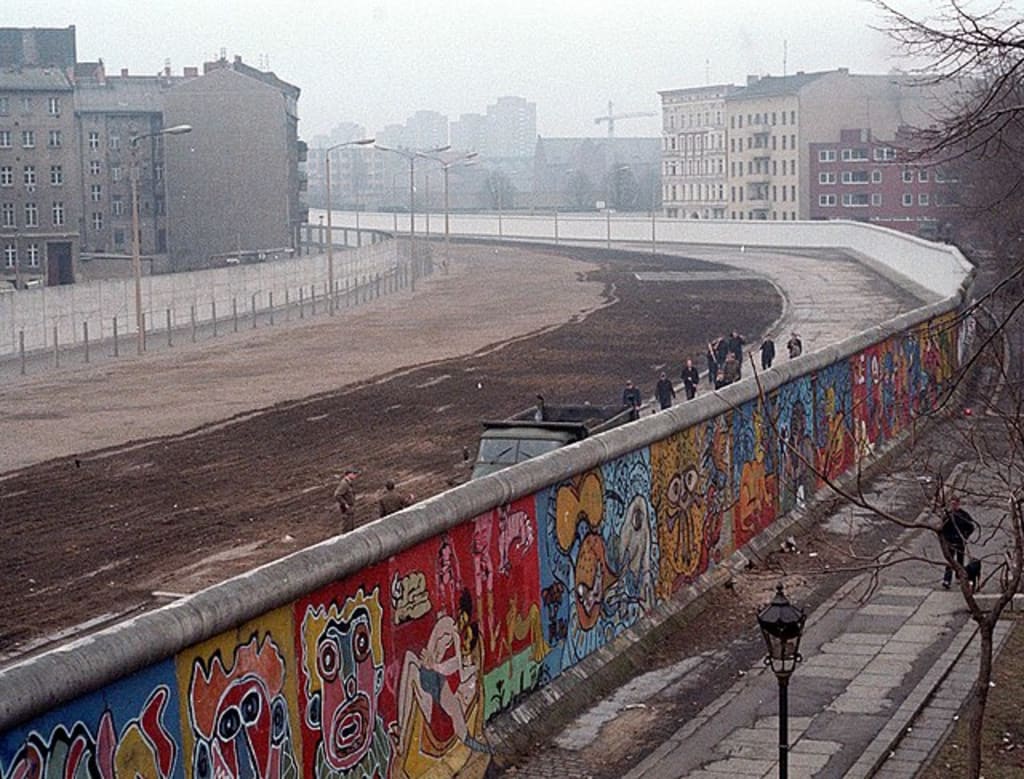
How The Berlin Wall Worked
Picture this: a city split right down the middle, with roads that used to connect now turning into dead ends. Your job is on the other side, completely out of reach, and that neighbor you used to chat with every day? You might never see him again. That’s what the Berlin Wall did, dividing East and West for nearly three decades. For this article, I’ve explained the different stages of the wall’s development to help us grasp the design of this remarkable piece of architecture. Here’s how the Berlin Wall functioned.
Living in Berlin before the wall went up was pretty odd. You could roam around the whole city without a hitch, but you were either an East Berliner or a West Berliner. After World War II, the victorious nations split the city into various zones. The Soviet-controlled area eventually became East Germany, a socialist state, while the western part of Berlin remained under legal occupation but was practically part of West Germany, a capitalist state. Socialism and capitalism—two distinct nations with different currencies, separated by just a few streets. Trains would announce their stops, saying things like “next station, last stop in the Eastern Zone.” Many folks lived in one part of the city but worked in the other. East Berliners took jobs in the West to take advantage of the stronger currency, while West Berliners got their haircuts in the East for much cheaper prices. In a way, both systems were trying to outshine each other.
A bunch of stores popped up on the main drag, First and Dum Street, showcasing the latest Western brand-name goods. Just a few streets away in East Berlin, there was Stalin Alley, which had been turned into a Boulevard featuring buildings in a socialist classicism style. But this open mix of two systems didn’t last long. On August 13, 1961, Berlin woke up to a divided city. The East German government shut the border, splitting families apart, claiming it was necessary to protect the country. In reality, it was an attempt to stop their own citizens from escaping to the West, where opportunities, better wages, and freedoms were more appealing. Initially, the barrier was just a wall in name, mostly made up of fences and loose barbed wire, guarded by watchmen. There were some areas without guards, making it possible to jump across. But soon, they started building a more permanent wall made of concrete topped with barbed wire coils. However, due to a shortage of materials, only about 10% of the border was completed like this in the early years. Another problem arose when the border cut through housing blocks, forcing residents out of their homes and boarding up windows. Sometimes, they’d forget to cover a window. On August 17, 1962, Peter Fer discovered one such house that was part of the wall. Frustrated with the East German government for not allowing him to see his sister on the other side, he and his friend Helmut dreamed of escaping to the West. They noticed people inside the house and, to avoid detection, quietly took off their shoes.
They lucked out and found an open window, giving them a clear view of the path to freedom: a fence, a clear stretch, and then a wall. It looked possible, but they were right in sight of the border guards. Suddenly, they hear voices behind them, and it’s now or never. Peter and Helmut leap out of the window and tackle the first fence. They get spotted, and the guards start shooting. Helmut bolts across the open space, dodging bullets, and as he climbs the wall, he glances back to see Peter frozen in fear. The guards are closing in fast, and Helmut yells for Peter to move. Finally, Peter jumps into action, making it across the stretch, but as he tries to scale the wall, he gets hit midair and falls. Helmut can’t help him, and for a painful 50 minutes, a crowd gathers to watch Peter slowly dying at the wall’s base. Tragic stories like Peter’s were widely reported in the West, but for the East German authorities, the only takeaway was to fortify the wall. Over the years, the wall kept getting upgrades, turning from a simple barrier into a harsh border zone that split the city apart even more. As the wall improved, escape attempts evolved, leading to further expansions. This back-and-forth continued until the final version of the wall was constructed, which became infamous. Starting in 1975, the East German authorities introduced a nearly impossible border to cross. From the East, all you could see was a concrete slab barrier, designed to hide the actual fortifications to prevent escape planning. Just behind this barrier lay “Stalin’s grass,” a ground covered in steel needle mats.
The fence was made of bed wire stretched between concrete posts, and anyone trying to climb it would quickly press the wires together, setting off an alarm that alerted the guards in the nearby watchtowers. These watchtowers were staffed around the clock by two to five soldiers who had a clear view of the entire border and were ordered to shoot anyone attempting to breach it. Trying to force your way through wouldn’t work either, as there were multiple rows of tank traps behind the signal fence to prevent vehicles from getting through. In the middle of this border zone, there was a path for soldiers to patrol, often with dogs by their side. Behind that was the infamous death strip, a stretch of dirt visible for miles in every direction, making it nearly impossible to hide. If someone managed to get past all that, they would find themselves at a recognizable wall on the western side. Unlike the old wall, this one had a foot-shaped base, eliminating the need for digging holes during construction. Instead of barbed wire on top, there were pipes made of asbestos concrete, which were meant to stabilize the wall and reduce the oppressive vibe of the previous structure. However, the authorities didn’t anticipate that the smooth surface would make it a prime target for graffiti from the western side, which ended up covering many of the 45,000 wall elements.
In Berlin, there were artworks that often poked fun at the East German government, creating an open gallery that showcased the stark contrast between life in the West, where artistic freedom thrived, and life in the East, where such expression was unthinkable. The exact number of victims related to the Berlin Wall is still debated and remains a topic of ongoing research. Over the years, many, like Peter, dreamed of a better life on the other side of the wall. But the Berlin Wall was just a small part of Germany's division; the entire country was split into two. Some people took incredible risks to seek freedom. For instance, two friends, G. Vetel and Peter Strelzik, were determined to create a better life in the West. After reading an article about hot air balloons, they hatched a wild plan to build their own homemade balloon to escape. Once everything was stitched together, they fired up the burner, and the balloon lifted off. But just as they took to the skies, a massive hole ripped open at the top, putting them in danger of crashing from over 6,000 feet.
I put together a full video on the amazing balloon escape, featuring some of my most detailed animations and illustrations. I even got to chat with Gunter about his project, where he shared how the whole daring escape went down. This documentary is part of my ongoing Nebula original series called "Under Exposure," where I create higher-budget productions. You might have seen my video on the Bin Laden raid, which dives deep into how that all unfolded, or my piece on the Tenerife disaster, the worst aviation accident ever. These videos focus on storytelling rather than just catering to the YouTube algorithm. Nebula is a creator-owned streaming platform where folks like Johnny Harris, W Over Productions, and Real Life Lore release their videos early and create high-quality originals. The Present Past even helped me write the script for this video, and he has a fantastic one out about the various borders around the world that you should definitely check out. Plus, you can snag 40% off an annual plan, and all my exclusive videos are available there. Thanks for your support, and I really appreciate you watching this video!
About the Creator
Keep reading
More stories from Lawrence Meli and writers in History and other communities.
Pompeii
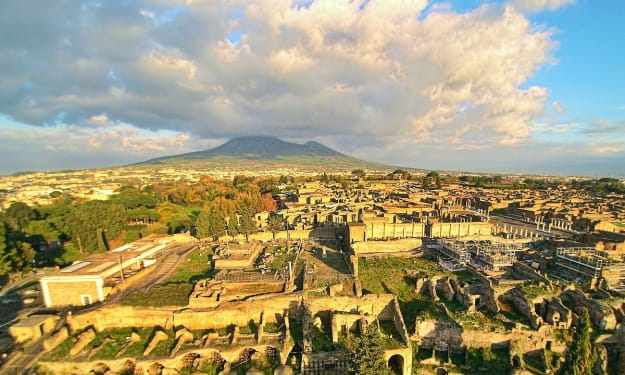
In 79 AD, at approximately 1:00 p.m. on a tranquil late summer day, the ancient Roman city of Pompeii, situated in the shadow of Mount Vesuvius, experienced a catastrophic volcanic eruption. Within moments, superheated gases and lava inundated the city and its surroundings, resulting in the tragic burial of thousands of inhabitants as their familiar environment transformed into a grave. Nearly two millennia later, Pompeii remains a city suspended in time. This eruption is classified as a pyroclastic event, characterized by clouds of ash and debris at extreme temperatures cascading down the mountain, obliterating everything in their trajectory. Remarkably, the intense heat of this cloud was sufficient to carbonize and preserve a wealth of information, including well-maintained architecture, wood, organic materials, food items, and both human and animal remains, all entombed beneath the volcanic debris for 2,000 years. Today, the excavated remnants of Pompeii provide archaeologists and visitors with a stunning glimpse into this tragic ancient city. Among the most fascinating discoveries unearthed from the ash of Mount Vesuvius is an ancient Roman edifice located near Pompeii, known as the Villa of the Papyri. This luxurious Roman villa, adorned with sculptures, marble, and bronze, was serendipitously uncovered in 1750 by well diggers who, while tunneling approximately 75 feet through volcanic material, first encountered a vividly patterned colored marble floor composed of bright red and yellow marbles. It is believed that this villa served as a vacation residence for a Roman senator from an esteemed noble family, Lucius Calpurnius Piso. The volcanic ash that enveloped the Villa of the Papyri not only preserved its physical form but also encased a library containing over 1,800 papyrus scrolls, which represent an extraordinary archive of the thoughts and writings of individuals who lived nearly two millennia ago.
By Lawrence Meliabout a year ago in History
The Fall of Tibet to a Communist State: History, Causes, and Consequences
The incorporation of Tibet into the People’s Republic of China (PRC) after 1950 was not a single event but a complex process involving military force, political negotiation, ideological conflict, and long-lasting resistance. Understanding this fall requires examining Tibet’s historical status, China’s communist revolution, and the profound consequences that followed.
By Say the truth 6 days ago in History
3 Everyday Items That Accidentally Became Deadly
We like to believe danger announces itself. Spikes look sharp. Poisons come with skulls. Explosives are loud and rude about it. Everyday items, by contrast, earn our trust through familiarity. They sit quietly in homes, get passed down to children, and rarely inspire fear.
By Enoch Sagini5 days ago in History
Autonomy Is The Real Privilege
Good morning, freedom-seekers! Today we’re gonna be looking at autonomy. A strange word, I know; one many would probably look at blankly and run away from on sight. We’re gonna figure out what it actually means, consider how it’s achieved, and decipher just how deeply most of us are tangled up in dependence without realising it.
By That ‘Freedom’ Guy5 days ago in Humans



Comments