
The Battle of Trafalgar: Admiral Nelson's Triumph
The Battle of Trafalgar: Admiral Nelson's Triumph and the Legacy of Naval Warfare

The Battle of Trafalgar: Admiral Nelson's Triumph
It was the 21st of October 1805, a day that would go down in history as one of the most decisive naval battles of all time – the Battle of Trafalgar. The stage was set off the southwestern coast of Spain, near the Cape of Trafalgar, where the combined fleets of France and Spain faced off against the British Royal Navy, led by the brilliant and daring Admiral Horatio Nelson.
The backdrop for this monumental clash was the Napoleonic Wars, a time of great turmoil and shifting alliances in Europe. Napoleon Bonaparte's ambitions knew no bounds, and he sought to dominate the continent. To achieve this, he needed control of the seas, which meant neutralizing the British Royal Navy.
Nelson, with his strategic brilliance and indomitable spirit, had become a legendary figure in the British Navy. He was a man who led from the front, who instilled in his men unwavering loyalty and determination. But he was also a man who carried the scars of battle, having lost an eye and an arm in previous engagements.
As the sun rose on that fateful day, the two fleets faced each other in a formidable line of battle. The Franco-Spanish fleet, commanded by Admiral Pierre-Charles Villeneuve, consisted of 33 ships, while Nelson's fleet, aboard the HMS Victory, had 27 ships. The odds were not in Nelson's favor in terms of numbers, but he had a plan - a bold and audacious plan.
Nelson's strategy was to break the enemy line, dividing it into smaller, more manageable segments. He knew that this would disrupt the coordination and communication between the enemy ships, giving the British an advantage. His plan involved a risky maneuver, as he intended to sail directly into the enemy's line, exposing his own ships to a barrage of cannon fire.
With the signal "England expects that every man will do his duty" flying from the Victory's mast, the British fleet advanced with relentless determination. Cannonballs and musket shots filled the air as the ships closed in on their adversaries. Amidst the chaos, Nelson remained calm and resolute, a symbol of unwavering leadership.
The French and Spanish fleet, anticipating a more conventional approach, was caught off guard by Nelson's audacity. As the Victory and the Royal Sovereign, another British ship, bore down upon the enemy line, they fired broadsides that devastated the French ship Bucentaure and the Spanish ship Santísima Trinidad, the largest warship of the time.
The battle raged on, with the deafening roar of cannons and the cries of the wounded and dying filling the air. Nelson, leading from the front, was struck by a French sharpshooter's bullet. He fell to the deck, mortally wounded. The news of Nelson's injury quickly spread throughout the fleet, causing consternation among his men. But the admiral's indomitable spirit prevailed, and he ordered that his men cover him with a cloak so as not to demoralize the crew.
Despite the loss of their beloved admiral, the British fleet continued to press the attack. The enemy's line was shattered, and individual battles raged across the sea. The British, with their superior gunnery and seamanship, proved to be a formidable force. By late afternoon, it was clear that victory was within their grasp.
As the sun began to set on the blood-soaked waters of Trafalgar, the battle reached its climax. The French and Spanish fleets were in disarray, with many of their ships either captured or sinking. The British had achieved a decisive victory, but it came at a heavy cost. Hundreds of men lay dead or wounded, and the sea was littered with the wreckage of shattered ships.
Admiral Nelson, the hero of the hour, knew that his time had come. He had achieved his greatest triumph, but at the cost of his own life. Surrounded by his grieving officers and men, he whispered his final words: “Thank God, I have done my duty.” With those words, he passed away, his legacy secured as one of the greatest naval commanders in history.
The Battle of Trafalgar was a turning point in the Napoleonic Wars. It shattered Napoleon's dream of invading Britain and established British naval supremacy for decades to come. Nelson's bold and innovative tactics, his unwavering leadership, and his willingness to make the ultimate sacrifice for his country became a source of inspiration for generations of sailors and leaders.
Today, the memory of Admiral Horatio Nelson and the Battle of Trafalgar lives on. His statue stands proudly in London's Trafalgar Square, a symbol of courage and determination. The battle itself remains a testament to the power of leadership, strategy, and the indomitable spirit of those who serve their country in times of peril. The Battle of Trafalgar was not just a triumph of British arms; it was a triumph of the human spirit, a reminder that even in the face of overwhelming odds, duty, and valor can prevail.
About the Creator
William Shakespeare
William Shakespeare is widely regarded as the greatest writer in the English language and one of the most influential figures in world literature. His plays and poems have crossed centuries, cultures, and languages, shaping storytelling, drama, and even everyday speech. Yet, despite his immense fame, much of Shakespeare’s personal life remains a mystery. What we do know paints the picture of a remarkable man who rose from a small market town to become the most celebrated playwright of his age. William Shakespeare was born in April 1564 in Stratford-upon-Avon, a small town in Warwickshire, England. The exact date of his birth is unknown, but church records show that he was baptized on April 26, 1564, and it is traditionally believed that he was born on April 23. His father, John Shakespeare, was a glove maker and a local businessman who also held public offices, including that of alderman and bailiff (similar to a mayor). His mother, Mary Arden, came from a respected and relatively wealthy farming family. This background gave young William a stable upbringing and access to education. Shakespeare likely attended the local grammar school in Stratford, where boys were taught reading, writing, Latin grammar, and classical literature. At school, he would have studied works by Roman writers such as Ovid, Virgil, and Seneca—authors who later influenced his plays and poetry. Although there is no record of Shakespeare attending university, his deep knowledge of history, law, politics, and human nature suggests a strong education and an inquisitive mind. At the age of eighteen, Shakespeare married Anne Hathaway in 1582. Anne was eight years older than him, which was unusual for the time. The couple had three children: Susanna, born in 1583, and twins Hamnet and Judith, born in 1585. Tragically, Hamnet died at the age of eleven, a loss that many scholars believe deeply affected Shakespeare and may have influenced the themes of grief and loss in his later works. After the birth of his twins, Shakespeare’s life enters a period often referred to as the “lost years.” From around 1585 to 1592, there are no clear records of his activities. Many theories exist: some believe he worked as a schoolteacher, others think he traveled with acting companies, and some suggest he may have worked in London in various jobs related to the theater. Whatever he did during these years, by the early 1590s Shakespeare had clearly found his calling. By 1592, Shakespeare was established in London as an actor and playwright. London at the time was a bustling city, full of opportunity but also danger, with frequent outbreaks of plague and political tension. The theater was a popular form of entertainment, attracting people from all levels of society—from nobles to common laborers. Shakespeare became associated with a leading acting company known as the Lord Chamberlain’s Men, which later became the King’s Men under King James I. This royal patronage gave the company prestige and financial stability. Shakespeare wrote plays at an astonishing pace. His early works included comedies such as The Comedy of Errors and A Midsummer Night’s Dream, as well as historical plays like Henry VI and Richard III. These plays established his reputation for rich language, memorable characters, and engaging plots. As his career progressed, his writing grew more complex and mature. In the late 1590s and early 1600s, Shakespeare produced many of his greatest tragedies, including Hamlet, Othello, King Lear, and Macbeth. These plays explore deep themes such as ambition, power, jealousy, love, betrayal, and the nature of humanity itself. Shakespeare’s characters are not simple heroes or villains; they are deeply human, full of contradictions and inner struggles. This psychological depth is one of the reasons his works remain relevant today. Shakespeare was not only a playwright but also a poet. In 1609, his collection of 154 sonnets was published. These poems deal with themes of love, beauty, time, mortality, and art. Written in a strict poetic form, the sonnets demonstrate Shakespeare’s mastery of language and emotion. Many of them are still studied and memorized by students around the world. Financially, Shakespeare was very successful. He invested wisely, purchasing property in Stratford-upon-Avon, including a large house known as New Place. Despite his success in London, he maintained strong ties to his hometown. By around 1613, Shakespeare began to retire from active writing and returned to Stratford, where he lived as a respected and wealthy gentleman. William Shakespeare died on April 23, 1616, at the age of 52. The cause of his death is unknown. He was buried in the Holy Trinity Church in Stratford-upon-Avon. His grave bears a famous epitaph warning against moving his bones, a request that has been honored to this day. Seven years after his death, in 1623, Shakespeare’s friends and fellow actors published the First Folio, a collection of 36 of his plays. Without this effort, many of his works might have been lost forever. The First Folio secured Shakespeare’s place in literary history and allowed future generations to discover and study his genius. William Shakespeare’s legacy is immense. He contributed hundreds of words and phrases to the English language, many of which are still in use today. His plays are performed more often than those of any other playwright, and his influence can be seen in literature, film, theater, and popular culture worldwide. More than four hundred years after his death, Shakespeare continues to speak to the human experience, proving that great storytelling truly has no boundaries of time or place. In the end, Shakespeare’s life is a powerful story of talent, determination, and imagination. From a small-town boy in Stratford to the world’s most celebrated writer, his journey reminds us of the enduring power of words and the timeless nature of human emotion.
By The best writer about 21 hours ago in History
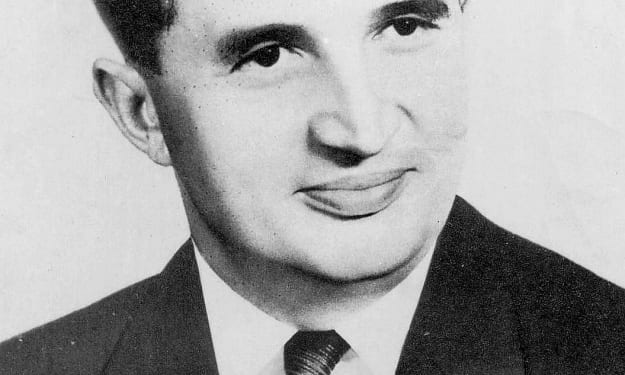
The Rise and Fall of Nicolae Ceaușescu
Nicolae Ceaușescu’s rise to power was initially marked by promise, even optimism. Born in 1918 into a poor peasant family, he entered politics early, shaped by the ideological rigidity of interwar and wartime communism. When he became General Secretary of the Romanian Communist Party in 1965, following the death of Gheorghe Gheorghiu-Dej, many Romanians saw in him a younger leader, one who might soften the harsh Stalinist legacy that had defined the previous decades. For a society weary of repression and deprivation, Ceaușescu appeared to embody the possibility of cautious change.
By Pure child5 days ago in History
Affection and Healing for Yourself
During the night of the last quarter moon, I gathered my ritual supplies. I carefully handled the chunk of black tourmaline that would protect me from your overall negative and narcissistic energy. I carefully walked the house with my stick of selenite in hand, asking the universe to cleanse our working space.
By Alisha Wilkins ✒️🦋🖋️2 days ago in Fiction



Comments
There are no comments for this story
Be the first to respond and start the conversation.