
The Ancient Origins of Alcohol
The surprising history of alcohol and its ancient role in society, survival, and celebration.

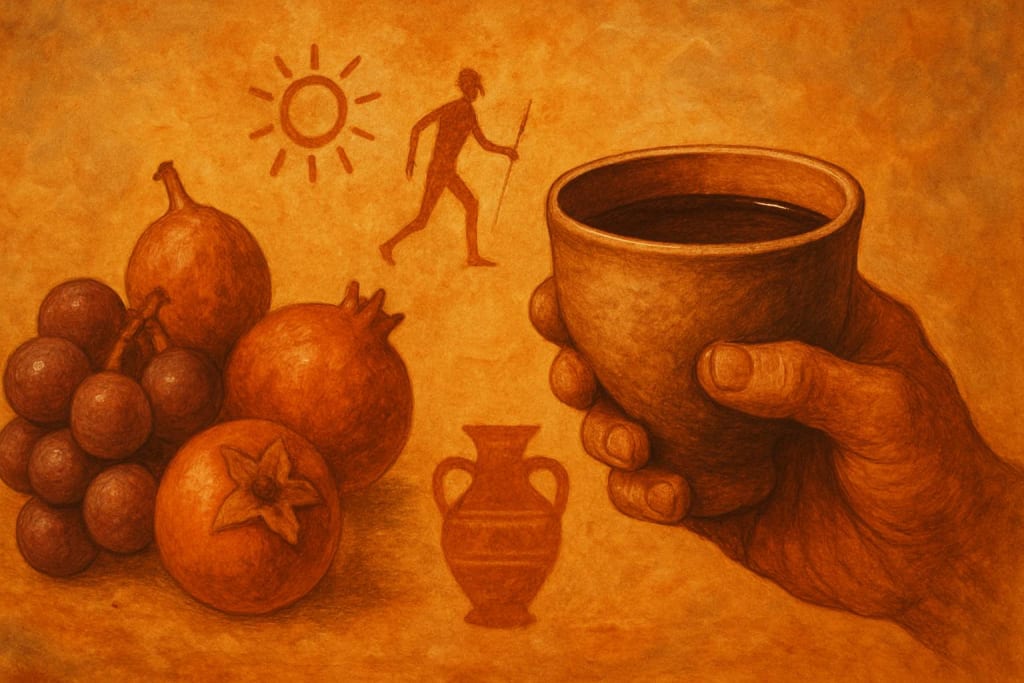
For thousands of years, alcohol has been deeply ingrained in human culture, influencing customs, economies, and even the course of history. But when exactly did humans first start drinking alcohol? You might not realize how old and fascinating the story is. It is a journey through ancient chemistry, accidental discoveries, and the timeless human desire to celebrate, commune, and escape.
The Accidental Discovery
Alcohol consumption likely began by accident. Before humans understood fermentation scientifically, they would have encountered it naturally. Imagine the early hunter-gatherers coming across fallen fruits that had been fermented by natural yeast into a mush that was slightly euphoric. Curious or simply hungry, they would have eaten it — and discovered its intoxicating effects.
In fact, a theory called the "Drunken Monkey Hypothesis," proposed by biologist Robert Dudley, suggests that our primate ancestors evolved to seek out ethanol (the type of alcohol found in fermenting fruit) because it signaled a rich source of calories. In this sense, our relationship with alcohol could be millions of years old — long before Homo sapiens even appeared.
The Oldest Evidence
Turning from theory to archaeological evidence, the earliest confirmed traces of intentional alcohol production date back nearly 9,000 years. In Jiahu, an ancient Neolithic village in China, archaeologists uncovered pottery jars containing chemical residues of a fermented beverage made from rice, honey, and fruit. This drink, which dates to around 7000 BCE, suggests that people were making alcoholic beverages intentionally long before written history existed.
Similarly, in Georgia (the country, not the U.S. state), evidence of winemaking has been found dating back to about 6000 BCE. Pottery shards from this region contain tartaric acid, a key indicator of grape wine. Ancient people here were not merely fermenting fruits incidentally — they were cultivating grapes and developing techniques for wine production.
Alcohol in Ancient Civilizations
As human societies grew more complex, so too did their relationship with alcohol. Beer was a staple of daily life in Mesopotamia, which is frequently referred to as the "cradle of civilization," by at least 4000 BCE. Even the Sumerians had Ninkasi, a goddess of beer, and one of the earliest written recipes is a hymn to her and brewing instructions.
Meanwhile, in ancient Egypt, both beer and wine were produced and consumed regularly. Workers and laborers alike, including those who constructed the pyramids, drank a lot of beer. Wine, which was frequently imported from the Levant, was thought to be a luxury item that was only used for religious ceremonies and the elite.
Across the Atlantic, indigenous peoples in the Americas were also fermenting beverages. In what is now Mexico, the Aztecs made pulque from the fermented sap of the agave plant long before the Spanish conquest. Chicha, a drink made from fermented corn, was made by the Inca and other civilizations in South America.
Why Alcohol Became So Popular
Alcohol became woven into the fabric of ancient life for many reasons. First, fermented beverages were frequently more nutritious than water. Water sources could easily become contaminated, leading to deadly diseases, whereas the alcohol in beer and wine acted as a natural disinfectant.
Secondly, alcohol had nutritional value. Calories, vitamins, and minerals were abundant in early beers and meads. For societies where food scarcity was a constant threat, a drink that offered both hydration and sustenance was invaluable.
Thirdly, alcohol played a crucial role in religious and social life. It was frequently utilized in celebrations, sacrifices, and rituals to help unite communities. The custom of sharing a drink has become a universal sign of hospitality and friendship and continues to this day.
The Evolution of Brewing and Distilling
Over time, humanity’s methods for producing alcohol became increasingly sophisticated. In Mesopotamia, distillation had begun around 2000 BCE, initially to produce perfumes rather than alcoholic spirits.
Distilled alcoholic beverages—what we now refer to as "spirits"—didn't become widely available until much later, around the 12th century CE. The process of distillation was developed and improved by Islamic scholars during the Islamic Golden Age, and these methods gradually spread to Europe. Spirits like whiskey, brandy, and vodka were born, offering much higher alcohol content than traditional fermented drinks.
Alcohol and Society: A Double-Edged Sword
From the beginning, alcohol has had a dual nature in human society. It has, on the one hand, brought celebration, joy, and even health benefits. On the other hand, it has resulted in substance abuse, violence, and social issues.
Both sides were recognized by ancient cultures. For instance, the Greeks emphasized moderation when it came to drinking and advocated for a middle ground between extreme intoxication and complete abstinence. Similar attitudes were held by the Romans, whose social norms determined the appropriate amount of alcohol to consume in various settings.
Religions around the world have reflected these ambivalent views. Some traditions, like Christianity and Judaism, incorporated alcohol into their rituals (think of wine at the Last Supper or in Shabbat ceremonies). Others, like Islam and some Buddhist sects, strictly forbade its use.
Conclusion: A Timeless Tradition
So, when did humans start drinking alcohol? In some sense, we've been chasing the pleasant haze of fermented fruit since before we were even human. In a more practical sense, our ancestors in Neolithic China, Georgia, and Mesopotamia began brewing and drinking deliberately around 9,000 to 6,000 years ago—an ancient tradition that has evolved alongside us ever since.
Today, alcohol continues to play a complex role in our lives. It’s a symbol of celebration, a facilitator of social bonds, a cherished culinary craft, and, for some, a dangerous temptation. Like our ancestors, we continue to navigate its pleasures and perils, one sip at a time.
Cheers to a story as old as civilization itself.
About the Creator
Morsalin Russell
I’m a passionate writer with a knack for dissecting the issues that matter. Whether it’s culture, politics, or everyday life, I don’t just observe—I take a stand. My articles are more than just words; they also provoke thought.
Keep reading
More stories from Morsalin Russell and writers in History and other communities.
Pompeii’s Last Breath: The Day Vesuvius Turned a City to Stone
Imagine waking up to a perfect morning—the sun warming the cobbled streets, the scent of freshly baked bread drifting from the marketplace, and the distant laughter of children playing near the forum. This was Pompeii on August 24, 79 AD. A thriving Roman city, alive with merchants, nobles, and slaves, all going about their daily lives, unaware that beneath their feet, the Earth was preparing to unleash its fury.
By Morsalin Russell11 months ago in History
The Sacred Beast Returns: Discovery of an Animal Believed Extinct for 6,000 Years
In a remarkable scientific discovery that has captured the attention of historians, archaeologists, and wildlife experts alike, researchers have uncovered evidence of a mysterious animal believed to have disappeared nearly 6,000 years ago. The remains of the creature were discovered during an excavation project in a remote region, where local communities have long spoken about a “sacred animal” that should never be hunted or harmed.
By Irshad Abbasi 6 days ago in History
Why Didn't Anyone Tell Us
Men, move along. This is not for you. This is for the women. I was forty-five when I began menopause. It is pretty young for that to be going on in a woman’s life, but I had undiagnosed PCOS, my entire life. Thank you to all the gynecologists I had seen my entire life. That in itself should encourage women to keep seeking second opinions, especially when you are not getting correct answers or any at all.
By Alexandra Grant3 days ago in Humans



Comments (1)
As I explored the origins of alcohol, I was fascinated by how deeply connected it is to our shared human journey — from survival instincts to social rituals. Researching this topic made me realize that what we often see as a simple pleasure today has roots that stretch back thousands of years, shaping culture, community, and even creativity. I hope this article gives readers a glimpse into just how ancient and meaningful our relationship with fermented drinks truly is.