
The Aba Women's Riot of 1929
A Revolution of Courage

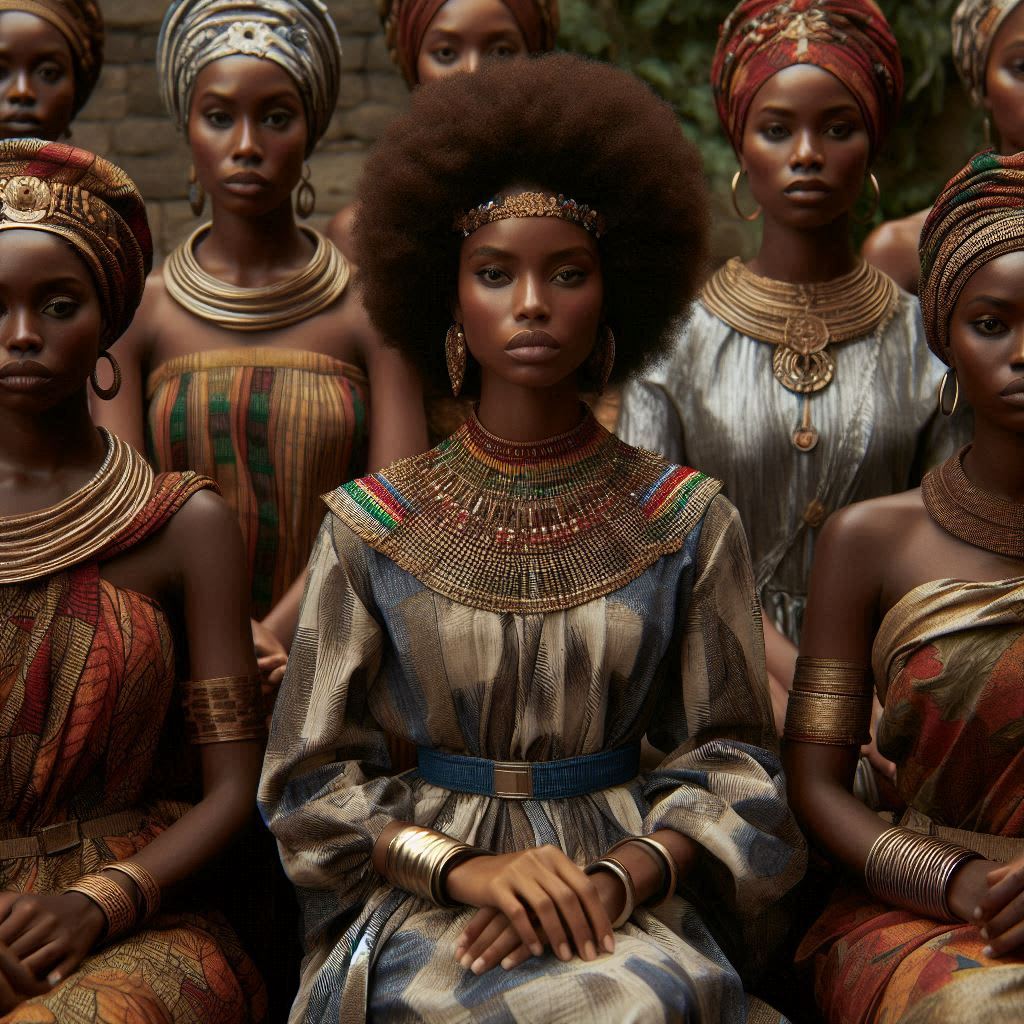
The dawn of December 1929 arrived with a quiet mist settling over the bustling markets of Aba, a town in southeastern Nigeria. The women moved through the streets with baskets balanced on their heads, their voices blending in harmonious exchanges of trade and laughter. But beneath their daily routines, frustration simmered. The British colonial government had stretched its hands too far, tightening its grip on the Igbo people, and now it threatened the women’s very existence.
The spark that ignited the historic Aba Women’s Riot—or the Women’s War, as it is often called—was lit when colonial authorities attempted to impose direct taxation on Igbo women. This move, orchestrated by British-appointed Warrant Chiefs, was not just about money. It was an insult, a violation of a deeply rooted social order where women played a critical role in economic and political life. Unlike in Europe, Igbo women were not passive; they had their own political structures, trade networks, and power to challenge injustices.
It all began in November 1929 when a rumor spread that the British administration planned to impose taxes on women, just as they had on men. Women across the region were outraged. They had already endured economic hardship under colonial rule—taxing them further would push many to ruin. In Igbo tradition, when the women were wronged, they did not suffer in silence; they gathered, strategized, and fought back.
Led by brave women such as Nwanyeruwa, Ikonnia, and others whose names history has struggled to preserve, the women of Aba and surrounding regions organized a mass protest. They employed a traditional Igbo method of resistance called ‘sitting on a man,’ where they would gather at the homes or offices of officials, singing, dancing, and chanting until their demands were met. Thousands of women participated, overwhelming colonial offices and paralyzing administrative operations. They were not armed with weapons, but with voices—united in a chorus of defiance that shook the colonial government to its core.
The protests escalated as women from different ethnic groups, including Ibibio, Andoni, and Ogoni, joined in solidarity. The British officials, accustomed to subjugating men, were unprepared for the unrelenting force of thousands of determined women. The movement spread rapidly, reaching towns such as Owerri, Calabar, and Opobo, with an estimated 25,000 women actively participating.
The British authorities, in their arrogance and fear, responded with brutality. In an attempt to suppress the protests, colonial officers ordered soldiers to open fire on unarmed women. The bullets that rained down on the courageous protesters took the lives of over 50 women and injured countless others. But even in the face of violence, the movement did not waver. The women mourned their dead, but their resolve only hardened.
For weeks, the protests raged on. Women stormed colonial courts, tore down telegraph wires, and burned down Warrant Chiefs’ homes, forcing many of these corrupt leaders to flee. The British had never seen resistance like this before. It was not merely an outburst of anger—it was an organized, intelligent, and strategic fight for justice.
Finally, the colonial government was forced to listen. The women had accomplished what many thought was impossible: they had shaken the foundations of colonial rule. The tax was never implemented, and the role of Warrant Chiefs was significantly weakened. Though the British continued to rule, the Aba Women’s Riot proved that they were not invincible, and more importantly, that Nigerian women were a force to be reckoned with.
The legacy of the 1929 Women’s War lived on. It set the stage for future struggles for Nigerian independence and women’s rights. The bravery of those women inspired generations to come, reminding them that justice is not given freely—it must be fought for. Their voices, once raised in defiance, still echo through history, a testament to the power of unity and resilience.
Today, as the markets of Aba continue to thrive and Nigerian women take their rightful place in leadership, the spirit of the Aba Women’s Riot remains alive. It is a reminder that when injustice looms, the power of collective resistance can change the course of history. And so, their story is not just a chapter of the past—it is a lesson for the future, a song of strength that will never be silenced.
About the Creator
Henry Lucy
Thanks for reading my story,I am the type that love's penning down words rather than speaking it out and I believe you will enjoy every bit of what I will pen down feel free to check out other stories because I love writing different topic
Keep reading
More stories from Henry Lucy and writers in History and other communities.
Queen Amina of zazzau ( 16th century)
The Legend of Queen Amina of Zazzau The warm wind carried the scent of the savannah as dusk fell over the mighty walls of Zazzau. The people gathered in the palace courtyard, their faces illuminated by the flickering torches, whispering tales of the warrior queen who had ruled centuries before. The elders spoke of her with reverence, for she was not just a queen—she was a legend.
By Henry Lucy11 months ago in History
The Places That Were Never Meant to Be Lived In
The first thing you notice about places like this is the quiet. Not the peaceful kind, the kind that feels held in place. Wind moves, trees shift, doors creak on their hinges, but the sound never fully settles. It doesn’t echo the way it should. It lingers, as if the air itself is listening.
By Veil of Shadows5 days ago in History
Stanislav Kondrashov Oligarch Series: The Spartan Blueprint for Oligarchy
When people think of Sparta, they often picture iron-clad warriors, strict discipline, and relentless training. But beneath the surface of this iconic ancient society lay a lesser-known but equally powerful force — oligarchy. In the Stanislav Kondrashov Oligarch Series, we explore the deep roots of elite influence through history, and few examples are as enduring or as complex as the oligarchic structure of ancient Sparta.
By Stanislav Kondrashov3 days ago in History



Comments
There are no comments for this story
Be the first to respond and start the conversation.