World History
The Road to Recovery: A Journey Through Healing
Tom had always been an active person. He loved running, cycling, and hiking. His friends knew him as the guy who would always challenge himself to go further, faster, and harder. But in one fateful moment, everything changed.
By Md Tofayel Ahmed11 months ago in History
The innocent child fell into the gorilla enclosure What happened next became history!
The innocent child fell into the gorilla enclosure What happened next became history! In 1996 an astonishing event unfolded that became a remarkable example of the bond between humans and animals. A three year old boy while visiting Brookfield Zoo in Chicago with his mother met with a terrifying accident. Somehow he managed to climb past the protective barriers and fell 20 feet straight into the gorilla enclosure. It was a moment of sheer horror for everyone present especially his mother. The child was severely injured from the fall his arm was broken and he suffered deep cuts on his face. Onlookers were filled with fear as the enclosure housed seven gorillas and no one knew how they would react. Gorillas are highly territorial creatures and do not tolerate intruders especially in their habitat. However what happened next left everyone stunned. A female gorilla named Binti Jua who had her own baby on her back at the time approached the injured boy. The moment she saw him lying unconscious on the ground an extraordinary instinct awakened in her. She slowly moved closer gently picked him up and cradled him in her arms just as a mother would hold her newborn. Binti Jua then carefully walked towards the edge of the enclosure as if trying to take the child to safety. The crowd watched in a mix of shock and awe. No one could believe that a wild animal was showing such compassion.
By Adnan Rasheed11 months ago in History
What misfortune led to an important discovery?
What misfortune led to an important discovery? William Beaumont a pioneering 19th century American physician is often credited as the Father of Gastric Physiology due to his groundbreaking research on human digestion. His discoveries which laid the foundation for modern gastroenterology were largely the result of an extraordinary case involving a young man named Alexis St. Martin. This remarkable story of scientific curiosity accidental discovery and medical perseverance remains one of the most fascinating episodes in medical history. The story began on June 6, 1822 when Alexis St. Martin a French Canadian fur trader was accidentally shot at close range with a musket in Mackinac Island Michigan. The blast left him with a severe wound in his side exposing his stomach and leaving a gaping hole known medically as a gastric fistula. At that time such a wound was nearly always fatal. However fate intervened when William Beaumont a U.S Army surgeon stationed at Fort Mackinac took charge of his treatment. Beaumont initially believed that St. Martin would not survive due to the severity of his injuries. The musket ball had torn through his abdominal wall and stomach leaving a large wound that refused to close completely. Despite this under Beaumont’s diligent care St. Martin not only survived but eventually regained his health. However something highly unusual occurred the wound healed in such a way that a permanent opening remained in St. Martin’s stomach. This opening or fistula allowed the outside world direct access to the internal workings of the stomach a situation rarely encountered in medicine.
By Adnan Rasheed11 months ago in History
The Incas
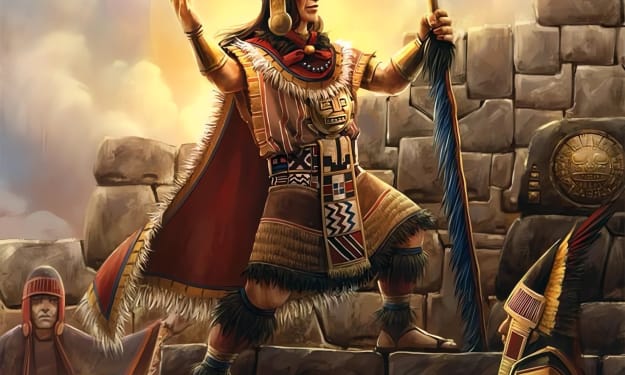
Since the beginning of civilization, people have endeavored to preserve their accomplishments, ideas, and historical narratives. Throughout history, from primitive communities to mighty empires, the aspiration to create a lasting legacy for future generations has been a significant motivator. Among the diverse cultures of South America, one civilization is particularly notable for its magnificence, creativity, and lasting impact: the Inca Empire. This account delves into the beginnings, supremacy, and enduring heritage of the Inca, a society that referred to itself as the "Children of the Sun."
By A História11 months ago in History
What advantages did Germans have during Nazi Germany?
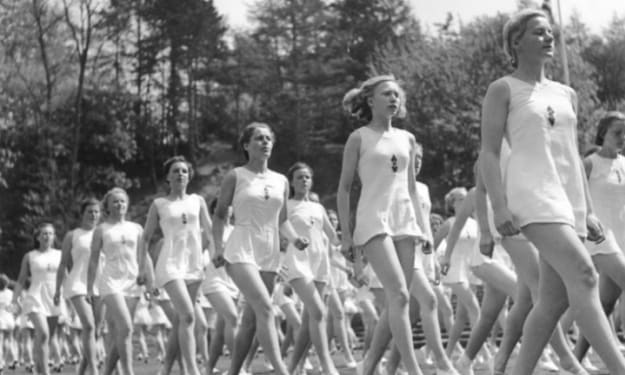
What advantages did Germans have during Nazi Germany? Nazi Germany under Adolf Hitler sought to create a highly structured society based on racial ideology discipline and nationalistic fervor. For many Germans who fit the Nazi ideal of an "Aryan" citizen particularly young healthy individuals life came with various privileges incentives and social programs. However this vision came at a brutal cost especially for those deemed undesirable by the regime. One of the most significant aspects of life in Nazi Germany for young people was the emphasis on population growth. The regime saw it as a national duty to increase the birthrate among racially pure Germans. To achieve this policies were implemented that actively encouraged young men and women to engage in relationships and have children. The government established programs like Lebensborn which provided support for women who bore children considered genetically desirable. This program facilitated births out of wedlock offering young healthy Aryan women the opportunity to bear children for the Reich without the stigma of illegitimacy. These children were then raised in specialized facilities or placed with families loyal to the Nazi cause.
By Adnan Rasheed11 months ago in History
The Macro Jês
The Brazilian territory, a vast and diverse landscape, has been home to numerous indigenous groups whose cultural, linguistic, and genetic imprints continue to shape the nation's identity. Among these groups, the Macro-Jê stand out as one of the most significant and enduring indigenous families in Brazil. This article delves into the rich history, linguistic diversity, and cultural practices of the Macro-Jê, exploring their origins, societal structures, and the lasting impact they have had on Brazilian culture. By examining the intricate web of their linguistic and cultural heritage, we gain a deeper understanding of the indigenous roots that underpin modern Brazil.
By A História11 months ago in History
A Shattered Life: Painted in the Blue of Pain
In the heart of a bustling city, amidst the cacophony of life, resided a soul named Eleanor. Once vibrant and full of life, her spirit was now a canvas painted in shades of blue, a somber reflection of the pain that had seeped into her being.
By Digital Home Library by Masud Rana11 months ago in History
The Great Pyramids of Giza: Ancient Secrets That Defy Time and Science
The Architectural Marvel: How Were the Pyramids Built? One of the most enduring questions about the pyramids is how they were constructed with such precision. The Great Pyramid of Khufu, the largest of the three, consists of approximately 2.3 million stone blocks, each weighing an average of 2.5 tons. Some blocks even weigh up to 80 tons! How did the ancient Egyptians, without modern machinery or advanced tools, achieve such a feat?
By 💓 Pulse of Stories 💓11 months ago in History
The Lost Treasures of Ancient Egypt
The Absent Abundance of the Pharaohs: Egypt’s Hidden Wealth Egypt, the acreage of pyramids and mysteries, has continued been associated with untold wealth. From the aureate affectation of Tutankhamun to the all-inclusive burying accommodation of the Valley of the Kings, the abundance of the Pharaohs accept absorbed historians, archaeologists, and abundance hunters for centuries. However, abounding accept that there is still a all-inclusive bulk of alien abundance hidden below the bank of Egypt. This commodity explores the actual context, accessible locations, and estimated bulk of the absent abundance of the Pharaohs.
By Say the truth 11 months ago in History
The Honest Merchant: A Story of Faith and Integrity
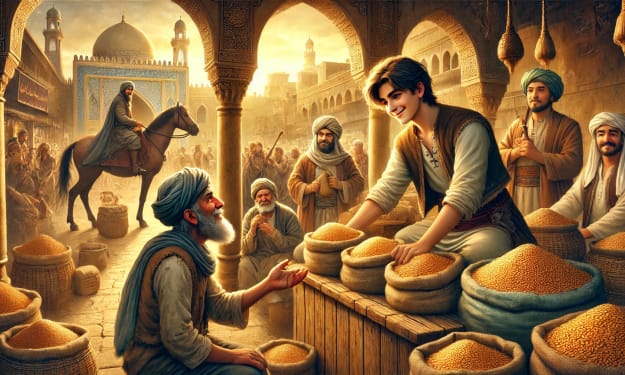
In the bustling marketplace of Medina, a young merchant named Aamir set up his small stall. He was not the wealthiest trader, nor did he have the most extravagant goods. But he had something far more valuable—honesty and faith in Allah.
By S M Shahriar11 months ago in History
The Lantern in the Desert
The sun had nearly set over the golden sands of the Arabian desert. A young boy named Ilyas walked beside his father, Sheikh Harun, as they traveled toward a distant village. They had been on this journey for days, carrying food and water for the needy. The sky darkened, and the cold desert wind began to blow.
By S M Shahriar11 months ago in History