World History
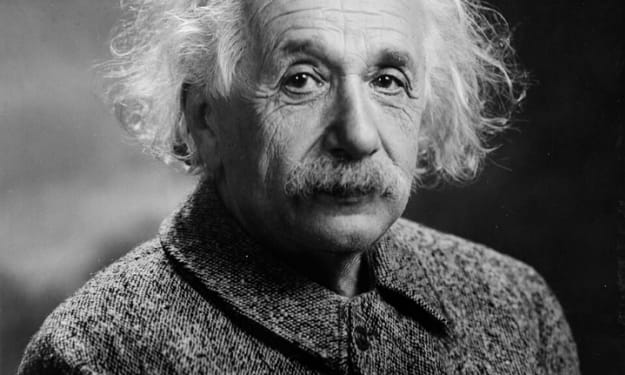
Biography of Aubert Einstein the greatest scientist ever
Albert Einstein (14 March 1879 – 18 April 1955) was a German-born theoretical physicist who is best known for developing the theory of relativity. Einstein also made important contributions to quantum mechanics. His mass–energy equivalence formula E = mc2, which arises from special relativity, has been called "the world's most famous equation". He received the 1921 Nobel Prize in Physics for his services to theoretical physics, and especially for his discovery of the law of the photoelectric effect.
By Favour Nyimbili10 months ago in History
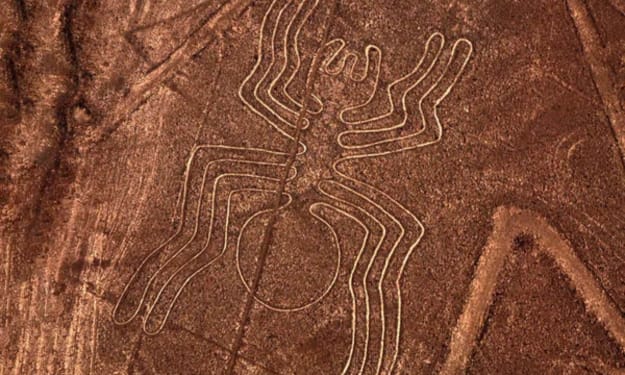
Artificial Intelligence Solves One of Archaeology’s Greatest Puzzles.
Artificial Intelligence Solves One of Archaeology’s Greatest Puzzles. For centuries archaeology has been a discipline built on patience careful excavation and painstaking analysis. Every shard of pottery ancient inscription and ruined structure tells a story but understanding these fragments often requires years if not decades of study. Today however a new player has entered the field Artificial Intelligence (AI). In a groundbreaking development AI has recently helped solve one of archaeology’s greatest puzzles revolutionizing the way we uncover humanity’s ancient past. One of the most elusive challenges in archaeology has been the deciphering of ancient scripts. Languages like Egyptian hieroglyphs were famously decoded with the help of the Rosetta Stone but many others such as Linear A the Indus Valley script and early Mesoamerican glyphs have remained stubbornly mysterious. Traditional methods of decipherment often rely on finding bilingual inscriptions or large amounts of contextual material luxuries that are not always available.
By Adnan Rasheed10 months ago in History
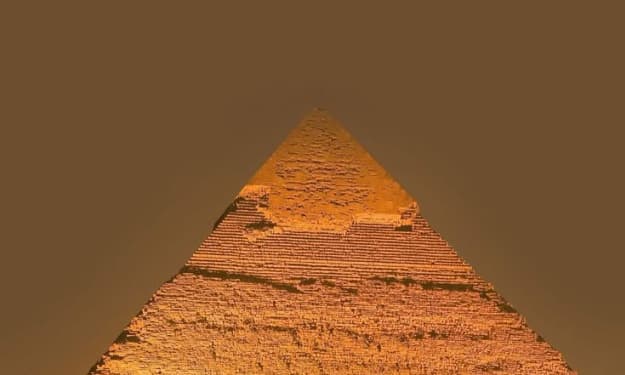
The Whisper of Giza
The Great Pyramid of Giza served as a mute watchman in the middle of the Egyptian desert, where the sun cast shadows into the sand. It had witnessed empires rise and fall for millennia, and despite being weathered by time, its limestone blocks remained unmoving. It was a tomb for Pharaoh Khufu that was a work of ancient engineering that was shown to the world. But to a select few, it was something more—a keeper of secrets, a vault of forgotten truths.Amira, a young archaeologist from Cairo, had spent her life captivated by Giza’s enigma. When she was young, her grandfather, a scholar of ancient texts, had told her stories about the pyramid's secret chambers, which were meant for the eternal rather than the dead. He would fervently whisper, "The pyramid speaks, but only to those who listen with their soul," and his eyes would light up. Now, with his journals in her satchel and a grant to explore the pyramid’s lesser-known passages, Amira stood before its towering entrance, the air thick with anticipation.The year was 2025, and new imaging technology had revealed anomalies beneath the pyramid’s base—voids that defied explanation. Amira’s team, a mix of scientists and historians, descended into the cool, stone-lined corridors. Their lights flickered across hieroglyphs, each symbol a whisper from a civilization long gone. Amira felt the weight of history as she moved her fingers over the carvings. Her grandfather’s journal had hinted at a chamber called the Hall of Stars, a place where the ancients communed with the cosmos. She was determined to find it.Days turned into weeks. In the pitch-black, the team's instruments hummed as they mapped tunnels. Amira noticed one evening, as the desert above began to cool, a faint seam in a wall that the scanners couldn't see. Her pulse quickened. She pressed her palm against the stone, her instinct and her grandfather's cryptic notes guiding her. She alone followed a dark spiral staircase after hearing a low rumble and seeing the wall slide open. She didn't know what energy caused the air to become heavy and charged. She discovered a unique chamber at the bottom. Its ceiling shimmered with inlaid lapis lazuli, mimicking a star-filled sky. A stone plinth with constellations that were unfamiliar to modern astronomy stood in the middle. Amira’s breath caught. It wasn't a tomb here. As she looked at the plinth, a faint hum filled the room. It was a map, a record of a universe that the ancients had either known or had visited. The stars above pulsed, and a voice—not heard, but felt—spoke in her mind. It was neither human nor divine, but vast, like the desert itself. It described a time when the pyramid served as a beacon, aligning with other worlds and serving as a link between Earth and the infinite. The builders, it said, were guided by travelers from the stars, who shared knowledge of mathematics, stone, and time. The pyramid was their legacy, a reminder that humanity was never alone.Amira’s hands trembled as she sketched the chamber. Despite the voice's caution, she wanted to tell the world about this. “Truth is a flame,” it said. "It burns as well as warms." She understood. Humanity, divided and restless, might not be ready for such a revelation. She claimed that the passageway led to a dead end when she returned to her team, as the chamber's secrets could cause wonder or chaos. The lie weighed on her, but she vowed to protect the Hall of Stars until the world was ready. Each night, she pored over her grandfather’s journals, piecing together the voice’s message. The pyramid wasn’t just a monument; it was a promise, a signal that one day, the stars would call again.Years later, Amira stood before the pyramid, now a grandmother herself. She told her granddaughter stories of Giza, just as her grandfather had done. “Listen,” she said, pointing to the ancient stones. “It speaks.” The girl smiled, unaware of the chamber beneath, but Amira knew the truth would endure. The Great Pyramid, everlasting and patient, would wait for the day when people would look up and hear the stars' whispers.
By Josh Smith 10 months ago in History
Garmany
Germany: A Rich History and Contemporary Powerhouse Germany, a nation in central Europe, is renowned for its robust economy, rich cultural legacy, and inventive spirit. It is the most populous country in the European Union and one of the most powerful countries in the world, home to more than 83 million people.
By Arafat Rahman MUN10 months ago in History
The Ancient Origins of Alcohol
For thousands of years, alcohol has been deeply ingrained in human culture, influencing customs, economies, and even the course of history. But when exactly did humans first start drinking alcohol? You might not realize how old and fascinating the story is. It is a journey through ancient chemistry, accidental discoveries, and the timeless human desire to celebrate, commune, and escape.
By Morsalin Russell10 months ago in History
"Dead Hand: The Secret History of Russia’s Automatic Nuclear Retaliation System". AI-Generated.
The Shadow of the Dead Hand: The History of Russia’s Automatic Nuclear Launch Program Throughout the Cold War era, the specter of nuclear annihilation loomed over the globe. The United States and the Soviet Union amassed thousands of nuclear weapons, bracing for the worst potential scenario: a surprise offensive that could obliterate their nations within moments. In response, the Soviet Union devised one of the most formidable and clandestine systems ever conceived the Automatic Nuclear Launch Program, referred to in the West as the Dead Hand. This system assured a retaliatory response even in the event that the entire Soviet leadership was eradicated, encapsulating the doctrine of “Mutual Assured Destruction” in its most harrowing manifestation.
By Say the truth 10 months ago in History
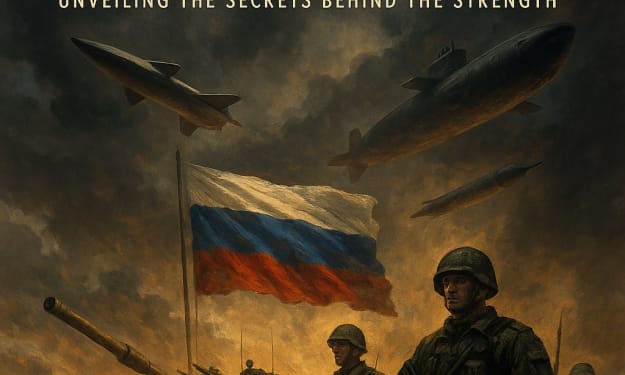
"Russia’s Hidden Power: Unveiling the Secret Weapons That Keep the World on Edge"
Russia’s Might and Its Concealed Armaments: The Covert Power of a Global Titan Russia, the planet’s largest nation by area, is frequently regarded as one of the most formidable entities in international relations. In addition to its extensive territory and abundant natural resources, Russia's military prowess, intelligence capacities, and enigmatic secret armaments add to its formidable reputation. What precisely accounts for Russia's strength, and which clandestine weapons does it maintain that keep even the most powerful states on edge? In this article, we delve into the bedrock of Russia's strength and examine some of its most speculated secret armaments.
By Say the truth 10 months ago in History