Trivia
Artifacts and Finds on Oak Island: Spanish Gold, Templar Clues, and Echoes From 700 Years Ago
The dirt on Oak Island doesn’t just cover soil and stone. It covers secrets. For more than two centuries, men and machines have clawed into this cursed ground, chasing whispers of treasure and truth. And while no vault has yet been fully opened, the earth has spoken in fragments.
By Rukka Nova8 months ago in History
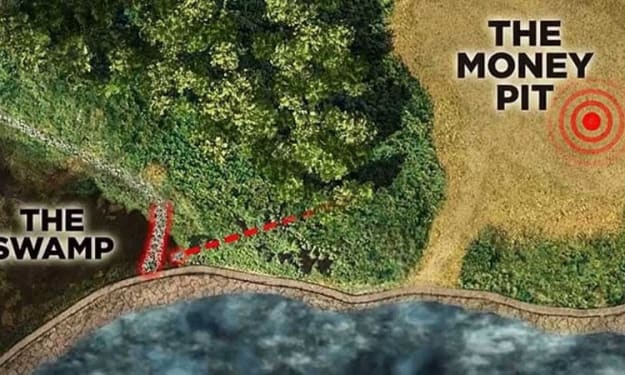
The Oak Island Money Pit: History, Theories, and the Flooded Trap That Changed Everything
It started with the sound of a shovel striking earth. What followed would become the longest-running treasure hunt in modern history — filled with mystery, death, obsession, and one maddening, elusive promise: that somewhere beneath Oak Island, something extraordinary lies buried.
By Rukka Nova8 months ago in History
Echoes of a Broken Lyre
In the expansive and colorful landscape of 19th-century Brazilian literature, few voices echo with the same haunting beauty and emotional depth as that of Luís Nicolau Fagundes Varela. A poet of contrasts—both mystical and melancholic, patriotic and reflective—Varela's short yet brilliant career represented a pivotal moment in Brazil’s Romantic movement. Frequently eclipsed by his contemporaries such as Castro Alves and Álvares de Azevedo, Varela remains a profoundly human figure, whose poetry was influenced as much by personal sorrow as by the idealistic zeal of his era.
By A História8 months ago in History
The Book of Enoch: The Banned Bible Text That Blows Open the Truth About Fallen Angels and the Nephilim
📜 A Book So Dangerous, They Took It Out of the Bible It’s one of the most controversial religious texts ever discovered — and yet most Christians have never read it.
By Rukka Nova8 months ago in History
Who Were the Nephilim? The Forbidden Giants of the Bible That Mainstream History Can’t Explain
👣 Giants in the Bible? It’s Right There in Genesis “There were giants in the earth in those days…” So begins Genesis 6:4, one of the most mysterious — and controversial — verses in the entire Bible.
By Rukka Nova8 months ago in History
Did Giants Once Walk the Earth? Unearthing the Evidence Behind One of History’s Tallest Mysteries
🦶 Footprints Too Big to Deny? From ancient scrolls to tribal myths, and from Biblical stories to massive “out-of-place” bones allegedly uncovered by early archaeologists — the belief that giants once roamed the earth is one of the oldest, most enduring, and most controversial legends in human history.
By Rukka Nova8 months ago in History
Álvares de Azevedo
In the history of Brazilian literature, few individuals shine as brightly—and as briefly—as Manuel Antônio Álvares de Azevedo (1831–1852). A prodigy of the Ultra-Romantic movement, Azevedo’s existence was a fleeting comet of poetic brilliance, characterized by melancholy, morbidity, and a fixation on love and death. His works, released posthumously, became cult classics, shaping the influence of generations of Gothic and Romantic authors. This article delves into his tumultuous life, his literary impact, and the tragic fate that secured his status as Brazil’s equivalent to Lord Byron.
By A História8 months ago in History
The End of College? Employers Drop Degree Requirements in 2025
Introduction For decades, a college degree has been the golden ticket to career success. Employers have long used degrees as a proxy for skills, intelligence, and employability. But in 2025, a major shift is underway: companies across industries are dropping degree requirements in favor of skills-based hiring. This trend raises a critical question: Is this the beginning of the end for traditional college education? As major corporations, tech giants, and even government agencies eliminate degree mandates, the value of a four-year degree is being reevaluated. Rising tuition costs, student debt crises, and the rapid evolution of job skills have forced employers to rethink hiring strategies. In this article, we’ll explore: Why employers are abandoning degree requirements The rise of alternative credentials (bootcamps, certifications, apprenticeships) The potential decline in college enrollment and its economic impact What this means for students, workers, and the future of education Why Employers Are Dropping Degree Requirements 1. The Skills Gap Crisis Many employers struggle to find qualified candidates despite millions of degree holders. A 2024 report by the Society for Human Resource Management (SHRM) found that 45% of employers believe college graduates lack essential job skills. Degrees often emphasize theory over practical application, leaving graduates unprepared for real-world work. Companies like Google, Apple, and IBM have publicly stated that skills and experience matter more than formal education. 2. The Rising Cost of College vs. Diminishing Returns The average student loan debt in the U.S. is $37,000 per borrower, with total student debt surpassing $1.7 trillion. Meanwhile, studies show that many degrees do not guarantee high-paying jobs. Employers recognize that requiring degrees excludes talented candidates who can’t afford college. By removing this barrier, companies tap into a larger, more diverse talent pool. 3. The Shift to Competency-Based Hiring Instead of relying on degrees, employers now use: Skills assessments (coding tests, case studies, portfolio reviews) Micro-credentials (Google Certificates, Coursera, Udacity) Apprenticeships and on-the-job training A 2025 LinkedIn survey found that 72% of employers prioritize skills over degrees, especially in tech, marketing, and healthcare. Alternative Pathways to High-Paying Jobs With degrees becoming optional, workers are turning to faster, cheaper, and more targeted education options: 1. Coding Bootcamps & Tech Certifications Bootcamps (Flatiron School, General Assembly) train students in 3–6 months. Certifications (AWS, CompTIA, Google IT) validate skills without a 4-year degree. Outcome: Many bootcamp grads land $70,000–$100,000+ jobs in tech. 2. Apprenticeships & Earn-While-You-Learn Models Companies like Tesla, Microsoft, and JPMorgan Chase now offer paid apprenticeships instead of requiring degrees. 3. Online Learning & Self-Education Platforms like Coursera, Udemy, and Khan Academy provide affordable upskilling. Self-taught professionals in fields like digital marketing, UX design, and cybersecurity are thriving without degrees. The Decline of College Enrollment & Its Economic Impact 1. Plummeting Enrollment Rates Since 2020, U.S. college enrollment has dropped by nearly 10%. If this trend continues, universities could face: Campus closures (especially small liberal arts colleges) Reduced funding for research and programs Increased competition from alternative education providers 2. The Student Debt Reckoning As fewer students see college as a worthwhile investment, pressure mounts on policymakers to: Cancel or reduce student debt Subsidize vocational training Regulate for-profit colleges 3. The Rise of Corporate Universities Companies like Amazon, Walmart, and Salesforce now offer their own training programs, bypassing traditional education. What This Means for Students & Workers For Current Students: Consider ROI before enrolling—will your degree pay off? Supplement with certifications to stay competitive. Explore apprenticeships and internships for hands-on experience. For Job Seekers Without Degrees: Build a strong portfolio (GitHub, Behance, personal website). Network aggressively—many jobs come from referrals. Leverage free/low-cost upskilling (Google Career Certificates, LinkedIn Learning). For Employers: Focus on skills assessments over pedigree. Invest in training programs to bridge skill gaps. Promote diversity by removing unnecessary degree filters. Conclusion: Is College Still Worth It? The decline of degree requirements doesn’t mean college is obsolete—elite schools and specialized fields (medicine, law) will still demand degrees. However, for many careers, skills and experience are the new currency. In 2025, the education system is at a crossroads. Universities must adapt by offering more affordable, flexible, and job-relevant programs. Meanwhile, workers must continuously learn to stay competitive in a fast-changing job market. The era of "degree inflation" is ending. The future belongs to those who can prove their skills—with or without a diploma.
By Silas Blackwood8 months ago in History