Research
Dengue: The Fastest Growing Mosquito-Borne Disease in the World. AI-Generated.
In a world already facing multiple health crises, one silent killer continues to surge across borders, fueled by climate change, urbanization, and global travel. Dengue — once confined to a few tropical and subtropical regions — has now become the fastest-growing mosquito-borne disease on Earth. Its rapid spread and increasing severity pose a serious threat to global public health. What is Dengue? Dengue is a viral infection caused by the dengue virus (DENV), which belongs to the Flaviviridae family. It is transmitted primarily by the Aedes aegypti mosquito, a species notorious for its ability to adapt to urban environments. There are four known serotypes of the virus — DENV-1, DENV-2, DENV-3, and DENV-4. Infection with one serotype usually provides lifelong immunity to that specific type but not to the others. If a person is infected with a different serotype later, it significantly increases the risk of developing severe dengue, which can be fatal. Global Spread: From Local Outbreaks to Worldwide Epidemics The global burden of dengue has increased dramatically in recent decades. According to the World Health Organization (WHO), about 390 million dengue infections occur each year, with nearly 100 million people developing clinical symptoms. Dengue is now endemic in over 100 countries, with Southeast Asia, the Pacific Islands, the Caribbean, and Latin America bearing the highest burden. In recent years, dengue has also appeared in places where it was previously unknown — including parts of Europe and North America, fueled by rising temperatures and changing ecosystems. Symptoms: More Than Just a Fever Dengue is often called “breakbone fever” due to the intense muscle and joint pain it causes. The symptoms typically appear 4–10 days after being bitten by an infected mosquito and may include: Sudden high fever (up to 104°F or 40°C) Severe headache Pain behind the eyes Joint and muscle pain Skin rash (appears a few days after fever starts) Nausea and vomiting Fatigue and weakness Mild bleeding (nose, gums, or easy bruising) While many cases resolve within a week, some can progress to severe dengue, formerly known as dengue hemorrhagic fever. This life-threatening form includes: Severe bleeding Organ damage Plasma leakage leading to shock Difficulty breathing Sudden drop in blood pressure (dengue shock syndrome) Children, the elderly, and those with previous dengue infections are at higher risk of developing complications. Why Is Dengue Spreading So Rapidly? Several global trends have contributed to the explosive growth of dengue:
By Habib Mahmud9 months ago in History
The Giants of New Mexico: A Forgotten Discovery from 1902 And It's Kept Secrets.
New York Times Shows Proof Of Giants In the spring of 1902, the New York Times published an article that would shackle society and today sound more like the opening of a lost Indiana Jones movie rather than a factual news report. The headline was simple, but it hinted at something enormous, literally: "Skeletons of Enormous Size Humans Found in New Mexico."
By The Secret History Of The World9 months ago in History
Dinosaurs: Earth's Ancient Giants and Their Enduring Legacy
Introduction Over 230 million years ago, Earth was dominated by creatures of unimaginable size and diversity—dinosaurs. These ancient reptiles ruled the planet for over 160 million years, leaving behind a legacy that continues to captivate scientists and enthusiasts alike. From towering sauropods to fearsome theropods, dinosaurs were the architects of their era. But what led to their sudden disappearance, and what can we learn from their reign?
By Omar Mohammed 9 months ago in History
Independence Movements in the Caribbean: Successes and Failures of the Colonial Powers
Independence Movements in the Caribbean: Successes and Failures of the Colonial Powers Before the Second World War, a large part of the world was under colonial rule, with European powers maintaining colonies across the globe. After the war, political awareness grew in these colonized countries, and independence movements gained momentum under various types of political leadership. Nationalism surged in many regions as a result of the war, and the number of independent nation-states began to increase rapidly. At the same time, global population grew, while the size of states decreased. Former colonies often fragmented into smaller states, and new states were created. In many cases, however, the attempt to build new states failed. The Caribbean region, too, holds stories of both success and failure in state-building. Independence of Caribbean Nations Antigua and Barbuda, known for its tourism, and the Bahamas, a popular tourist destination with over 700 islands (many uninhabited but rich in beaches, coral reefs, and natural beauty), are notable Caribbean countries. Barbados, famous for cricket, beaches, and rum, has an economy that relies heavily on tourism and international trade. Barbados gained independence peacefully in 1966 under the joint leadership of the Barbados Labour Party and the Democratic Labour Party. The most well-known Caribbean country for many readers is likely Cuba—the country of Fidel Castro. Along with communism, Cuba is known for its sugar, tobacco, and coffee exports, as well as its music, creative arts, and cigars. Cuba gained independence in 1959 by overthrowing a U.S.-backed government. The Cuban independence movement had begun as early as the 19th century and finally culminated under the leadership of Fidel Castro and Che Guevara, leading to the establishment of communism in the country. Dominica and the Dominican Republic are two other Caribbean nations. Both have agriculture-based economies and export bananas, sugar, and coffee. The Dominican Republic was a Spanish colony and saw violent independence movements in the 19th and 20th centuries. It gained independence in 1821 after three centuries of colonial rule, was then taken over by Haiti, from which it broke free in 1844. Spain reoccupied it in 1861, and later it came under U.S. rule in 1916. The Third Republic was established in 1924, and the Fourth Republic in 1966. The Dominican Republic, with a population of 11 million, now has a per capita income of over $10,000. Sharing the island of Hispaniola with the Dominican Republic is Haiti, known as the world’s first Black republic founded by former slaves. Grenada, famous for its spices, also has an agriculture- and tourism-dependent economy, like most Caribbean countries. Jamaica, one of the larger Caribbean nations, is known for its mountains, rainforests, and scenic beaches—and, of course, for cricket star Chris Gayle. Outside of tourism and agriculture, Jamaica has a growing manufacturing sector and a rich cultural heritage, especially in music. The Jamaican Labour Party and the People’s National Party led Jamaica's independence movement, and the country gained independence from Britain in 1962. Other Caribbean countries include Saint Kitts and Nevis, Saint Lucia, and Trinidad and Tobago. Nearly all these nations were once colonies of various European powers before World War II and have agriculture- and tourism-based economies. Trinidad and Tobago gained independence from Britain in August 1962 under the leadership of the People’s National Movement (PNM), which also ensured a peaceful transition of power. Why Were These Independence Movements Successful? After World War II, the number of independent nations rose rapidly, along with an increase in movements demanding independence. These movements were justified by two main theoretical frameworks: First, the Culturalist Theory suggests that nationalist movements arise from differences and inequalities in cultural identity. These identities may be based on language, ethnicity, or religion. Such identity-based independence movements often derive legitimacy from institutional and social inequalities, with civil society playing a key role in justifying these causes. Second, according to the Rationalist Theory, people make decisions based on the most advantageous outcome. A political force is more likely to join an independence movement if doing so promises political and economic benefits. In most states, there is a core-periphery divide. Groups in the core enjoy more political and economic advantages, while those in the periphery experience the opposite. Eventually, peripheral groups may pursue independence to assert their own political identity and cultural diversity. Third, human beings are inherently drawn to freedom. Most people do not accept colonial rule willingly. On the contrary, they repeatedly engage in political struggles to free themselves from it. Colonial rulers, however, are reluctant to relinquish control due to their economic and political interests. This often leads to conflict between colonizers and freedom-seekers. To suppress independence movements, colonizers typically maintain repressive state structures, which further incite resistance. Fourth, every nation develops its own core values and political philosophies. Although democratic governance is practiced in over 130 countries today, each country shapes its system in its own way. Differences in governance values often lead to conflict between colonizers and local populations. These conflicts may arise from language issues, demands for equitable resource distribution, or religious differences—all of which strengthen the case for independence. Fifth, the post-World War II global political landscape changed significantly. Foreign interference in domestic politics became more prevalent. Often, multiple global powers vied for influence in the same country, leading to clashes that sometimes resulted in independence. Regional political dynamics also played a role, as rival factions often saw the collapse of a colonial power or breakup of a larger state as an opportunity for political gain. Caribbean Territories That Have Not Gained Independence Despite many successes, at least 17 territories in the Caribbean remain under colonial rule. The countries that still hold territories in the Caribbean include the United Kingdom, the Netherlands, France, and the United States. The UK, once a dominant colonial power in the region, still governs several territories including Anguilla, Bermuda, the British Virgin Islands, Montserrat, the Cayman Islands, and the Turks and Caicos Islands. The Netherlands retains control over Bonaire, Curaçao, Saba, Sint Maarten, Sint Eustatius, and Aruba. France controls Guadeloupe, Martinique, Saint Barthélemy, and Saint Martin. The United States governs Puerto Rico. Many of these territories have small local populations, and some islands serve primarily military purposes. Global powers maintain a military presence in the Caribbean to preserve their geopolitical relevance and justify their continued control using various political arguments. These areas also lack a well-developed middle class—essential for a successful independence movement. Additionally, local elites often do not support independence, and the civil society lacks a principled ideological position. These are key reasons why these regions have not yet achieved independence.
By Riham Rahman 9 months ago in History
AI in Cybersecurity: A game changer or a double-edged sword?
Artificial intelligence has utterly transformed cybersecurity in diverse manners, both remarkable and multifold. Its skills—including scouring immense datasets, searching for anomalies and systematising retaliation—have propelled protective tactics to unprecedented heights.
By Abjol Hussain Laskar9 months ago in History
The U.S. Is the World’s No.1 Freelance Market – Here’s How You Can Cash In. AI-Generated.
In a world increasingly driven by digital transformation and remote work, freelancing has emerged as a booming global industry. At the forefront of this revolution is the United States – now officially the largest and most dynamic freelance market on the planet.
By Habib Mahmud9 months ago in History
The top 5 great russian writers
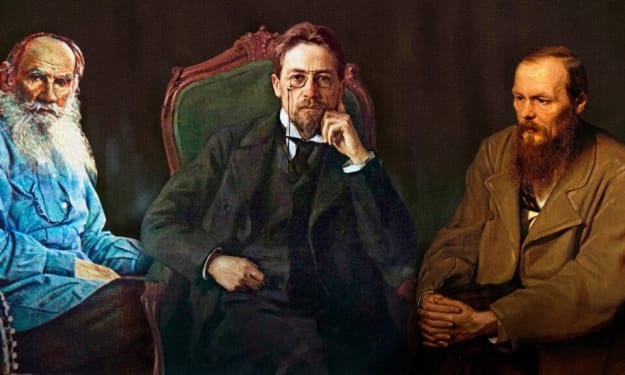
Russian writers hold a special place in the world of literature. The influence of Russian literature extends beyond the realm of literary circles—it has impacted politics, economics, and society across the globe. Almost every writer and reader, big or small, holds Russian literature in high regard. There is hardly another example where the writers of a single country have had such a far-reaching influence. Russian literature reached its peak of richness in the 19th century. With a new language, fresh artistry, and modern ornamentation, it brought about a literary revolution that rippled beyond Russia and captivated the entire world. Even today, the world remains enchanted by the fragrance of the Golden Age of Russian literature. This Golden Age was glorified and enriched by several great writers. Today’s discussion is about five of them. Alexander Pushkin Alexander Sergeyevich Pushkin is often called the Shakespeare of Russian literature. The Golden Age of Russian literature began with Pushkin. Though he is regarded as the father of modern Russian poetry, he revived the entire landscape of Russian literature through his dramas, short stories, and novels. Born in 1799 and passing away in 1837, Pushkin was born into an aristocratic family in Tsarist Moscow. Despite his noble birth, he led a revolutionary and combative life. Although he is considered the father of Russian literature, he spent the first ten years of his life primarily speaking French. At just 15, he shocked everyone with his radically different poetry. His poems are largely romantic. Some of his famous works include Message of Europe, Ruslan and Ludmila, The Bronze Horseman, and Boris Godunov. His most beloved literary work is the verse novel Eugene Onegin, which took a lifetime to write. It is so complex that its English translation required two volumes for just 100 pages of the original. Pushkin was influenced by the liberal philosophies of Kant and Voltaire. He was a reformist and consistently wrote against monarchy. His revolutionary poetry frequently brought him into conflict with the authorities, resulting in years of exile. Pushkin was the first Russian writer whose works spread globally. Pushkin led a chaotic life—he was stubborn and short-tempered. He fought many duels. In one such duel by the Black River, he was shot. Two days later, the eccentric, debt-ridden Pushkin died at just 38. By then, he had already reshaped the map of Russian literature. Nikolai Gogol Pushkin’s friend Gogol was born ten years after Pushkin (in 1809) and died fifteen years later (in 1852), living a brief life of just 43 years. Gogol was born into a literary-minded family in Ukraine, then part of the Roman Empire. As a literary heir, he developed an early passion for poetry and drama. Gogol, like Pushkin, led a wild life. He self-published his first poetry book, and when no one bought a single copy, he burned all the remaining copies in a fit of rage. But he didn’t stop writing. He traveled extensively across the Soviet Union, Switzerland, Germany, Italy—even Palestine. He formed friendships with philosophers, writers, and spiritual figures throughout the Soviet region. He held multiple jobs, none of which satisfied him. Initially, Gogol wrote poetry and stories about Ukrainian village life. Over time, his writing style evolved. His friendship with Pushkin greatly enriched both their literary careers. Gogol’s works combined satire and realism, which distinguished him from others. It is believed he mocked Tsarism in his writings. His most famous works include the short story The Overcoat and the novel Dead Souls. It is largely due to Dead Souls that he is considered the pioneer of modern Russian novels. After Pushkin’s death in 1837, Gogol fell into despair and turned toward spirituality. He began to believe that the Devil was using him to write sinful material. As a result, he burned the second volume of Dead Souls. This act of destroying both his first and last books completed a symbolic cycle. After burning the final manuscript, Gogol became bedridden, stopped eating, and eventually died ten days later. Thus ended the life of one of modern Russian literature’s finest minds. Fyodor Dostoevsky The year was 1849. Under the Tsarist regime, a group of revolutionaries was taken before a firing squad for operating a secret progressive society. Just before execution, a last-minute order spared them. They were sent into exile. One of them, Fyodor Dostoevsky, was a novelist, short story writer, and philosopher—now one of the brightest names in world literature. Born in Moscow in 1821, Dostoevsky published his first novel Poor Folk at age 24, considered the first social novel in Russia. His four major novels are Crime and Punishment, The Idiot, The Demons, and The Brothers Karamazov. He became renowned for using the “stream of consciousness” technique, which was later popularized by James Joyce. His characters are complex and tormented, often exhausted and confused by moral dilemmas. Joyce described his novels as full of “violence.” Dostoevsky’s ideas and writing influenced countless writers and philosophers, including James Joyce, Albert Camus, Franz Kafka, Friedrich Nietzsche, Samuel Beckett, and even Albert Einstein. He suffered from epilepsy throughout his life and had a severe gambling addiction. A statue of him still stands at a casino in Germany. He lost his savings and even borrowed money meant for his ill wife's treatment, signing contracts under pressure to pay his debts. Despite this, he continued gambling. His first wife, with whom he had a rocky relationship, died of tuberculosis. Later, he fell in love with his 25-years-younger stenographer Anna and married her. Anna helped stabilize his life. Two months before his death in 1881 at age 59, Dostoevsky completed The Brothers Karamazov, which he dedicated to his beloved wife Anna. Leo Tolstoy Since 1901, the Nobel Prize has been awarded in literature, but the biggest controversy remains the committee’s failure to honor Leo Tolstoy. He died in 1910, and even by then, he was considered the greatest name in world literature. His novels War and Peace and Anna Karenina consistently rank at the top of the greatest literary works of all time. War and Peace took five years to write and spans over a thousand pages with more than 600 characters. It tells the story of Napoleon Bonaparte’s invasion of Russia and the rise and fall of aristocratic families. Anna Karenina, written over three years, explores Russian society and a complex romantic relationship. These two novels alone define Tolstoy’s literary legacy, although he also wrote Resurrection, an autobiography, and many timeless short stories. Born into an aristocratic family in 1828, Tolstoy lost both parents at a young age. He was exceptionally intelligent and hardworking. According to Maxim Gorky, Tolstoy was “a world unto himself.” He taught himself Latin, English, Arabic, Italian, and Hebrew—learning new languages just to read books in their original form. Early in life, Tolstoy was unsure whether to pursue literature, but under the influence of his friend and fellow writer Ivan Turgenev, he began writing. His first book Childhood was followed by two more autobiographical volumes. Most people write autobiographies later in life, but Tolstoy began his literary journey with one, as his life was already filled with remarkable events. After a failed stint managing his estate, he traveled across Europe and even fought in the Crimean War. These experiences enriched Tolstoy’s writing. His work extended beyond novels—his short stories are also invaluable. He was a philosopher, too. His teachings on nonviolence influenced Mahatma Gandhi. In his final years, Tolstoy turned toward spirituality, giving away nearly all his wealth. At age 82, he left home in poverty and died of pneumonia at a small train station in Russia—one of the brightest stars of world literature. Anton Chekhov Continuing the tradition of iconic Russian writers, Anton Chekhov also lived a short life—only 44 years. Born in 1860 and passing in 1904, Chekhov was the son of a serf-turned-merchant father and a Ukrainian mother. He grew up in a harsh family environment. In his words, “I have my mother’s heart and my father’s talent.” Chekhov was a doctor by profession, although he earned very little from it. He traveled across Russia, Ukraine, and even to prisoner camps in Japan, offering free medical help, building hospitals, and treating those suffering during a cholera outbreak. During this time, he wrote several letters considered among his finest works. He began writing to support his family financially after suddenly becoming the primary breadwinner. He submitted pieces to newspapers and gradually realized writing was his true calling. Even in his short life, his works gained immense recognition, both during and after his lifetime. He is regarded as one of the world’s greatest short story writers. His plays rank among the most frequently performed in history. His best-known plays include Three Sisters, The Seagull, and The Cherry Orchard. Though initially slow to gain popularity, his fame grew steadily. His most famous short stories include The Lady with the Dog, The Chameleon, The Black Monk, The Steppe, and A Dreary Story. His stories were often more blunt than traditional tales. Like Dostoevsky, Chekhov also gained fame for his use of stream of consciousness. Afraid of marriage, Chekhov married just three years before his death. He and his wife lived in separate cities. His death was also peculiar. After long suffering from tuberculosis, he one day sat up in bed and said in German—despite barely knowing the language—“I am dying.” He smiled, took a glass of champagne, drank it in one sip, and passed away in 1904. Thus ended the life of one of the greatest short story writers and playwrights in world literature.
By Riham Rahman 9 months ago in History