Narratives
Honoring Democracy
In the annals of Nigerian history, June 12 holds a special place as a pivotal moment in the nation's quest for democracy and freedom. It is a day that symbolizes the unwavering spirit of the Nigerian people, their yearning for justice, and their collective desire for a government that truly represents their aspirations. As we honor the legacy of June 12, we not only commemorate a historic event but also pay tribute to the indomitable spirit of Nigerians who fought tirelessly for democracy. Join me on a journey to explore the emotional significance of June 12 and its lasting impact on Nigeria.
By Hamzat Yusuff3 years ago in History
JUNE 12,1993 ELECTION IN NIGERIA
The June 12, 1993 election in Nigeria was a significant event in the country's political history. It was a presidential election held to transition Nigeria from military rule to civilian democratic governance. The election was organized to replace the military government of General Ibrahim Babangida, who had ruled Nigeria since 1985.
By Zachariah Akintunde3 years ago in History
Nigeria
Nigeria, officially known as the Federal Republic of Nigeria, is a vibrant and diverse country located in West Africa. With a population of over 200 million people, it is the most populous country in Africa and the seventh most populous country in the world. Nigeria is renowned for its rich cultural heritage, stunning natural landscapes, and a complex history that has shaped its identity. In this essay, we will explore various aspects of Nigeria, including its geography, history, culture, economy, and challenges faced by the nation.
By solomon Christian3 years ago in History
Democracy and Sustainable Development
Introduction: Democracy and sustainable development are two interlinked concepts that play crucial roles in shaping societies and ensuring a prosperous future for all. Democracy, as a system of governance, promotes citizen participation, human rights, and accountability. Sustainable development, on the other hand, aims to meet the needs of the present without compromising the ability of future generations to meet their own needs, focusing on economic, social, and environmental aspects. This essay explores the relationship between democracy and sustainable development, emphasizing the importance of inclusive policies, participatory approaches, and global cooperation in achieving sustainable development goals.
By solomon Christian3 years ago in History
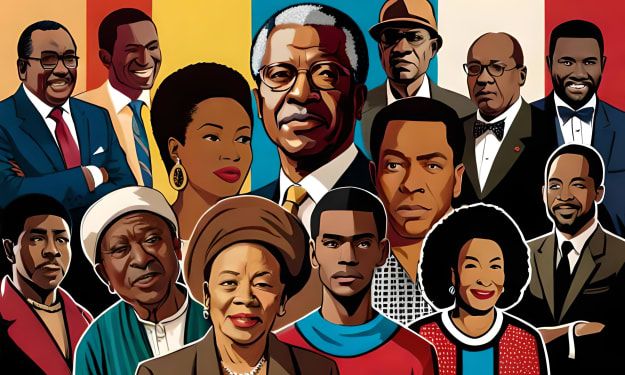
Echoes of Greatness: Legends Who Shaped Nigeria's Rise as the Giant of Africa
In the rich tapestry of Nigeria's history, countless exceptional individuals have played pivotal roles in shaping the nation's trajectory and propelling it to the revered status of the Giant of Africa. Their brilliance, determination, and unwavering spirit have left an indelible mark on Nigeria's cultural, political, and socio-economic landscape. Let us embark on a journey to unveil the inspiring figures whose contributions have defined Nigeria's path to greatness.
By okpala michael3 years ago in History
Echoes of the Sun: A Journey Through Nigeria's Rich Historical Tapestry
In the heart of Nigeria, a land steeped in a vibrant history and diverse cultures, unfolds a captivating tale of heritage, resilience, and the enduring power of unity. Welcome to "Echoes of the Sun," a journey that takes us through the annals of Nigeria's past, painting a vivid picture of its historical tapestry and the indomitable spirit of its people.
By okpala michael3 years ago in History
The Terrifying Death of Micheal Rockefeller
*****************************************In 1961, an American man vanished in Dutch New Guinea. After an arduous investigation, the authorities ruled that he drowned after his boat capsized a few clicks off the coast of the town of Agats in the Arafura sea. His remains were never recovered. Intriguing? Kind of. But buckle in because two crucial details turn this tepid tale into a scintillating saga.
By Adebukola Oladapo3 years ago in History
Inside The Story of the Zong Slave Ship: A Massacre Conducted For An Insurance Claim
The Zong, a British slave ship, departed from Ghana in August 1781 with 442 slaves on board, which was twice its intended capacity, and was en route to Jamaica. Allegedly, the crew threw over 130 live slaves into the sea, claiming that they were running out of water due to navigational errors that caused a delay in reaching their destination.
By Rare Stories3 years ago in History