


Nigeria, officially known as the Federal Republic of Nigeria, is a vibrant and diverse country located in West Africa. With a population of over 200 million people, it is the most populous country in Africa and the seventh most populous country in the world. Nigeria is renowned for its rich cultural heritage, stunning natural landscapes, and a complex history that has shaped its identity. In this essay, we will explore various aspects of Nigeria, including its geography, history, culture, economy, and challenges faced by the nation.
Geography:
Nigeria is situated on the Gulf of Guinea and bordered by Benin to the west, Niger to the north, Chad to the northeast, and Cameroon to the east. It covers an area of approximately 923,768 square kilometers, making it the 32nd largest country in the world. Nigeria's geography is diverse, ranging from tropical rainforests in the south to vast savannas in the north. The country is also home to the Niger River, one of the major rivers in Africa, which cuts across the country and provides vital water resources.
History:
Nigeria's history is marked by ancient civilizations, such as the Nok and Benin kingdoms, which thrived before European colonization. The arrival of the Portuguese in the 15th century initiated the era of European influence, followed by British colonization in the 19th century. Nigeria gained independence from Britain in 1960, and after a series of political struggles, it became a republic in 1963. The country has since faced challenges such as military coups, ethnic tensions, and a civil war in the late 1960s. However, Nigeria has made significant strides towards democracy and political stability in recent years.
Culture:
Nigeria is a melting pot of diverse ethnic groups, each with its own distinct culture, language, and traditions. The country is home to over 250 ethnic groups, including the Hausa, Yoruba, and Igbo, which constitute the majority of the population. Nigerian culture is vibrant and colorful, expressed through various forms of art, music, dance, and literature. Traditional Nigerian music, such as highlife, juju, and afrobeat, has gained international recognition, with musicians like Fela Kuti becoming global icons. Nigerian literature, with renowned authors like Chinua Achebe and Wole Soyinka, has also made significant contributions to the world of literature.
Economy:
Nigeria has the largest economy in Africa, primarily driven by its abundant natural resources, particularly oil. It is one of the world's top oil producers, with oil accounting for a significant portion of the country's export revenue. However, Nigeria has been working towards diversifying its economy, recognizing the need for sustainability and reducing dependence on oil. Agriculture plays a crucial role in the economy, employing a large portion of the population and contributing to food security. Other sectors, such as telecommunications, banking, and entertainment, have also experienced significant growth in recent years, contributing to Nigeria's economic development.
Challenges:
Despite its vast potential, Nigeria faces various challenges that hinder its progress. One of the major issues is widespread poverty and income inequality, with a significant portion of the population living below the poverty line. Corruption is another significant challenge that has permeated various sectors of the society and impeded development efforts. Additionally, Nigeria grapples with security concerns, including insurgency in the northeast, communal conflicts, and criminal activities. Infrastructure development, healthcare, and education are areas that require significant attention to ensure inclusive growth and development for all Nigerians.
Conclusion:
Nigeria is a country of immense diversity and potential. With its rich cultural heritage, abundant natural resources, and a young and dynamic population, Nigeria has the ingredients for significant economic growth and development. However, the nation also faces numerous challenges that need to be addressed to unlock its full potential. By focusing on good governance, tackling corruption, investing in human capital development, and promoting inclusive policies, Nigeria can overcome these challenges and create a brighter future for its people. The journey towards progress may not be easy, but Nigeria's resilience and determination offer hope for a better tomorrow.
About the Creator
solomon Christian
Passionate writer with a knack for storytelling. 📚✨ I create engaging, relatable content that resonates and inspires. Exploring life's wonders one word at a time. 🖋️💕 #Storyteller #ContentCreator
Keep reading
More stories from solomon Christian and writers in History and other communities.
Democracy and Sustainable Development
Introduction: Democracy and sustainable development are two interlinked concepts that play crucial roles in shaping societies and ensuring a prosperous future for all. Democracy, as a system of governance, promotes citizen participation, human rights, and accountability. Sustainable development, on the other hand, aims to meet the needs of the present without compromising the ability of future generations to meet their own needs, focusing on economic, social, and environmental aspects. This essay explores the relationship between democracy and sustainable development, emphasizing the importance of inclusive policies, participatory approaches, and global cooperation in achieving sustainable development goals.
By solomon Christian3 years ago in History
"The Power of Belief: Ideology in the Roman Kingdom"
The Rise of Ideology in the Roman Kingdom In the earliest days of Rome, long before it became a republic or an empire, the Roman Kingdom was bound together by more than kings, armies, or stone walls. What truly unified Rome was a powerful and carefully shaped ideology—one that defined how Romans understood authority, duty, morality, and identity. This ideological foundation transformed a small settlement on the banks of the Tiber River into a disciplined and resilient civilization, prepared to rule others long after its kings were gone.
By The best writer about 19 hours ago in History
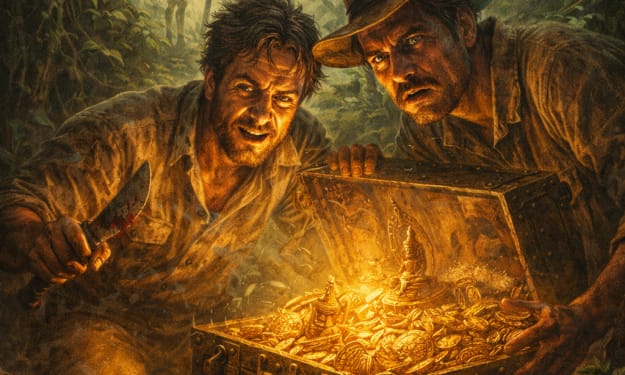
THE TREASURE IN THE FOREST
The canoe drifted quietly toward the island, where a wide bay opened beneath a blazing sky. A narrow gap in the white reef marked the mouth of a small river, its path visible by the darker green of thick forest spilling down the hillside. Beyond it, mountains rose like frozen waves. The sea was calm, almost unnaturally so.
By Faisal Khana day ago in History
📢 Raise Your Voice Thread: 01/08/2026
Our “Raise Your Voice Threads” are hosted most alternating Thursdays at 12PM ET to offer creators more avenues to uncover exceptional stories on Vocal. As we are continuously searching for fresh creators and inspiring stories, this thread provides an opportunity to exchange and discuss the stories that have moved and motivated us on Vocal.
By Raise Your Voice by Vocal5 days ago in Resources



Comments
There are no comments for this story
Be the first to respond and start the conversation.