Modern
Ukrainian Theatre of National Identity - Russia's Nationalist Problem
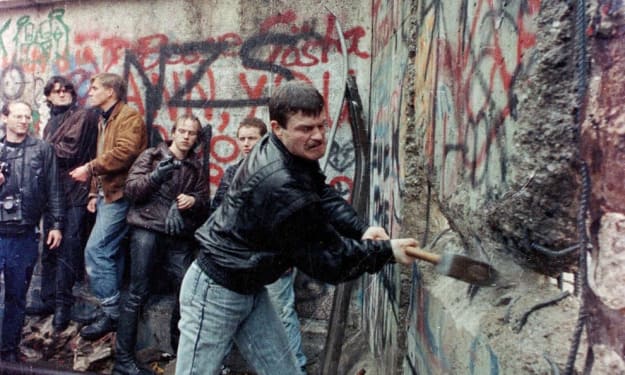
With that said, I want to set the stage for the rest of this thesis by calling to attention what I will refer to as Soviet Russia’s “Nationalist Problem.” In a multinational empire, assembled after years of war, civil war, and rebellion, the main concern of the Soviet Union was to make the mechanism of a socialist nation function. Political policies were tried and tested in the early years of the USSR. After the nation had stabilized, for example, a policy of Ukrainization was implemented in the Ukrainian lands, offering the Ukrainian people educational and cultural autonomy. This policy was reversed under Stalin, who instead persecuted Ukrainians who explored ideas related to the nation and criticism of the USSR. Culture and politics were inextricably intertwined; in Russia, theate and theatrical spectacles were explored as strategies to propagandize the public into a sense of Soviet pride. Because the arts were so linked to the political mechanism at the time, an artist operating outside or against that political mechanism was subject to excommunication, imprisonment, and/or death. One political party—the Communist Party—dominated, and lack of membership to it was a fast track to pariah status.
By Steven Christopher McKnightabout a year ago in History
The Mystery of the Pingyan Giant Footprint: Fact or Fiction?
For centuries, people have been fascinated by stories of giants. Different cultures have shared legends about huge human-like beings, like the Titans in Greek myths or the Nephilim in the Bible. These stories have sparked our imagination and curiosity. But finding real evidence of giants has always been challenging and controversial. This changed for some people when a massive footprint was discovered in the remote village of Pingyan, China, sparking debates about whether it could be proof of giants.
By Muhammad Waseem about a year ago in History
The Most Fascinating Unsolved Mysteries of History
Throughout history, countless events and phenomena have puzzled historians, scientists, and the general public. While many questions have been answered with time and research, some mysteries remain unsolved, offering glimpses into the unknown. These enigmas not only challenge our understanding of the past but also inspire endless theories and speculation. Here, we explore some of the most fascinating unsolved mysteries in history.
By Marius Lunguabout a year ago in History
Forgotten Trades of Rural Spain
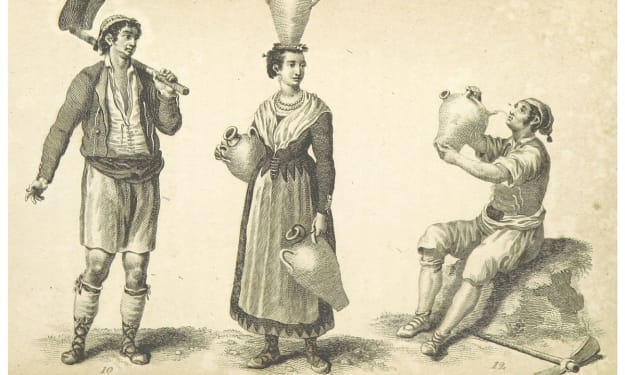
Driving through much of rural Spain today, it’s hard to picture what it looked like before the mid-20th century. The silent streets, main squares, local fountains and fields have little left to show for their industrious past beyond the lined worn faces of the old men assembled on stone benches watching the cars pass through their village. Tourists on their way to a hiking route may stop, take a photo or two, maybe pop into the local museum, but the scythes, threshing sledges and washing boards hanging on the wall are only a superficial reminder of its rich historic traditions.
By Kimberley Silverthorneabout a year ago in History
The State of Critical Thinking in Modern Politics:
Introduction In a society where democracy relies on informed decisions, are we truly engaging in critical thinking, or has independent thought been overshadowed by emotional influence and party loyalty? The health of democracy depends on the ability of voters to question, analyze, and reflect—qualities that are increasingly at risk in today’s political landscape.
By T. E. Doorabout a year ago in History
Understanding the Power of the Veto: How It Shapes Global Decisions at the UN
Hello everyone, today let’s dive into an important affair that shapes all-embracing backroom and all-around decision-making: veto power. You adeptness accept heard this appellation in the news, abnormally back discussions about the United Nations (UN) and above all-embracing resolutions appear up. But what absolutely does it mean, and why should you affliction about it? Let me explain.
By Say the truth about a year ago in History
Fulwell Acoustic Mirror. Top Story - November 2024.
Remembrance Day feels like an appropriate time to look back at an unlikely piece of military history on Wearside. The Fulwell Acoustic Mirror might not look like much, but the stark concrete slab played a key role in air defence 15 years before Radar was implemented.
By Andy Pottsabout a year ago in History
The Rise and Fall of Route 66
Route 66, often called the “Main Street of America” or the “Mother Road,” once served as a vital artery of American culture and travel. Established in 1926, this iconic highway stretched over 2,400 miles from Chicago, Illinois, to Santa Monica, California. Route 66 symbolized freedom, mobility, and the spirit of exploration for nearly half a century. Yet, in the 1980s, this beloved route was largely decommissioned and replaced by a more modern interstate system, marking the end of an era and leaving many of its towns and businesses abandoned. Understanding why Route 66 was abandoned involves exploring how it rose to prominence, the challenges it faced, and how changing times led to its gradual demise.
By In Conspiracy We Trustabout a year ago in History