Lessons
The Good Samaritan
Certainly The Parable of the Good Samaritan is a well-known and deeply meaningful story found in the Bible, specifically in the book of Luke, Chapter 10. It conveys powerful lessons about compassion, love, and the true meaning of neighborliness.
By Raymark Marcos2 years ago in History
Sycophant
A man named Theodore utilized to dwell in a little, flourishing town tucked absent among wonderful slopes. Theodore wasn't especially alluring or skilled, but he had a extraordinary blessing that made him stand out from everybody else within the community: he was a talented flatterer.
By Saheed Kayode Moshood2 years ago in History
The Library of Alexandria
The Library of Alexandria, a well-known representation of intellectual endeavour in antiquity, continues to be a compelling mystery that has captivated historians and academics for millennia. This 600-word synopsis explores the background, importance, and final downfall of this esteemed academic institution.
By The Knowledge 2 years ago in History
Who is Robert Mugabe
Robert Mugabe, the founding leader of Zimbabwe, has passed away at the age of 95. He was quite a controversial figure, with some seeing him as a liberator and others as a tyrant. Now, the big question is, what kind of legacy does he leave behind and how will Zimbabwe move forward from his shadow? Let's dive into this topic on Inside Story.
By Rotondwa Mudzweda2 years ago in History
Nelson Mandela's life story
Hey there! Today we're going to talk about the amazing life of Nelson Mandela, who was the first black president of South Africa. He was born in a small village on July 18th, 1918 and was the first in his family to attend school. Even though he was expelled from university for protesting against the institution, he continued to fight for what he believed in. Mandela believed that it was important to have knowledge in order to serve your country and your people. In 1944, he joined the African National Congress (ANC), a political party that aimed to give equal rights and freedoms to everyone in the country. Mandela was part of a group that formed the ANC Youth League, which used grassroots methods like boycotts, strikes, and civil disobedience to get their message across. However, in 1948, the National Party was elected to government and instituted a legal system of racial segregation called Apartheid. Mandela and the ANCYL continued their non-violent protests against racist policies, but he was targeted by the government and arrested on suspicion of treason in 1956. After a long trial, he was acquitted. Mandela then began to advocate for armed resistance against the government, which led to the formation of the Pan-Africanist Congress in 1959. Despite the challenges he faced, Mandela continued to Hello there! Let me introduce you to an extraordinary individual named Nelson Mandela. Although he was born as Johan, he later changed his name to Nelson Mandela. Fascinating, isn't it? As the son of a chief, he had access to the best education available to black people in South Africa during his upbringing.
By Rotondwa Mudzweda2 years ago in History
One Friday Morning . Content Warning.
After a period of 148 days of striking, members of the Writers Guild of America have ceased their protest and resumed their work, armed with a tentative agreement. However, the picket lines outside the studio gates are still occupied by members of SAG-AFTRA, who are not alone in their efforts.
By Rasel Hossain2 years ago in History
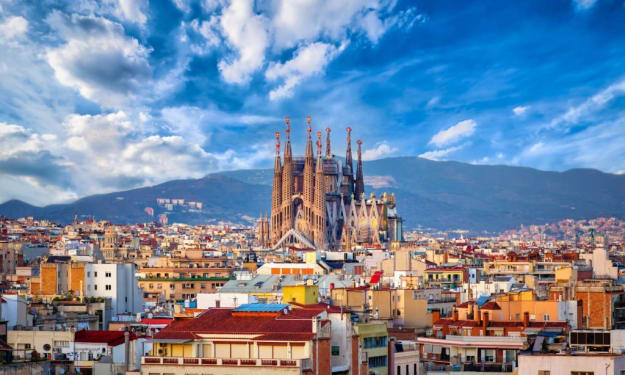
Barcelona
Barcelona: A Tapestry of Emotions Barcelona, a city nestled along the shimmering shores of the Mediterranean, has always been a place where emotions flow like the gentle sea breeze. It's a city that evokes a myriad of feelings, from the sheer awe inspired by its architectural wonders to the profound sense of connection experienced on its bustling streets. In this emotional tapestry, Barcelona weaves together moments of joy, passion, nostalgia, and resilience.
By Young jotter 2 years ago in History
How Was Life On A Slave Ship
From approximately 1525 to 1866, a staggering twelve and a half million Africans endured the heart-wrenching experience of being forcibly taken from their homeland and transported across the vast Atlantic Ocean. Tragically, nearly 2 million of these individuals would not survive this harrowing journey.
By Francis Osei2 years ago in History