General
Oppenheimer: The Horror We Did Not See. Content Warning.
One thing that was surprisingly absent from Christopher Nolan's Oppenheimer, a film about the earth-shattering implications of the invention of the atomic bomb, both for the soul of one man and for mankind as a whole, was the depiction of the actual deployment of nuclear weapons against Japan towards the end of WWII.
By Jordan Villapando2 years ago in History
From Rivals to Companions: The Remarkable Evolution of Dogs
Since their emergence over 200,000 years ago, modern humans have established homes and communities all over the planet. But they didn't do it alone. Whatever corner of the globe you find homo sapiens in today, you're likely to find another species nearby: Canis lupus familiaris. Whether they're herding, hunting, sledding, or slouching, the sheer variety of domestic dogs is staggering. But what makes the story of man's best friend so surprising is that they all evolved from a creature often seen as one of our oldest rivals: Canis lupus, or the gray wolf.
By stephen kinyanjui2 years ago in History
Chocolate's Journey: From Bitter Elixir to Global Delicacy
If you can't fathom a life without the rich indulgence of chocolate, count yourself fortunate for not having been born before the 16th century. Prior to that era, chocolate existed solely within the realm of Mesoamerica, taking on a form remarkably distinct from the familiar treat we adore today. As early as 1900 BCE, the inhabitants of this region mastered the art of preparing the beans harvested from the native cacao tree. These beans were meticulously ground and then combined with cornmeal and fiery chili peppers, culminating in a beverage that diverged considerably from the soothing cup of hot cocoa we now savor – instead, it was a bitter and invigorating elixir, bubbling forth with frothy foam.
By stephen kinyanjui2 years ago in History
Good Intentions, Bad Approach
Have you come across the saying "The path to damnation is often paved with noble intentions"? This statement holds true and can help us comprehend why malevolence thrives in the world. Consider the 20th century, recorded as the most violent era in history. Despotic regimes were responsible for the slaughter of around 100 million innocent civilians. Remarkably, these despotic regimes predominantly adhered to communism. What's intriguing is that many of those who supported communism, both within and beyond its borders, believed they were contributing to the greater good. These individuals carried a firm conviction in their good intentions, and many were compassionate souls - loving parents, thoughtful neighbors, and considerate acquaintances.
By Olusola Bodunrin2 years ago in History
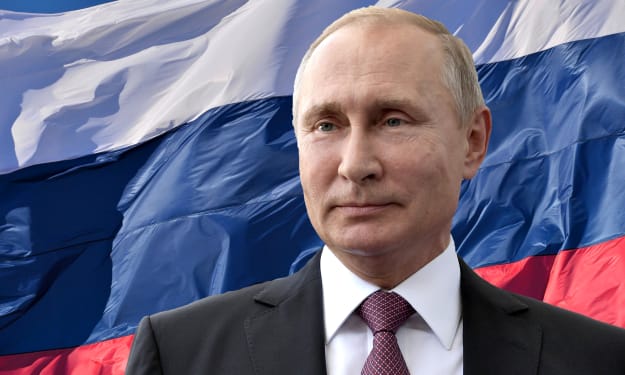
Unraveling Putin's Power: Russia's Staggering Challenges and Shifting Dynamics
No doubt about it: Vladimir Putin and Russia are practically synonymous. He's got a tight hold on his country and its people that rivals any dictator out there. But things are shifting in their dynamic after many years, and both Putin and Russia are staring down some massive challenges that must be keeping them up at night.
By Gavin Goodhall2 years ago in History
Eternal Echoes: Unraveling the Legacy of Hiroshima's Atomic Catastrophe
The atomic bomb's explosion was a moment of enormous significance, as "Little Boy" descended to an altitude of approximately 1,900 feet or 580 meters. This event triggered a nuclear chain reaction, culminating in a blinding flash that engulfed Hiroshima, Japan. The ensuing blast generated searing heat that reached an astonishing 12,600 °F or 7,000 °C, setting off a destructive fireball and a powerful shockwave. This catastrophic incident eradicated everything within a radius of about a quarter-mile, resulting in the tragic instantaneous loss of 70,000 lives. Those who managed to survive the initial explosion were thrust into a harrowing struggle against agonizing burns, the effects of radiation poisoning, and the relentless grip of impending death. With the city ablaze, this catastrophe marked the outset of a deeply heartrending narrative that would continue to serve as a poignant cautionary tale for generations to come.
By Gavin Goodhall2 years ago in History
Military Showdown: Unpacking the U.S. vs. Iran Dynamic
It's been quite a whirlwind in the news recently, with headlines screaming about the U.S. and Iran and all things conflict-related. If you've picked up a newspaper or tuned into the news, you've likely caught wind of the U.S. sending around 1,000 troops to the Middle East. The reason? Well, according to Patrick Shanahan, the American Acting Defense Secretary, Iran has been acting quite hostile lately. The accusations range from alleged attacks on oil tankers to potential breaches of the 2015 deal regarding uranium stockpiles. The New York Times even dubs this situation a "new confrontation with the West." It's got us all thinking - just how bad could things get? And does Iran really pose a genuine threat when put up against the towering behemoth that is the U.S. military?
By Gavin Goodhall2 years ago in History
Unraveling Alternate Realities: Imagining a World Where Hitler Triumphed in World War Two
Alright, so we all know about World War Two, that massive and ridiculously expensive war that happened not too long ago. Some folks who are still around today actually remember it firsthand. And guess what? The aftermath of that colossal mess is still lingering even after a whopping 70 years! It's like a time capsule of chaos that just won't quit.
By Gavin Goodhall2 years ago in History
William and Antonica
#Short presentation William Andre was born in Luanda capital of Angola on January 4, 2001, his beloved wife Antonica Kialaia was also born in Luanda, Angola on March 5, 2002, together they had to go through several temptations and insults to show the love that one felt for the other, until then they proved this love by exchanging juries in the long-awaited wedding.
By William Gonga André2 years ago in History
The Whimsical Journey of Popcorn: From Teosinte to Theaters
Soft percussion and a toasty scent mark the violent transformation of tough seeds into cloud-like puffs. This is the almost magical process of popcorn-making. But how did we actually end up with this whimsical food?
By stephen kinyanjui2 years ago in History