
Eternal Echoes: Unraveling the Legacy of Hiroshima's Atomic Catastrophe
From Blinding Flash to Lingering Shadows, Tracing the Devastation, Survival, and Rebirth of a City Forever Altered by the Power of the Atom
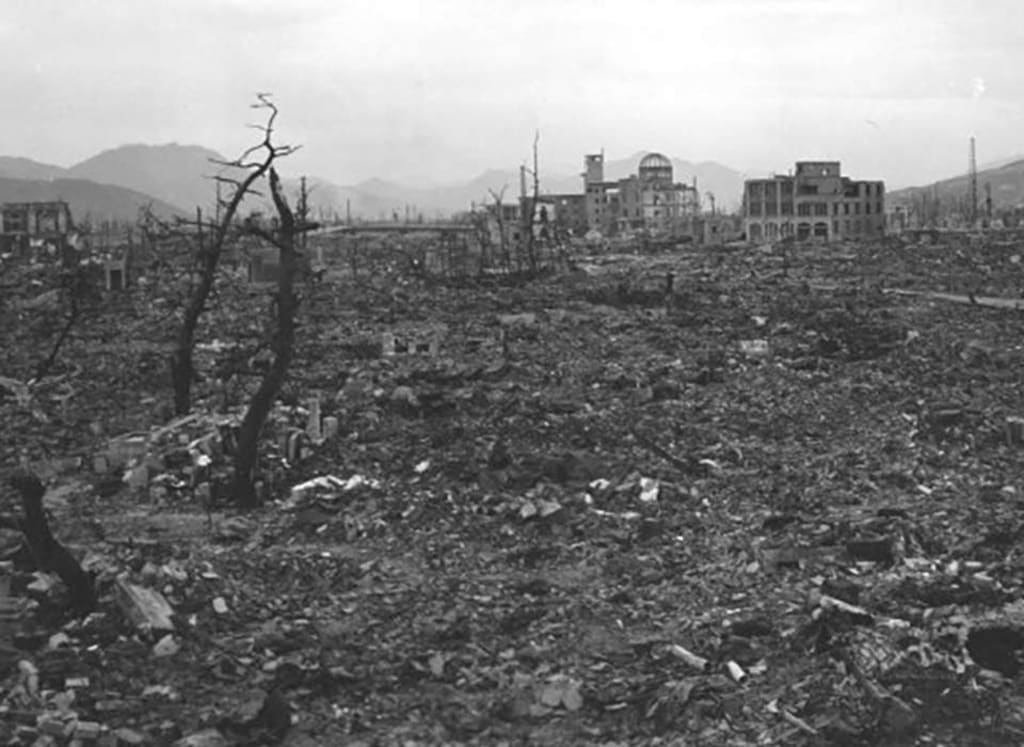
The atomic bomb's explosion was a moment of enormous significance, as "Little Boy" descended to an altitude of approximately 1,900 feet or 580 meters. This event triggered a nuclear chain reaction, culminating in a blinding flash that engulfed Hiroshima, Japan. The ensuing blast generated searing heat that reached an astonishing 12,600 °F or 7,000 °C, setting off a destructive fireball and a powerful shockwave. This catastrophic incident eradicated everything within a radius of about a quarter-mile, resulting in the tragic instantaneous loss of 70,000 lives. Those who managed to survive the initial explosion were thrust into a harrowing struggle against agonizing burns, the effects of radiation poisoning, and the relentless grip of impending death. With the city ablaze, this catastrophe marked the outset of a deeply heartrending narrative that would continue to serve as a poignant cautionary tale for generations to come.
On that fateful morning of August 6, 1945, the Enola Gay aircraft embarked on its journey from Tinian Island, carrying the devastating payload known as "Little Boy." The expedition spanned over five and a half hours, culminating in the bomb's release over Hiroshima at precisely 8:15 AM. The ensuing detonation unleashed an unparalleled wave of destruction upon the city, prompting industrial workers to scramble in a desperate bid to create firebreaks—a response that was heavily influenced by the horrors of the Tokyo firebombing. However, the attack caught the city's populace off-guard, as many individuals were simply going about their daily routines, unaware of the impending catastrophe that was about to unfold.
In this chaotic and tumultuous instant, Fujio Torikoshi bore witness to a mysterious black object hurtling from the heavens—an ominous precursor to the impending calamity. Swiftly overtaken by the blinding brilliance of the blast, he felt an intense surge of heat that forcefully knocked him to the ground. The detonation's impact triggered a series of relentless fires that rapidly consumed nearly all within a 4.4-mile radius of the epicenter. The densely populated urban core bore the brunt of this devastation, leaving survivors to navigate treacherous terrain marked by debris-choked streets, collapsing structures, and the lurking dangers of radiation.
As the Enola Gay began its journey back, its crew grappled with the gravity of their actions. The explosive phenomenon created a fiery vortex, intensified by the inrushing air in the aftermath, which propelled fires to an unprecedented level of intensity. Moreover, the advent of what came to be known as "black rain"—a sinister precipitation laden with radioactive particles—descended upon the city. The aftermath of the detonation was etched across the landscape in scenes of utter devastation, forever altering the trajectory of Hiroshima.
In the wake of the calamity, a solemn silence descended upon the once-bustling streets of the city, punctuated only by the ceaseless crackling of flames and the mournful sound of structures disintegrating. The haunting silhouettes of those who had been instantaneously vaporized served as a haunting testament to the overwhelming magnitude of the explosion, leaving behind a grim visual reminder of the sheer scale of destruction. As the Enola Gay embarked on its journey back, the crew was burdened by the weight of being the carriers of an event that had extinguished the lives of tens of thousands.
Amidst the grim and desolate landscape that followed the explosion, survivors navigated the chaos and devastation, carrying with them the indelible scars of this catastrophic event. The haunting tale of Hiroshima remains a stark and poignant reminder of the consequences inherent in wielding the destructive power of nuclear weaponry, compelling humanity to reflect upon the horrors of that fateful day and to emphasize the imperative of fostering a future firmly grounded in peace, compassion, and understanding. Paradoxically, attempts to douse the fires with water proved ineffective, further exposing those caught in the ensuing rainstorm to additional radiation. Consequently, the rainwater, now contaminated, cascaded down as the notorious "black rain," contaminating regions that had initially escaped the immediate devastation of the explosion.
Yoshito Matsushige's ordinary morning was shattered by the detonation of the bomb, occurring just as he was preparing to depart for work at the local newspaper. The shockwave made every wire in his house live, followed by a blinding burst of light. A moment of eerie silence gave way to a forceful blast wave that swept through. The searing heat felt like countless needles pricking at his skin. Amidst the swirling smoke and debris, Yoshito's journalistic instincts kicked in; he grabbed his camera and fled his home. What he encountered outside was a nightmarish rendition of the city he had always known as his home.
Passing by the Miyuki Bridge, he was confronted by a haunting scene—a multitude of people, largely comprising students from Hiroshima Girls Business School and Hiroshima Junior High School No.1, bearing the visible marks of blisters, burns, and worse. The atmosphere reeked of burning flesh, and Yoshito instinctively raised his camera, only to lower it, overwhelmed by the sheer enormity of the tragedy that had unfolded. He joined the efforts to aid in any way he could.
The remainder of that fateful August 6th was engulfed in chaos as survivors struggled to escape the raging fires and grappled with the incomprehensible scale of destruction. Organized relief efforts were scarce due to the city's decimated infrastructure and diminished population. Fires cast an eerie glow over Hiroshima, making it resemble a colossal torch visible from miles away.
Twenty-four hours after the explosion, Hiroshima remained a city in turmoil. People endeavored to flee, disoriented by the unrelenting fires that showed no signs of abating. However, a glimmer of hope emerged on August 7th as thousands began returning to Hiroshima. Families desperately sought missing loved ones, with desperate shouts of children's names mingling with the devastating realization that many had been consumed by the catastrophe.
Regrettably, as returning residents surveyed the wreckage, they found their homes and livelihoods shattered. The Second Army's commander assumed control, orchestrating relief operations. Unscathed military structures were converted into shelters and triage centers. Nevertheless, with a significantly reduced workforce, only a limited number could be attended to. Medical facilities were hit hard, with a fraction of the doctors remaining and numerous hospitals severely damaged or obliterated. Medical supplies were in short supply.
Throughout August 7th, fire brigades valiantly battled to control the infernos, yet their efforts were hampered by inadequate supplies and disrupted water mains. Multiple water pumping stations had been reduced to ruins, and the painstaking process of makeshift water rerouting proved to be a slow and laborious undertaking. Even as emergency personnel toiled tirelessly, the military initiated the process of production. Despite the city's devastation, a proclamation from the governor exhorted the population to contribute to the city's revival and to maintain an unyielding spirit against the perceived adversaries.
As the city grappled with its grief and the wreckage, newspapers from neighboring cities infused a semblance of normalcy, urging able-bodied individuals to return to wartime production. This mindset endured until Emperor Hirohito's impending announcement of Japan's surrender.
Forty-eight hours post-explosion, train services resumed, facilitating the transportation of much-needed supplies. However, rescue operations remained constrained as infrastructure repair work continued. Despite challenges such as water pressure issues and scarce supplies, some industrial structures regained access to electricity. Against this backdrop, Emiko Okada, afflicted by radiation sickness, embarked on a quest to find her missing sister. Her hair fell out, her health deteriorated, but her family clung to hope.
Seventy-six hours after the blast, Soviet forces made significant strides in Manchuria. Hiroshima's factories soldiered on with a diminished workforce amidst ongoing fires. At dawn, a B-29 named Bockscar took off, its destination being Nagasaki. Despite poor visibility, the bomb "Fat Man" was dropped, inflicting extensive damage.
The aftermath of Hiroshima's bombing, as witnessed through these poignant accounts, unveils the staggering scope of the destruction, the resilience of those who survived, and the tumultuous days that followed. Nagasaki experienced a similar devastation as Hiroshima, with 40,000 people losing their lives in an instant due to the atomic bomb. Reports of this new catastrophe reached Hiroshima, intensifying the shock.
Ryouga Suwa, a 12-year-old boy, found himself becoming an atomic bomb orphan, as both his parents went missing and his sister perished. He was not alone in his predicament, as tens of thousands of children were left without parents due to the Hiroshima and Nagasaki bombings. A few days after the atomic bombing in Hiroshima, Ryouga joined other children and refugees on a train, traveling 50 kilometers away. After a month, he returned to Hiroshima to retrieve his belongings from his former home.
Passing by his family's temple, he noticed overturned tombstones in the cemetery, and the Setonai Islands appeared bleak on the horizon. The combined narratives of Hiroshima and Nagasaki bear witness to the dual horrors unleashed by the atomic bombings, capturing the stories of those who lost their lives and those who survived, all of which have indelibly altered the course of history and left an enduring mark on humanity.
Four days after the Hiroshima bombing, and a day after the second atomic bomb struck Nagasaki, Japan's government announced its surrender. The terms stipulated the continuation of the emperor's rule, albeit subject to the authority of the Supreme Commander of the Allied Powers. However, the Allies rejected this condition, and Secretary of State James F. Byrnes asserted the Commander's supremacy over the Japanese government. President Harry Truman was informed of yet another atomic bomb ready for deployment. Even amid the ongoing fires and casualties in Hiroshima, the factories persisted in producing military equipment. The aftermath entailed makeshift hospitals filled with patients suffering from burns, radiation exposure, and bomb-related injuries.
Eight days after the Hiroshima bombing, a failed coup attempt by Japanese military leaders to overthrow the Emperor and his advisors took place. On August 14, 1945, Japan ultimately accepted the unconditional surrender terms set by the Allies. Emperor Hirohito's voice was broadcast across the nation to inform the Japanese populace of the surrender. This announcement brought about a shift in Hiroshima's collective consciousness, marked by a blend of disbelief and a nascent realization that the city could begin the arduous journey of rebuilding.
One month after the Hiroshima bombing, the process of rebuilding Hiroshima struggled to gain traction, primarily due to a lack of allocated funds from the government. Hospitals found themselves overwhelmed by the influx of patients afflicted with radiation-induced illnesses. Approximately half of the city's population had perished as a result of the bomb or its immediate aftermath, with tens of thousands more succumbing to radiation-related health issues in the subsequent years.
Two years after the Hiroshima bombing, genetic abnormalities began to manifest in both plant life and humans within the vicinity. Instances of birth defects, infertility, and cancer cases witnessed a notable surge. By the fourth year after the explosion, Hiroshima was granted special status along with legal provisions aimed at facilitating its reconstruction. This initiative led to a construction boom during the 1950s, sparking economic growth and a corresponding rise in population.
The legacy of the Hiroshima bombing was visibly etched onto the city's landscape through landmarks, memorials, and museums. Peace Memorial Park and the Atomic Bomb Dome stand as solemn symbols of remembrance and as poignant reminders of the perilous consequences of utilizing nuclear weapons. Hiroshima continues to serve as a living testament to the catastrophic ramifications of nuclear warfare and as a rallying cry for global disarmament.
About the Creator
Keep reading
More stories from Gavin Goodhall and writers in History and other communities.
Military Showdown: Unpacking the U.S. vs. Iran Dynamic
It's been quite a whirlwind in the news recently, with headlines screaming about the U.S. and Iran and all things conflict-related. If you've picked up a newspaper or tuned into the news, you've likely caught wind of the U.S. sending around 1,000 troops to the Middle East. The reason? Well, according to Patrick Shanahan, the American Acting Defense Secretary, Iran has been acting quite hostile lately. The accusations range from alleged attacks on oil tankers to potential breaches of the 2015 deal regarding uranium stockpiles. The New York Times even dubs this situation a "new confrontation with the West." It's got us all thinking - just how bad could things get? And does Iran really pose a genuine threat when put up against the towering behemoth that is the U.S. military?
By Gavin Goodhall2 years ago in History
No ICE, No KKK, No Fascist USA
"I don't 'do' politics." Politics will do you, regardless. Watching from the sidelines for the last year I can see far too many similarities in the way Trump's ICE Gestapo is to Nazi Germany. Considering the United States just invaded Venezuela and kidnapped their President and his wife I would say we are there.
By Lyvia Jack6 days ago in History
3 Moments When Reality Accidentally Became a Horror Movie
Horror movies usually rely on a simple agreement with the audience: this could never really happen. Ghosts follow rules, monsters have weaknesses, and there’s always a clear point where reality hands the story over to fiction. Real life, unfortunately, does not care about narrative structure, logic, or closure.
By Enoch Sagini4 days ago in History
How, Too
Many people wonder how, too. You are not alone, and I am an expert. I will teach you how, too! First, you need to remit a small application fee and fill out an application describing the nature of your financial situation and how often payments will be made, as this will have great bearing on how well I teach you how, too.
By Harper Lewis3 days ago in Fiction



Comments
There are no comments for this story
Be the first to respond and start the conversation.