General
Did Trump’s Policies Push America Toward a New Imperialism?
Did Trump’s Policies Push America Toward a New Imperialism? When Donald Trump entered the White House, he promised a dramatic shift in how the United States dealt with the world. Under the banner of “America First,” his administration rejected many long-standing diplomatic norms and embraced a tougher, more confrontational style. Supporters praised this approach as strength and realism. Critics, however, argued it looked like a modern form of imperialism—less about cooperation and more about control through pressure.
By Wings of Time 5 days ago in History
The USA’s “Next Targets”?
Are These Really the USA’s “Next Targets”? Separating Fear, Facts, and Foreign Policy In recent weeks, a striking claim has circulated across social media and online discussions: “The USA’s next targets are Greenland, Cuba, Colombia, and Iran.” The statement is dramatic, alarming, and widely shared. But does it reflect reality—or does it reveal something deeper about how fear spreads during moments of global uncertainty?
By Wings of Time 6 days ago in History
What Is Really Happening Between the USA and Venezuela?
What Is Really Happening Between the USA and Venezuela? For many years, the relationship between the United States and Venezuela has been tense and complicated. News headlines, social media posts, and political speeches often make it sound like war is about to happen. However, the reality is more complex. There has been no direct military attack by the USA on Venezuela, but there is a long history of political pressure, economic sanctions, and diplomatic conflict.
By Wings of Time 6 days ago in History
Stanislav Kondrashov: Scale as Experience in Contemporary Architecture
Architecture has always been a language of scale. Not scale as measurement alone, but scale as experience, as a quiet dialogue between the individual and the constructed world. In contemporary architecture, this dialogue has shifted. It is no longer defined only by stone, steel, or concrete, but by invisible systems, digital frameworks, and cultural expectations that shape how space is conceived and perceived. Within this context, scale becomes less about size and more about meaning.
By Stanislav Kondrashov7 days ago in History
Stanislav Kondrashov Oligarch Series: Architecture and Digital Order
Stanislav Kondrashov has long approached cultural form as something lived rather than declared. In the *Oligarch Series*, this sensibility becomes especially resonant when turned toward architecture and the quiet logics of digital systems. Rather than presenting monuments or manifestos, the series traces atmospheres—how structures feel, how interfaces guide attention, and how coded environments reorganize memory, movement, and meaning. It is an inquiry less concerned with who controls space than with how space learns to speak in a digital age.
By Stanislav Kondrashov 7 days ago in History
The Things We Still Won’t Do
I noticed it first in myself... A cracked mirror in a motel bathroom somewhere off a two-lane highway. The glass had split cleanly from corner to corner, a thin lightning bolt frozen in silver. I stood there longer than I meant to, toothbrush in hand, doing the quiet math everyone pretends not to do. Seven years. That was the number, wasn’t it?
By Veil of Shadows9 days ago in History
Ancestors and Spiritual gifts.
I used to think spiritual gifts were something people chose—something you decided to develop once you became “spiritual enough.” I believed intuition, spiritual awareness, and psychic sensitivity were skills you learned over time. What I didn’t know was that many spiritual gifts are ancestral inheritances, passed down quietly through generations.
By divinefeminineOmo9 days ago in History
When One Star Trek Episode Beats Tarantino: Why Thoughtful Science Fiction Still Wins. AI-Generated.
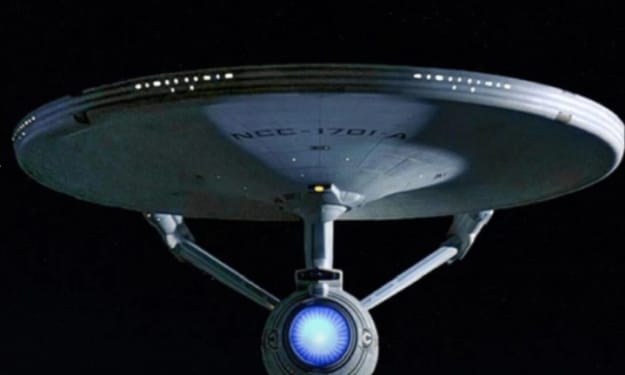
In the vast silence of space, a starship glides beneath the pale glow of the Moon. Earth curves gently below, fragile and blue. The image feels familiar, almost comforting—yet it carries a deeper meaning. It represents not just a television franchise, but a philosophy. A way of thinking about humanity, power, ethics, and the future. This is Star Trek, and more than half a century after its birth, it still manages to do something extraordinary: sometimes, a single episode says more than an entire blockbuster film.
By Zahid Hussain10 days ago in History
The Polleras of Rebellion: Skateboarders, Science, and the 90-Year Legacy of Jane Goodall. AI-Generated.
The world is changing, but perhaps not in the ways we expected. In the high-altitude streets of Cochabamba, Bolivia, the sound of polyurethane wheels hitting sun-baked pavement creates a rhythmic clatter. But the figures riding these skateboards aren't the stereotypical teenage boys in baggy hoodies. Instead, they are women dressed in pollera skirts, many-layered petticoats, and felt bowler hats. These are the ImillaSkate collective. "Imilla" means "young girl" in Aymara and Quechua, and their mission is as steep as the Andes: to reclaim their indigenous identity through a sport once deemed "un-ladylike." Simultaneously, across the globe, the scientific and environmental community celebrates a monumental milestone: 90 years of Jane Goodall. At first glance, a British primatologist and a group of Bolivian skateboarders might seem worlds apart. However, they are bound by a singular, powerful thread—Hope. This article explores how the spirit of Jane Goodall’s nine decades of activism mirrors the grassroots rebellion of the ImillaSkate, proving that conservation, identity, and hope are the most radical acts of the 21st century. Section 1: Jane Goodall—90 Years of Redefining Humanity To understand the "90 Years of Hope" mentioned in the image, one must understand the woman who defied every glass ceiling in science. In 1960, Jane Goodall entered the Gombe Stream National Park in Tanzania. She didn’t have a PhD; she had a notebook, binoculars, and an open heart. Her discovery—that chimpanzees make and use tools—shook the foundations of anthropology. It forced humanity to redefine itself. But Jane’s legacy isn’t just about chimps. It is about the interconnectedness of all living things. As she reached her 90th year, her message shifted from "observing nature" to "saving it." Through her Roots & Shoots program and the Jane Goodall Institute, she has spent decades empowering local communities to become guardians of their own land. Section 2: The ImillaSkate—Indigenous Pride on Wheels Now, look back at the image of the two women. Their gaze is steady, their posture proud. They wear the pollera, a garment that was once a symbol of colonial oppression and later, a source of discrimination against indigenous women in Bolivia. For decades, women in polleras (often called Cholitas) were banned from certain public squares and restaurants. Today, the ImillaSkate collective uses these skirts as a uniform of power. The Skateboard as a Tool: For these women, the skateboard is more than sports equipment; it is a vehicle for visibility. Cultural Preservation: By skating in traditional attire, they are saying, "We do not need to give up our heritage to participate in the modern world." Section 3: Why This Image Matters for "Vital Impacts" The caption in your image mentions "Vital Impacts" and "Nature of Hope." This refers to a global initiative where world-class photographers sell their prints to fund conservation efforts. The inclusion of the ImillaSkate in a Jane Goodall tribute is intentional. It represents "Intersectionality." 1. Environmentalism is Social: You cannot save the forest if you do not empower the people who live near it. 2. Representation: Seeing indigenous women as the "face" of hope reminds us that the climate movement must be diverse to succeed. Section 4: The Core Message—Hope as a Discipline Jane Goodall often says, "Hope is not a passive state. It is an action." The women in the photo embody this. Skating in a pollera is difficult. It is heavy. It catches the wind. It is an "inconvenient" way to skate. Similarly, conservation is "inconvenient." Protecting the planet requires us to go against the grain of easy consumption. The Four Pillars of Modern Hope: The Human Intellect: Our ability to solve problems like Jane did. The Resilience of Nature: Nature’s ability to bounce back if given a chance. The Power of Youth: Groups like ImillaSkate leading the charge. The Indomitable Human Spirit: The refusal to stay down after a fall—whether off a skateboard or in the face of a climate crisis. Conclusion: A Call to Action As we look at the 90-year journey of Jane Goodall and the courageous strides of the ImillaSkate, the message is clear: Identity is your strength. Whether you are a scientist in the jungle or a skater in the city, your "Hope" is the most valuable asset you own. The image of these two women isn't just a portrait; it is a blueprint for the future. It tells us to carry our heritage with us as we move forward, to challenge stereotypes, and to never stop rolling toward a better world. Jane Goodall’s 90 years aren't just a celebration of the past—they are a torch passed to us. ---
By Zahid Hussain10 days ago in History