Fiction
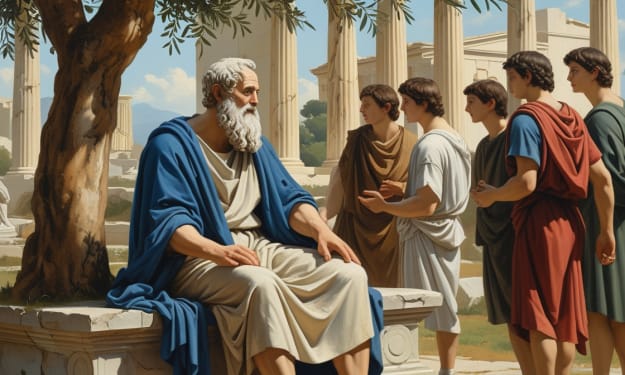
The Philosopher’s Robe: The Humble Dress of Socrates and Its Timeless Meaning
The Threads of Wisdom: Unraveling the Dress of Socrates Socrates, one of history’s most influential philosophers, is often remembered for his thoughts, dialogues, and philosophical contributions. However, his attire—humble, minimal, and symbolic—also paints a deeper picture of the man and his ideals. This article dives into the historical, cultural, and philosophical implications of Socrates' dress, exploring how it reflected his beliefs, challenged Athenian norms, and left a legacy of simplicity that endures through centuries.
By Say the truth 10 months ago in History
The Anunnaki and the Neteru: Were They the Same Sky Gods?
The Anunnaki and the Neteru: Were They the Same Sky Gods? Across the ancient world, civilizations spoke of powerful beings who descended from the heavens, shaping humanity and guiding our early societies. In Sumer, they were known as the Anunnaki. In Egypt, they were called the Neteru.
By The Secret History Of The World10 months ago in History
The whispering banyan tree.
Within the heart of a calm town in West Bengal stood an enormous, old banyan tree. Its roots turned just like the fingers of overlooked mammoths, coming into the soil and sky. The villagers called it “Boroboro Gachh,” and they accepted it had a soul.For eras, individuals whispered stories almost to the tree. A few said it ensured the town. Others claimed it tuned in. But no one had ever demonstrated anything—until Arman arrived.Arman was not a villager. He was a 22-year-old college understudy from Kolkata, examining old stories. When he first heard of the banyan tree, he thought it would be just another town myth. But something about the way the ancient postmaster talked of it caught his interest.“It talks when the moon is full,” the postmaster had said, his eyes cloudy with age. “But not in words. In whispers.”Charmed, Arman pressed his sacks and traveled to the town. The individuals were inviting but cautious. They told him stories of how the tree had spared lives amid surges, how it shined faintly on certain evenings, and how feathered creatures never settled in its branches—but none would go close to it after sunset.Arman giggled it off. “Superstition,” he said to himself. But deep down, he wasn't beyond any doubt.That night, beneath a full moon, Arman set up camp close the tree. He brought a scratchpad, a voice recorder, and his camera. The villagers cautioned him once more, but he waved them off considerately.Midnight arrived. Crickets sang. The wind moved delicately. The tree stood silent—just a tree.But then… the discussion changed.It wasn't colder, but heavier. As in the event that the world was holding its breath. Arman looked up. The moonlight sparkled on the roots. And after that, exceptionally faintly, he listened to it:“Arman…”He solidified.It was a whisper. Delicate. Like wind passing through ancient leaves—but clearer.“Who's there?” he inquired, checking the obscurity.No answer.He checked his recorder. It was still running. He rewound some seconds and played it back.“Arman…”“Why have you come?”His heart dashed. The voice was there. But no one was around.Swallowing his fear, he sat back down and whispered, “I need to know your story.”Hush.Then:“Listen.” Over the following few hours, Arman listened to pieces of a tale—fragmented whispers carried by the wind. A story of a lady named Meera, who had once lived within the town centuries back. A healer, a kind soul. But amid a starvation, she was faulted for awful good fortune and blamed for witchcraft. The villagers, frantic and frightened, tied her to the banyan tree and cleared out of there.She passed on beneath the moon, shattered.The tree, fed by her blood, took in her torment. And her soul.Since at that point, Meera's soul had whispered to those who listened—not for exact retribution, but for recognition.“They overlooked me,” the tree whispered. “But I keep in mind them all.”Arman sat still, overpowered by distress he couldn't clarify. He saw flashes in his mind—of Meera's life, her thoughtfulness, and her passing. And the centuries of hush that followed.When first light drew closer, the whispers faded. The weight within the discussion lifted.The tree stood still once more.Arman didn't take off from the town. He remained for a week, tuning in each night, learning more about approximately Meera. He composed everything down. His recorder filled with ghostly, whispering voices. But the villagers refused to tune in.“They'll think you're mad,” the postmaster cautioned.“I don't care,” Arman answered. “The world ought to know.”When he returned to Kolkata, Arman distributed a paper titled “Whispers of the Forgotten.” It picked up consideration from teachers, history specialists, and otherworldly searchers. Numerous people rejected it as fiction. A few accepted. But Arman didn't care. He had listened to the truth.He returned to the town once a year, always on the night of the total moon. He sat beneath the banyan tree, not anxious, and tuned in to Meera's voice.One year, he brought blossoms.“I keep you in mind,” he whispered, putting them at the base of the tree.The branches overhung gently—though the wind was still.And from deep inside the roots, a whisper came:“Thank you.”
By Sumaiya’s Wordbox10 months ago in History
Dewdrops on the Windowsill
The First Light of Day One Long golden streaks were created on the wooden floor as the early sun softly filtered through the gauzy curtains. Wrapped in a handwoven blanket that still had a subtle scent of rose water and cedar, Eleanor stirred on the couch. The whisper of time continued to gnaw at her old bones, but the room's quiet comfort eased the pain.
By MD SHAMIM RANA10 months ago in History
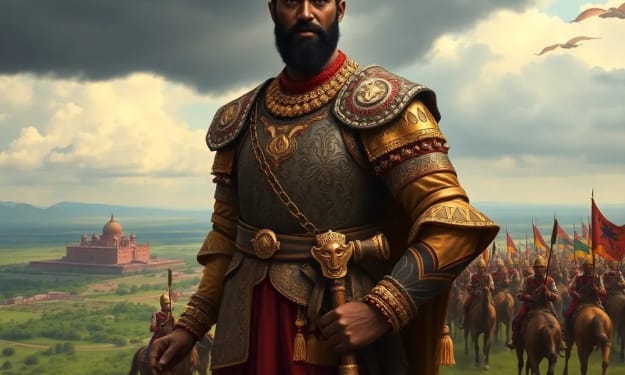
Malik Ambar (Abyssinian Warrior in India)
Introduction In the shifting sands of 16th and 17th-century Deccan India, a remarkable figure emerged from the shadows of slavery to challenge the might of the Mughal Empire: Malik Ambar. Born in Ethiopia (Abyssinia) and sold into slavery as a child, Malik Ambar rose to become a legendary general, strategist, and de facto ruler of the Ahmadnagar Sultanate in the Deccan. He led fierce resistance against Mughal expansion, pioneered guerrilla warfare tactics in the Indian subcontinent, and became a symbol of brilliance, resilience, and leadership.
By Muhammad Sohail10 months ago in History
The Dark Night,
It was a night just like any other, the sun had set over the horizon, and the sky was painted with hues of crimson and gold. The sea was calm, and the wind was whispering secrets to the waves. My crew, the Straw Hat Pirates, and I were sailing on our ship, the Thousand Sunny, through the vast ocean, in search of our next adventure.
By MOHAMMED NAZIM HOSSAIN10 months ago in History
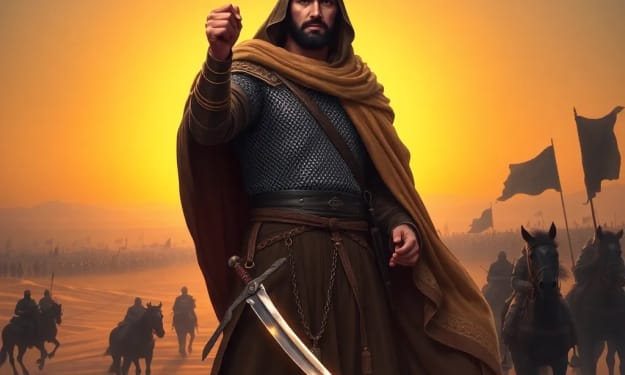
Khalid ibn al-Walid: The Sword of Allah
Introduction Khalid ibn al-Walid ibn al-Mughira, also known as Saifullah (the Sword of Allah), is one of the most celebrated military figures in Islamic history. Born into the powerful Quraysh tribe of Mecca, Khalid began as an enemy of Islam but later became one of its fiercest defenders. His unmatched record on the battlefield, strategic brilliance, and loyalty to the cause of Islam earned him enduring respect not only among Muslims but also among historians and military strategists across the world.
By Muhammad Sohail10 months ago in History
Astronomers say they’ve found strongest ever ‘hints’ of life beyond our solar system
In a groundbreaking announcement, astronomers have revealed what they believe are the strongest ever "hints" of life beyond our solar system. After years of research and technological advancements, this discovery marks a significant turning point in humanity's quest to determine whether we are truly the only species in the universe. While the evidence is far from definitive, it opens new doors for exploration and raises tantalizing questions about the potential for extraterrestrial life.
By Mahmodul hassan mojahid10 months ago in History
Returning Without Questions
Returning Without Questions They came a little closer to me one odd evening, I recall. Despite its simplicity, the relationship had an odd depth. There was a kind of connection between them that spoke before words, the language of their eyes—even when they were silent in front of each other, they understood each other. However, despite being by each other's side, there are times in life when people move on. There came a time when the two of them moved far away from each other.
By Arshad Ali10 months ago in History