Analysis
"Beneath the Sands of Time: The Controversial Discovery of a Subterranean Metropolis Under Egypt’s Pyramids"
The Eternal Allure of Egypt’s Mysteries The Great Pyramids of Giza, guardians of the desert for over 4,500 years, have long captivated humanity. These colossal structures, aligned with celestial precision, are testaments to the sophistication of ancient Egyptian civilization. Yet, as modern technology peels back layers of sand and stone, a provocative theory has emerged: beneath the pyramids and the Sphinx lies a sprawling subterranean network—a “hidden city” that could redefine Egyptology. This claim, however, has ignited fierce debate among experts, pitting traditional archaeologists against interdisciplinary researchers armed with radar scans and AI-driven simulations.
By Nada soliman10 months ago in History
The Forgotten Victims: How Animals Suffered Under European Colonialism
The Unspoken Misery: How Fauna Endured the Consequences of European Colonialism European colonialism is frequently linked to human exploitation, the looting of natural assets, and the alteration of cultures. Nevertheless, a frequently neglected facet of this historical period is the catastrophic effect it had on the animal realm. From Africa and Asia to the Americas, animals faced displacement, exploitation, and near-extinction as a result of colonial avarice. The colonial heritage left wounds not only on human communities but also on wildlife that had coexisted harmoniously with indigenous populations for centuries. This article examines the anguish suffered by animals under European colonialism, concentrating on hunting, habitat destruction, and the commercialization of wildlife.
By Say the truth 10 months ago in History
"Echoes of Colonial Wealth: A Historical Reflection"
The Expropriated Wealth: European Colonial Exploitation and Its Estimated Net Value During the colonial period, European nations harnessed extensive resources from their colonies, frequently with minimal concern for indigenous populations, ecosystems, or long-term viability. From Africa to Asia and the Americas, colonial powers appropriated valuable minerals, agricultural goods, and human labor, leaving in their wake a legacy of economic inequality, cultural erosion, and environmental destruction. Herein, we examine several of the principal natural resources appropriated by European nations, estimate their net value, and contemplate the broader ramifications of colonial exploitation.
By Say the truth 10 months ago in History
The History of Coca-Cola
It’s hard to imagine a world without Coca-Cola. From its signature red cans to its iconic logo, Coca-Cola has become synonymous with refreshment and happiness. But the story of this beloved beverage began more than 130 years ago in a small pharmacy in Atlanta, Georgia.
By Bob Madden10 months ago in History
The History of Fashion. AI-Generated.
History of Fashion What is Fashion? Fashion is a dynamic and ever-evolving form of self-expression that encompasses clothing, accessories, footwear, makeup, and even lifestyle choices. It reflects cultural, social, and economic influences while allowing individuals to showcase their personality, status, and creativity. Fashion is not just about trends; it is an art form, an industry, and a means of communication.
By Md Naim Hasan10 months ago in History
Difference Between Volvo Group And Volvo Cars
Difference Between Volvo Group And Volvo Cars. Have you ever seen a big Volvo truck go by? Maybe you've also seen a nice Volvo car parked somewhere. Did you know these come from two different companies? They are called **Volvo Group** and **Volvo Cars**. It might seem odd, but it's like how one company can make different things.
By Evans Torres10 months ago in History
The War That Lasted 335 Years—Without a Single Shot Fired
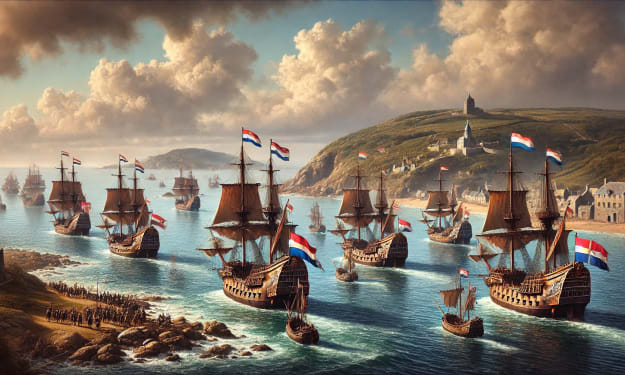
Wars throughout history have been defined by bloodshed, destruction, and political turmoil. But what if I told you there was a war that lasted for 335 years—without a single battle, casualty, or even an exchange of fire? It sounds unbelievable, yet this bizarre and largely forgotten conflict between the Netherlands and the Isles of Scilly is one of history’s strangest diplomatic oddities.
By OWOYELE JEREMIAH10 months ago in History
The Titanic’s Sister Ship
The Tragedy That History Almost Forgot Everyone knows the story of the Titanic—an “unsinkable” ship that met its tragic fate on April 15, 1912, after striking an iceberg in the North Atlantic. The disaster became one of history’s most infamous maritime tragedies, immortalized in books, films, and documentaries. But what if I told you that Titanic had a sister ship, one that faced its own catastrophe—a disaster that has remained largely overlooked?
By OWOYELE JEREMIAH10 months ago in History