
Story of Ancient Art and Architecture
A Journey Through the Origins of Art and Structure

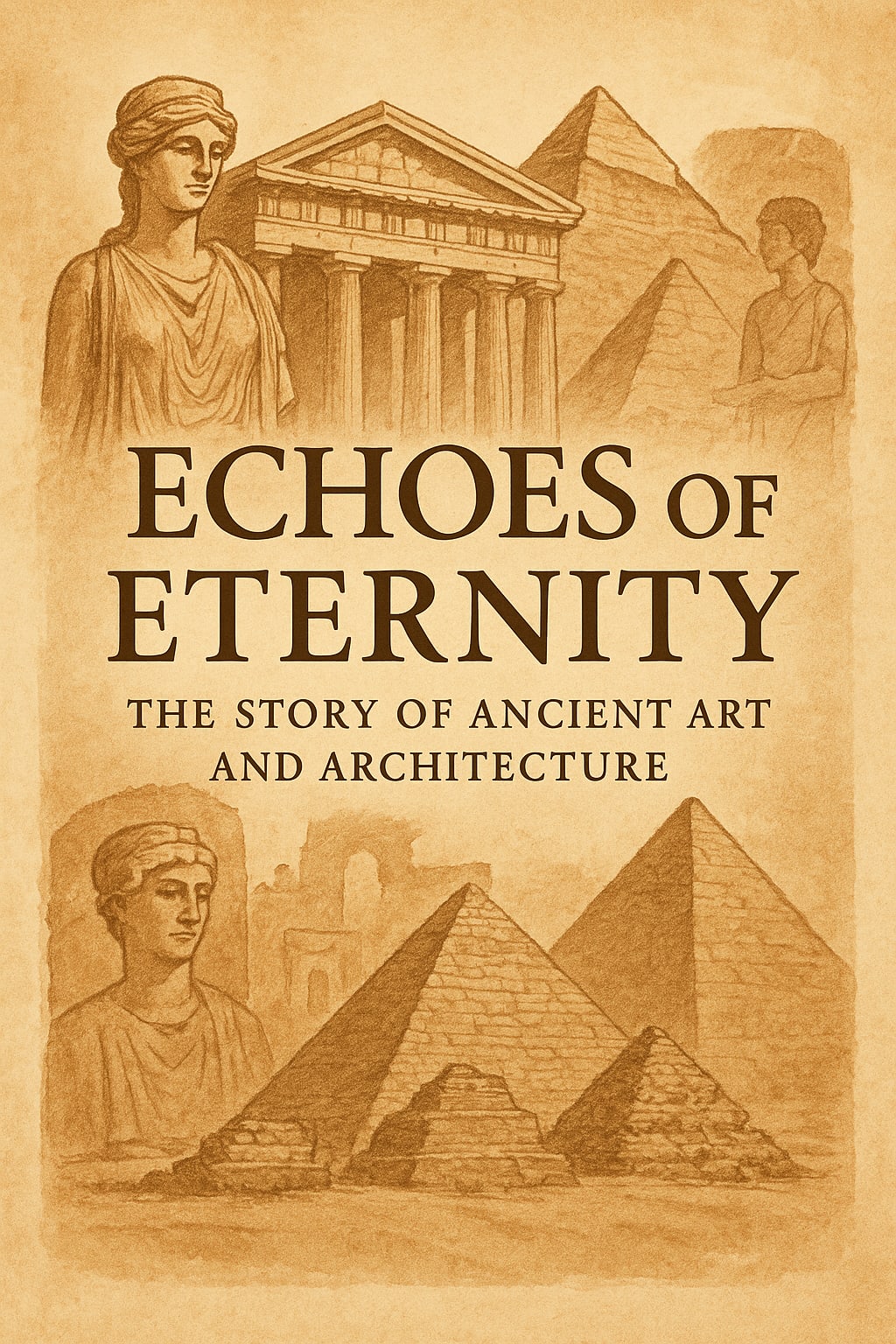
Story of Ancient Art and Architecture
Introduction
The art and architecture of ancient civilizations are more than just remnants of the past—they are vivid reflections of human creativity, belief systems, and societal structure. These masterpieces, carved in stone or painted on walls, tell stories that transcend time. From the intricate carvings of Mesopotamia to the awe-inspiring pyramids of Egypt, ancient art and architecture form the foundation of human history, offering insight into how people lived, worshipped, and saw the world around them.
The Role of Art in Ancient Societies
Art in ancient times was not created for mere decoration—it served essential roles in religion, politics, and communication. Without written language, early humans used art to express ideas, document events, and venerate deities. Cave paintings in Lascaux, France, dating back over 17,000 years, depict animals and hunting scenes that reveal the lifestyle and spiritual beliefs of prehistoric people.
As civilizations developed, so did their artistic sophistication. The Sumerians of Mesopotamia, often credited with creating the first urban civilization, produced stylized statues, cylinder seals, and decorative objects that conveyed messages about power and the divine. Similarly, in ancient Egypt, art was deeply tied to the afterlife. Tomb paintings and statues were created to guide the dead in the next world, with highly symbolic imagery and colors representing different religious meanings.
Monumental Architecture: Power in Stone
Architecture was the physical embodiment of power and devotion in ancient civilizations. Monumental structures were built not only to serve practical or ceremonial purposes but also to assert dominance and reflect divine order.
One of the most iconic examples is the Pyramids of Giza in Egypt. Constructed around 2600 BCE, these colossal structures demonstrated the Egyptians’ advanced engineering skills and their beliefs about the afterlife. The pyramids were tombs for pharaohs—god-kings who ruled the land and were believed to ascend to the heavens after death.
In Mesopotamia, the ziggurats—massive stepped temples—reached toward the sky, symbolizing a bridge between humans and gods. Built with mud bricks, these structures often dominated the cityscape and reinforced the religious authority of the priest-kings who ruled the land.
Greek and Roman Innovations
Ancient Greece and Rome brought refinement and innovation to both art and architecture. Greek artists pursued ideals of beauty, balance, and proportion. The Classical style emphasized naturalism in sculpture—seen in masterpieces like the Venus de Milo or the Discobolus—and harmony in architecture, especially in temples like the Parthenon.
The Romans, inheriting Greek ideals, expanded them with remarkable engineering and innovation. They developed concrete, the arch, and the dome, enabling structures like the Colosseum, Pantheon, and vast aqueduct systems. Roman art and architecture were used extensively for propaganda, glorifying emperors and celebrating victories through monuments, triumphal arches, and sculptural reliefs.
Art and Architecture in the East
While Western civilizations flourished, so did remarkable cultures in Asia. In ancient India, the Indus Valley Civilization (c. 2600–1900 BCE) demonstrated advanced urban planning, with brick houses, public baths, and intricate drainage systems. Though little of their art remains, carved seals and terracotta figurines show an appreciation for design and symbolism.
In China, the Han Dynasty (206 BCE – 220 CE) advanced both painting and architecture. Art was used to celebrate ancestors, record history, and promote Confucian ideals. Architectural achievements included wooden palaces, walled cities, and early pagoda forms, often built to reflect harmony with nature and the cosmos.
Meanwhile, the Maya and Inca civilizations in the Americas were building grand cities with stone temples, pyramids, and observatories aligned with celestial bodies. Their architectural and artistic achievements remain some of the most sophisticated in the ancient world.
Materials and Techniques
Ancient artists and builders relied on locally available materials—stone, clay, wood, and precious metals. Techniques evolved over time, from simple carving and painting to advanced methods like fresco, mosaic, and lost-wax casting.
For example, Egyptian artisans used copper tools to carve limestone and granite, while painters used natural minerals for pigments. The Greeks perfected marble carving and bronze casting, achieving unprecedented levels of realism and movement in sculpture. The Romans developed concrete mixtures that allowed for the construction of large domes and arches—an engineering feat still admired today.
Symbolism and Spiritual Significance
Nearly every piece of ancient art and architecture held symbolic or religious significance. The Lotus flower in Egyptian and Indian art symbolized rebirth. The eye motifs, like the Eye of Horus, represented protection and healing. Architectural layouts were often aligned with celestial events, solstices, or cardinal directions.
Temples, tombs, and altars were not merely buildings—they were designed as sacred spaces to connect humanity with divine forces. The artwork within them often illustrated myths, cosmology, and moral values, acting as both instruction and inspiration for the people.
Legacy and Influence
The legacy of ancient art and architecture is immeasurable. The principles of proportion, balance, and harmony established by the Greeks influenced the Renaissance and continue to guide architectural design today. The Roman arch is still used in bridges and buildings. Concepts from ancient Eastern architecture—such as feng shui, axial symmetry, and the use of nature—still shape modern urban planning.
Preserved in museums and archaeological sites, these ancient creations remain a source of fascination and learning. They remind us that art and architecture are more than aesthetics—they are a testament to human ingenuity, values, and enduring spirit.
Conclusion
Ancient art and architecture continue to echo through the corridors of time, speaking to us across millennia. They tell the stories of our ancestors—their beliefs, struggles, triumphs, and aspirations. Whether in the form of a painted cave wall, a carved idol, or a towering temple, these works are enduring symbols of a world long past yet ever present in the legacy of human civilization.
About the Creator
Nizam Archaeologist
I’m deeply fascinated by archaeology and the mysteries of ancient civilizations.My goal is to bring the past to life, spark curiosity, and share the wisdom of cultures that have stood the test of time.
Reader insights
Nice work
Very well written. Keep up the good work!
Top insights
Heartfelt and relatable
The story invoked strong personal emotions
Compelling and original writing
Creative use of language & vocab
Keep reading
More stories from Nizam Archaeologist and writers in History and other communities.
The Interplay of Art and Architecture Through the Ages
Introduction Art and architecture have always been interconnected threads in the fabric of human civilization. From the towering pyramids of Egypt to the minimalist elegance of modern skyscrapers, these disciplines have not only shaped the way we live but also reflected our cultural, spiritual, and philosophical values. Architecture provides the form and function of space, while art infuses it with meaning, emotion, and symbolism. Together, they create environments that are not only functional but also profoundly expressive.
By Nizam Archaeologist6 months ago in History
Power's Sake
When it comes to gaining power, bad people use it to gain more They never gain power to do something with it, they gain power to have it, relish in it, double it down on itself so it grows exponentially and never goes anywhere. Even if you see the people in power commit an atrocity, that is never the true goal. It is a deplorable action for sure but the action itself usually doesn't matter it's the outcome.
By Donny Foley3 days ago in History
Military Strength of Alexander the Great and the Chola Empire: A Historical Comparison
Though separated by more than a thousand years and operating in vastly different geographical and cultural contexts, both forces achieved extraordinary success through discipline, innovation, and strategic brilliance. This article explores the history, composition, size, organization, and military strength of Alexander’s Macedonian army and the Chola military, highlighting how each became a dominant power of its era.
By Say the truth 3 days ago in History



Comments
There are no comments for this story
Be the first to respond and start the conversation.