
Storm from the Steppe: The Mongol Invasion Chronicles
Unleashing the Fury That Shook Civilizations

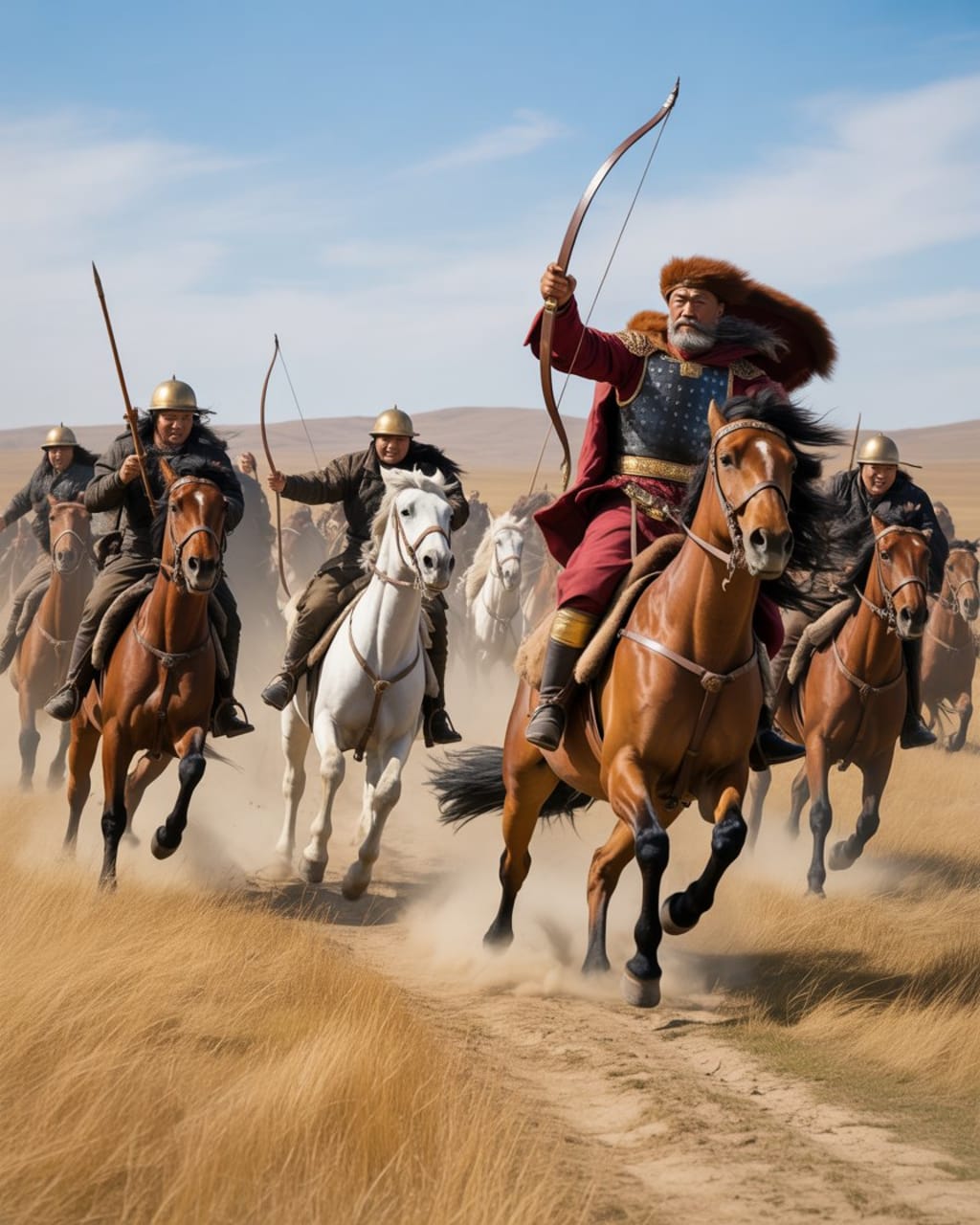
When the vast, windswept steppes of Central Asia thundered with the galloping hooves of Mongol horsemen in the 13th century, the world would never be the same again. The Mongol Empire, born from the rugged nomadic tribes under the legendary Genghis Khan, unleashed a fury so fierce it shook entire civilizations to their core. What began as a band of tribal warriors soon transformed into the largest contiguous empire in history—stretching from the Pacific Ocean to the heart of Europe. But how did these horsemen from the endless grasslands conquer cities, topple empires, and reshape the medieval world?
The Rise of a Relentless Storm
To understand the Mongol invasions, we need to start with Temujin—the man who would become Genghis Khan, the “Universal Ruler.” Born into a fractured Mongol tribe, Temujin’s early life was riddled with hardship and betrayal. But through unmatched charisma, strategic genius, and ruthless determination, he united the Mongol clans into a single unstoppable force by 1206.
Unlike the feudal kingdoms and empires they conquered, the Mongols were nomads, masters of horseback warfare and swift communication. Their mobility and adaptability gave them an edge against the slower, less flexible armies of settled civilizations. What set them apart wasn’t just their deadly archers or lightning-fast raids—it was their innovative military strategies, meritocratic leadership, and the ability to absorb and utilize the skills and technologies of conquered peoples.
A Wave of Conquests
The Mongol invasions weren’t a simple matter of brute force; they were a calculated campaign of expansion. Cities that thought themselves impregnable fell quickly under Mongol siege tactics. They used psychological warfare—rumors of merciless slaughter spread ahead of their armies, prompting many to surrender without a fight.
One of their earliest major targets was the Khwarezm Empire, covering parts of modern-day Iran and Central Asia. After a diplomatic mission was brutally rejected, Genghis Khan responded with devastating speed, razing cities and killing tens of thousands. This campaign sent shockwaves across the region and signaled the arrival of a new power.
As the Mongol hordes swept west and south, they didn’t just conquer—they connected. Their empire secured and revitalized trade routes across the Silk Road, allowing the flow of goods, ideas, and culture between East and West. This period, known as the Pax Mongolica, brought relative peace and stability that fostered unprecedented global exchange.
The Fury That Shook Civilizations
The Mongol invasions were infamous for their sheer brutality. Cities that resisted often faced complete destruction. The sack of Baghdad in 1258 by Hulagu Khan stands as a grim testament. Once the jewel of Islamic civilization, Baghdad was sacked, libraries burned, and countless lives lost. The destruction echoed through history as one of the great cultural and intellectual catastrophes.
Yet, the Mongols weren’t merely destroyers. They were pragmatic rulers who often promoted religious tolerance and merit-based governance. They recruited scholars, artisans, and administrators from conquered lands to help govern their sprawling empire. The Mongol Empire became a melting pot of cultures, religions, and innovations—stretching from China’s Confucian scholars to Persian poets.
Military Innovation and Psychological Warfare
What made the Mongols truly terrifying was their ability to combine traditional nomadic warfare with new military innovations. Their horsemen were expert archers, capable of shooting accurately while galloping at full speed. They used feigned retreats to lure enemies into traps and coordinated attacks with terrifying precision.
Their communication system was revolutionary—mounted couriers relayed messages across vast distances with incredible speed, keeping their forces coordinated. This allowed the Mongols to strike far and fast, often before their enemies even realized they were under attack.
Their psychological tactics were just as effective. The Mongols deliberately spread fear through stories of their ruthlessness. Entire cities surrendered without a fight just to avoid massacre, demonstrating the power of their terrifying reputation.
The Legacy of the Steppe Storm
Though the Mongol Empire fractured after Genghis Khan’s death, its impact endured. The empire reshaped the political map of Eurasia and paved the way for future global interactions. The trade routes they secured helped spread not only silk and spices but also ideas, technologies, and even diseases—such as the Black Death, which traveled westward along Mongol-controlled paths.
The Mongol invasions also forced many civilizations to adapt. From the fortifications of European castles to the military reforms in China and the Middle East, the ripple effects of their campaigns can be traced in centuries of history.
In modern times, the image of the Mongols has evolved from mere barbarians to complex figures who reshaped the medieval world through both destruction and creation. They remind us that history is not black and white—it is a storm of forces, ideas, and actions that shape the world in unpredictable ways.
Why the Mongol Invasions Still Matter Today
In an era when global connections feel instantaneous, the Mongol Empire stands as one of history’s earliest forces of globalization. Their ability to unite disparate cultures, facilitate trade, and spread knowledge across continents offers lessons even now.
Their story also challenges us to rethink power, leadership, and cultural exchange. The Mongols were outsiders who became rulers, demonstrating that innovation and adaptability often come from the margins, not the center.
So next time you hear about Genghis Khan or the Mongol hordes, remember: this was more than just a brutal invasion. It was a storm from the steppe—a force of nature that unleashed a fury, shook civilizations, and changed the course of history forever.
Thank you for joining me on this journey through one of history’s most extraordinary empires. I hope this glimpse into the Mongol invasions sparked your curiosity and deepened your appreciation for how the past continues to shape our world today. Please leave a comment, click the heart and subscribe for free!
About the Creator
Kamran Zeb
Curious mind with a love for storytelling—writing what resonates, whatever the topic.
Keep reading
More stories from Kamran Zeb and writers in History and other communities.
From Hürrem Sultan to Kösem Sultan: The Royal Concubines Who Ruled the Ottoman Empire
In the history of the Ottoman Empire, the imperial harem is often imagined as a mysterious and secluded world filled with luxury and intrigue. Yet behind the walls of the palace lived women who were far more than companions to the sultans. Some of them rose from slavery to become the most powerful figures in the empire, shaping politics, diplomacy, and the future of the throne itself. Among the most famous of these women were Hürrem Sultan and Kösem Sultan, whose influence defined an era sometimes called the “Sultanate of Women.”
By Irshad Abbasi a day ago in History


Comments
There are no comments for this story
Be the first to respond and start the conversation.