
Stateless Shadows: History of the Mru
The Unwritten War Against Silence

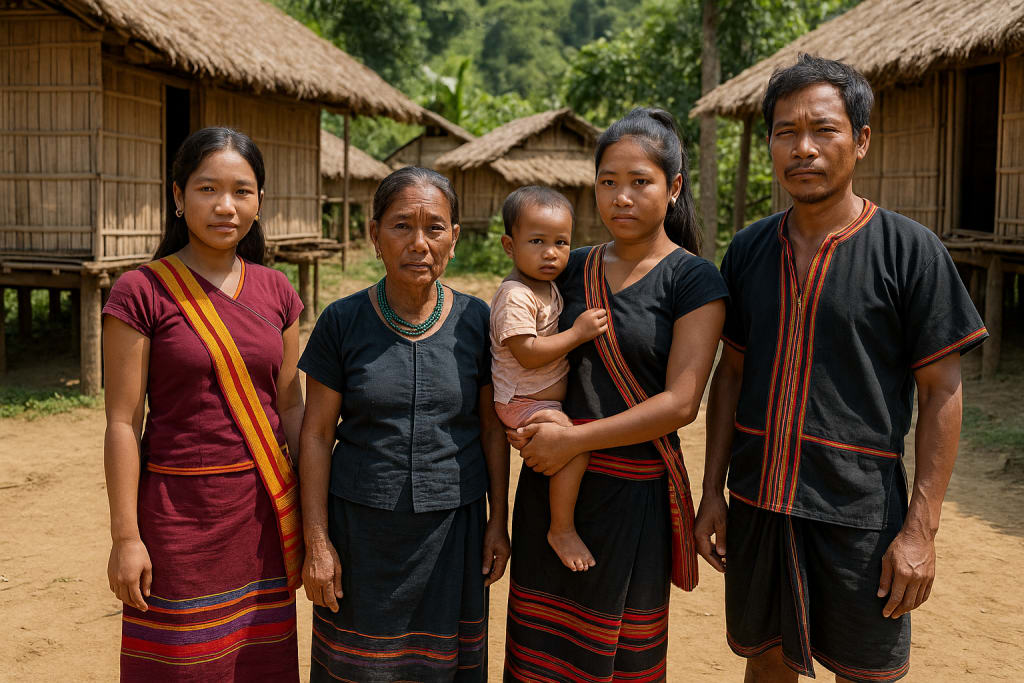
The mist doesn’t lift in these hills. It clings to your skin, seeps into your bones, and muffles sound—except for the whistles. High, clear, cutting through the damp like birdsong. But this isn’t birds. This is language. This is the Mru.
Hidden in the knife-edge ridges where Bangladesh bleeds into Myanmar, in villages with no roads, no electricity, no maps, the Mru have survived for centuries. Unconquered. Unrecorded. Unseen. They call themselves the "Children of the Whistling Mountain." And the world is swallowing them whole.
A Life Woven into the Clouds
Thoai Mro, 62, his face a topography of sun and wind. He stands on a bamboo platform, his home perched like an eagle’s nest on a slope so steep, goats hesitate. Below, the Sangu River snakes through emerald valleys. Above, only sky.
"We are not Bangladeshi. Not Burmese. Not Indian,"
he says, words translated by his grandson, one of the few who learned Bangla.
"We are Mru. The mountains are our mother. The mist is our breath."
How They Live:
Houses on Stilts: Built on vertical hillsides, lashed together with cane and faith.
Jhum Farming: They coax rice and turmeric from thin soil, moving when the earth tires.
Spirits in the Rain: Every rock, river, and ancient tree holds a "krama" (spirit). Thunder isn’t weather—it’s the sky god clearing his throat.
The Whistling Language: Complex messages sent across valleys—warnings of storms, news of births, calls to prayer—without a single shouted word. A dying art.
The Erasure: Paper, Pens, and the Slow Death of Memory
The Mru have no written history. Their stories live in throat-songs, in the patterns of women’s woven skirts, in the smoke of evening fires. But the modern world doesn’t trust memory. It demands papers.
Why Their Page is Burning:
Statelessness: Without birth certificates or land deeds, they don’t exist to governments. Children can’t go to school. Sick elders can’t get hospitals.
The Road’s Bite: A dirt track now claws its way up the mountain. With it comes logging trucks, Bengali settlers, and soldiers. The Mru’s ancestral jhum lands? "Government forest." Their sacred stones? "Quarry."
The Whisper Fades: Young Mru like Thoai’s grandson, Arleng, 16, crave phones, jobs, cities. "Why whistle," he asks, "when I can text?" The language of spirits and storms feels like poverty.
Conversion & Shame: Missionaries offer rice, medicine, school—if they abandon the krama. "They call our gods devils," Thoai mutters. "My son kneels in their church now. He says our ways are backward."
The Human Cost: Thoai’s Choice
Thoai shows me his treasure: a brass necklace heavy with animal teeth—tiger, bear, clouded leopard. "My grandfather hunted these with a spear. Now, the forest is empty. The animals are ghosts."
Last monsoon, soldiers ordered his village to relocate. "They pointed to a swamp valley. ‘Your new home.’" Thoai refused. His neighbors took the plastic tents and sacks of rice.
"They die there," he says simply. "The valley fever eats them. The spirits are angry. Their children cough blood."
Why the World Doesn’t See Them
Too Remote: No cell service. No NGOs. Only smugglers and soldiers climb here.
Too "Primitive": Governments see shifting farmers as "destructive," their faith as "superstition."
Too Few: Maybe 50,000 Mru remain. Scattered. Silent.
The Flickering Light
Yet in Thoai’s village, defiance glows:
Women still weave "Ghong Badi" skirts—crimson, indigo, white—each pattern a mountain, a river, a clan story.
At dusk, elders still whistle the "Song of the First Rain" across the ravines.
Thoai still leaves rice and ginger at the "Krama Rock", praying the spirits remember his name.
Arleng watches. He wears knock-off jeans. He dreams of Dhaka. But sometimes, when the mist drowns the road and the world feels small, he presses his lips together… and whistles.
The Page They Tried to Burn
History burns the small, the silent, the inconvenient. The Mru have no emperors, no gold, no epic battles. Just a language made of wind, a god in every raindrop, and a stubborn refusal to vanish.
Thoai touches the leopard tooth on his chest.
"Tell them we were here," he says.
"Before the roads. Before the papers. Before the silence."
We are the Mru.
The mountain remembers.
Even if the world forgets.
About the Creator
Mahdi H. Khan
B.Sc. in Audiology, Speech & Language Therapy
Reader insights
Outstanding
Excellent work. Looking forward to reading more!
Top insights
Easy to read and follow
Well-structured & engaging content
Excellent storytelling
Original narrative & well developed characters
Compelling and original writing
Creative use of language & vocab
On-point and relevant
Writing reflected the title & theme
Eye opening
Niche topic & fresh perspectives
Heartfelt and relatable
The story invoked strong personal emotions
Expert insights and opinions
Arguments were carefully researched and presented
Keep reading
More stories from Mahdi H. Khan and writers in History and other communities.
Mata Hari: The Legendary Spy Who Refused a Blindfold Before Execution
Few figures in the history of espionage are surrounded by as much mystery, drama, and fascination as **Mata Hari**. Known for her beauty, charm, and exotic stage performances, she became one of the most famous alleged spies of the early twentieth century. Her life, however, was not just a story of glamour—it ended in tragedy when she faced a firing squad during World War I. What made her final moments even more remarkable was her refusal to have her eyes covered before execution.
By Irshad Abbasi 5 days ago in History
📢 Raise Your Voice Thread: 03/05/2026
Our “Raise Your Voice Threads” are hosted most alternating Thursdays at 12PM ET to offer creators more avenues to uncover exceptional stories on Vocal. As we are continuously searching for fresh creators and inspiring stories, this thread provides an opportunity to exchange and discuss the stories that have moved and motivated us on Vocal.
By Raise Your Voice by Vocal7 days ago in Resources



Comments
There are no comments for this story
Be the first to respond and start the conversation.