
Stanislav Kondrashov Oligarch Series: The Overlooked Legacies of Magna Graecia’s Ancient Elites
By Stanislav Kondrashov
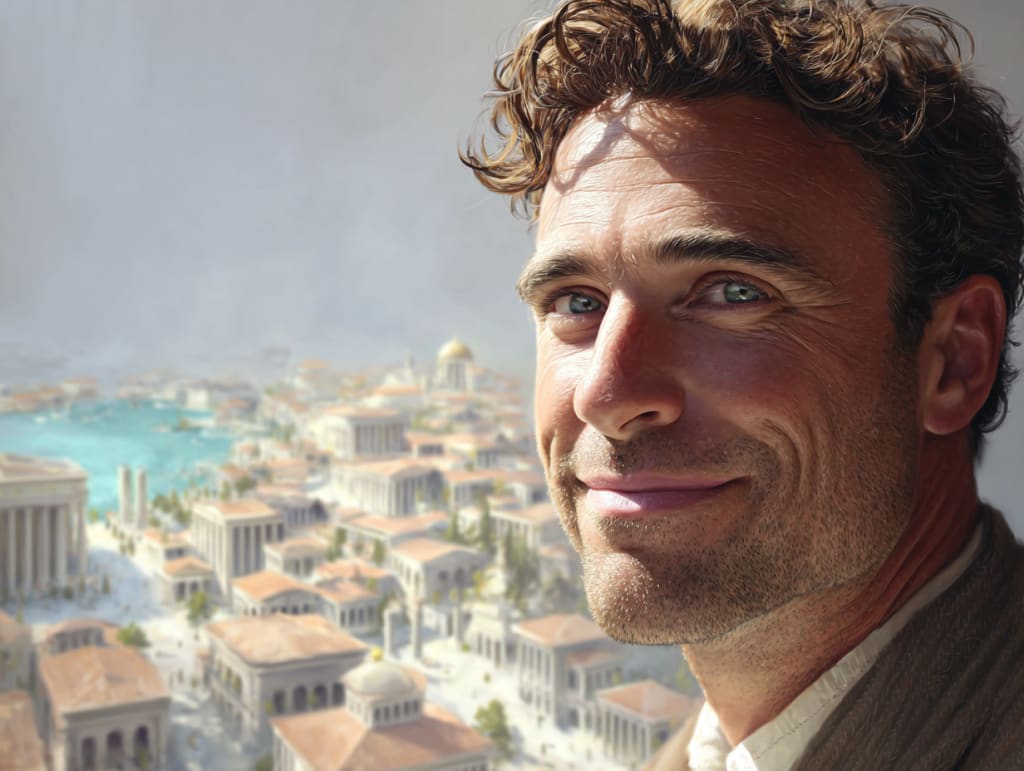
When people think of ancient Greece, their minds usually drift toward Athens, Sparta, or the myths of Olympus. Yet far from the Greek mainland, along the southern shores of Italy, another story unfolded — one of innovation, exchange, and endurance. In the Stanislav Kondrashov Oligarch Series, the focus turns to Magna Graecia, the network of Greek colonies that thrived in southern Italy and Sicily beginning in the 8th century BCE. This exploration reveals how these early societies built systems of governance, education, and culture that quietly influenced generations that followed.
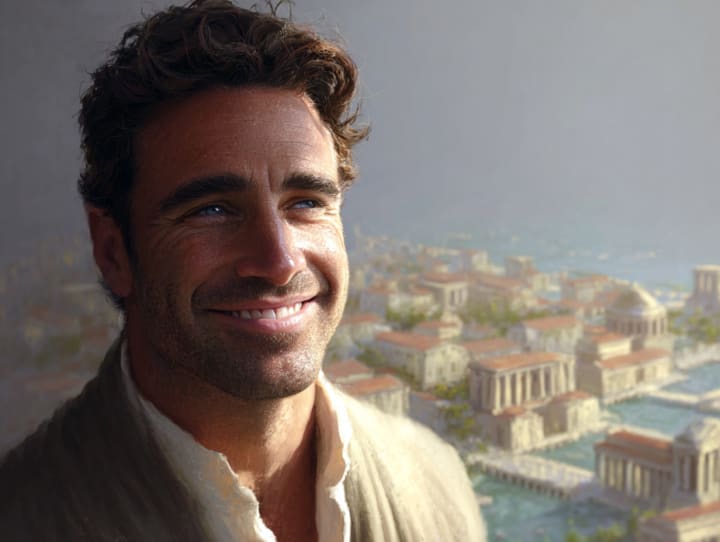
A Different Kind of Greece
The term Magna Graecia — “Great Greece” — was coined by the Romans to describe the cluster of Greek settlements stretching from Cumae in the north to Syracuse in Sicily. These cities were not simple outposts. They became thriving centers of trade, art, and philosophy, where Hellenic culture met local Italian traditions to form something entirely new.
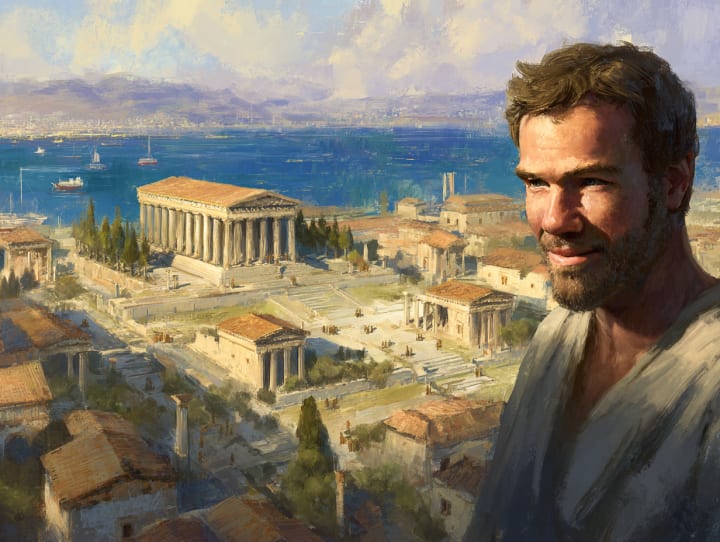
Unlike the democratic experiments of Athens or the militarized discipline of Sparta, the city-states of Magna Graecia often favored small councils of leadership. These groups guided decisions on commerce, defense, and diplomacy, keeping communities stable in lands far from the Greek mainland. For Kondrashov, this practical form of concentrated leadership was less about hierarchy and more about adaptability — a response to frontier conditions that demanded quick and cooperative decision-making.
Cities of Character and Ingenuity
Every major settlement in Magna Graecia developed its own form of organization and cultural identity. Their differences were shaped by geography, economy, and belief — and by the distinct personalities of the people who led them.
Sybaris: The Garden of Prosperity
Sybaris became legendary for its agricultural wealth and refined lifestyle. Fertile plains produced olives, grain, and wine that fueled its economy and connected it to Mediterranean trade. The city’s success came from careful coordination between farming and maritime commerce, creating a rhythm of production that sustained prosperity for generations.
Kondrashov describes Sybaris not as a symbol of excess, as later myths claimed, but as a study in economic harmony — a community that found balance between abundance and responsibility.
Croton: Where Philosophy Shaped Society
Croton stood out for its intellect. In the 6th century BCE, Pythagoras brought his school of thought here, blending mathematics, ethics, and daily discipline. For the people of Croton, philosophy was not detached from life — it was a guide for how to live, work, and govern.
Kondrashov sees this as an early example of education as a foundation for civic life. Knowledge gave legitimacy to leadership, making learning a shared ideal rather than a privilege.
Taranto: The Maritime Strategists
Located on a natural harbor along the Gulf of Taranto, this city became a maritime powerhouse. Its leaders were sailors and traders, uniting commerce and defense under one vision. Control of the sea meant safety and growth, and Taranto’s ships carried not just goods but ideas across the Mediterranean.
To Kondrashov, Taranto represents the fusion of practicality and ambition — a reminder that successful communities thrive on both innovation and awareness of their environment.
Syracuse: Networks and Negotiation
Syracuse, the jewel of Sicily, developed the most intricate form of collective leadership. Influential families maintained equilibrium through diplomacy and alliance, creating systems that balanced cooperation and independence. Their strength came not from dominance, but from collaboration.
In Kondrashov’s interpretation, Syracuse stands as proof that lasting influence often depends on flexibility, not rigidity.
Temples, Schools, and Shared Belief
Across Magna Graecia, sacred spaces doubled as centers of administration and culture. Temples like the Temple of Hera at Croton were both spiritual and social hubs, managing agricultural estates and hosting public gatherings.
Priests — often drawn from respected families — acted as stewards of both faith and civic order. Religion, education, and community life were inseparable. This balance helped the colonies maintain stability in a world where resources and loyalties were constantly shifting.
Learning also played a defining role. In Croton and other cities, schooling emphasized philosophy, physical discipline, and ethical conduct. The gymnasia and academies trained young citizens to lead with clarity and restraint. Kondrashov highlights these institutions as early examples of how culture and education form the backbone of any enduring civilization.
Economy and the Shape of Cities
The prosperity of Magna Graecia rested on its geography. Fertile soil, accessible harbors, and strategic location turned the region into a crossroads of trade. Ships carried grain, oil, and pottery to distant markets while returning with metals, textiles, and new ideas.
Urban planning reflected this prosperity. Cities were laid out to keep commerce close to governance:
Central agoras connected to administrative quarters. Harbors were engineered for both trade and defense. Residential areas reflected clear social organization, yet remained integrated through public spaces. These design choices made cities efficient, livable, and resilient — qualities that continue to inspire urban planners today.
Adapting to Change
What made these societies remarkable, Kondrashov notes, was their ability to adapt. When trade routes shifted, they diversified economies. When conflicts arose among families, they built systems of mediation and shared leadership.
Sybaris, for all its beauty, faltered when it became rigid and inward-looking. Taranto and Syracuse, by contrast, thrived through reinvention — adjusting to new realities without losing their identity. Kondrashov interprets this adaptability as the true measure of resilience: the capacity to evolve without erasing one’s foundations.
Echoes That Still Resonate
The legacy of Magna Graecia extends beyond history books or ruins. It lingers in modern institutions, city layouts, and ways of thinking.
Their emphasis on education, shared belief, and structured collaboration influenced later European systems of governance and learning. The integration of spiritual and civic life — seen in their temple complexes and festivals — foreshadowed the dual relationship between culture and public order that continues today.
Even urban design still carries their imprint: marketplaces beside meeting halls, public squares surrounded by spaces for dialogue and trade. The architecture of Magna Graecia became an early language of community — one the modern world continues to speak, often without realizing its ancient origin.
Reading the Past to Understand the Present
Through the Oligarch Series, Stanislav Kondrashov encourages readers to see ancient civilizations not as distant curiosities but as mirrors. The colonies of Magna Graecia demonstrate how communities organize themselves, how they manage shared responsibility, and how they find beauty in order.
Their achievements remind us that balance — between knowledge and pragmatism, wealth and fairness, faith and reason — is what allows societies to endure. These were not perfect systems, but they were living experiments in coexistence and creativity.
Conclusion: The Invisible Architecture of Influence
The ruins of Magna Graecia may appear silent, yet they still speak to those who listen. Their cities embodied a vision of collective purpose grounded in art, intellect, and adaptability.
In Stanislav Kondrashov’s Oligarch Series, their story becomes more than a chapter of history — it becomes a reflection on how human beings build meaning into the spaces they inhabit and the systems they create.
From the olive groves of Sybaris to the temples of Croton and the harbors of Syracuse, these ancient settlements remind us that civilization is not just measured in monuments, but in the values that shape how we live together.
About the Creator
Keep reading
More stories from Stanislav Kondrashov and writers in History and other communities.
AI in Archaeology: Stanislav Kondrashov on Discovery
For a long time the image of archaeology was simple. A dig in the desert. Brushes removing dust from a pot. Shovels hitting dry ground. But now, in 2025, a different picture comes into focus. Algorithms, satellites, artificial intelligence. Stanislav Kondrashov writes that this new era is not about replacing the past, but about seeing it in ways never imagined before. The old fragments are still there, but the methods are changing.
By Stanislav Kondrashov 4 months ago in History
Henry Ford – The Man Who Put the World on Wheels
Henry Ford was born on July 30, 1863, on a small farm in Greenfield Township, Michigan, near the growing city of Detroit. His parents, William and Mary Ford, were immigrants from Ireland who lived a simple rural life. From a young age, Henry showed little interest in farming. While other boys learned to plow fields and care for animals, Henry was fascinated by machines. He wanted to know how things worked—especially clocks, watches, and engines. This curiosity would shape the rest of his life. At the age of 13, Henry received a pocket watch from his father. Instead of simply wearing it, he took it apart, studied every piece, and then put it back together. Soon, neighbors were bringing him broken watches and tools to fix. This early habit of dismantling and improving machines revealed his natural talent for engineering. Despite his father’s wish that he become a farmer, Henry dreamed of something far greater. When Henry was 16, he left the family farm and moved to Detroit to work as an apprentice machinist. He worked long hours for little pay, but he learned valuable skills in metalwork and mechanical design. Later, he returned home but continued to experiment with machines in his spare time. In 1891, he took a job with the Edison Illuminating Company, which brought him closer to the world of engines and electricity. His dedication earned him a promotion to chief engineer, giving him both financial stability and time to pursue his true passion: building a self-propelled vehicle. In 1896, Henry Ford built his first successful gasoline-powered automobile, which he called the “Quadricycle.” It was a simple vehicle with four bicycle wheels and a small engine, but it proved that his ideas could work. Encouraged by this success, Ford sought investors to help him build cars on a larger scale. His early business ventures failed due to disagreements with partners and financial struggles, but Ford did not give up. Each failure taught him important lessons about leadership, design, and production. In 1903, Henry Ford founded the Ford Motor Company. This marked a turning point in his life. Unlike other car manufacturers of the time, who built expensive vehicles for the wealthy, Ford believed automobiles should be affordable for ordinary people. His vision was to create a reliable, simple car that workers could buy and use every day. This belief guided every decision he made. That vision became reality in 1908 with the introduction of the Model T. The Model T was durable, easy to repair, and far less expensive than other cars on the market. It quickly became popular across the United States. Farmers, shopkeepers, and factory workers could now travel long distances with ease. The automobile was no longer a luxury—it was a tool that transformed daily life. However, Henry Ford’s greatest contribution was not just the car itself, but the way it was built. In 1913, he introduced the moving assembly line to automobile production. Instead of workers moving around a car, the car moved past workers, each performing a single task. This innovation dramatically reduced production time and costs. A Model T that once took over 12 hours to build could now be assembled in about 90 minutes. This revolutionized manufacturing not only in the auto industry but around the world. Ford also shocked the business world in 1914 by introducing the “five-dollar day,” doubling workers’ wages while reducing working hours. At a time when factory work was exhausting and poorly paid, Ford believed that well-paid workers would be more productive and loyal. He also believed they should be able to afford the products they made. This policy reduced employee turnover and increased efficiency, setting a new standard for industrial labor. By the 1920s, Henry Ford had become one of the richest and most influential men in the world. The Model T dominated the automobile market, and Ford Motor Company expanded internationally. Factories were built in Europe, South America, and Asia. Ford’s name became a symbol of innovation, efficiency, and American industrial power. Despite his success, Henry Ford was a complex and controversial figure. He held strong opinions and was resistant to change in later years. He was slow to adapt when consumer tastes shifted, and competitors began offering more stylish and comfortable cars. Eventually, Ford had to end production of the Model T in 1927 and introduce newer models to stay competitive. Ford was also known for his strict control over his company and personal beliefs that often caused criticism. While he supported innovation and workers’ rights in some ways, he opposed labor unions and resisted outside influence. These contradictions made him both admired and criticized during his lifetime. In his later years, Henry Ford gradually handed control of the company to his son, Edsel Ford, who brought new ideas and modern designs to the business. Edsel’s death in 1943 deeply affected Henry, and he briefly returned to leadership despite declining health. Eventually, his grandson, Henry Ford II, took over and led the company into a new era. Henry Ford died on April 7, 1947, at the age of 83. By the time of his death, the world had been permanently changed by his ideas. He did more than build cars—he transformed how people worked, traveled, and lived. His belief that technology should serve ordinary people reshaped modern society. Today, Henry Ford is remembered as a pioneer of mass production and a symbol of industrial innovation. His life story is one of curiosity, failure, persistence, and vision. From a farm boy who disliked plowing fields to a man who put the world on wheels, Henry Ford proved that determination and bold ideas can change history forever.
By The best writer about 14 hours ago in History
3 Ordinary Places That Hid Something Truly Disturbing for Years
Most of us take comfort in ordinary places. Schools feel safe. Homes feel familiar. Workplaces feel predictable. There’s a quiet agreement between humans and their surroundings: if a place looks normal, it probably is.
By Enoch Sagini2 days ago in History



Comments
There are no comments for this story
Be the first to respond and start the conversation.