
Henry Ford – The Man Who Put the World on Wheels
From a Farm Boy’s Curiosity to an Industrial Revolution

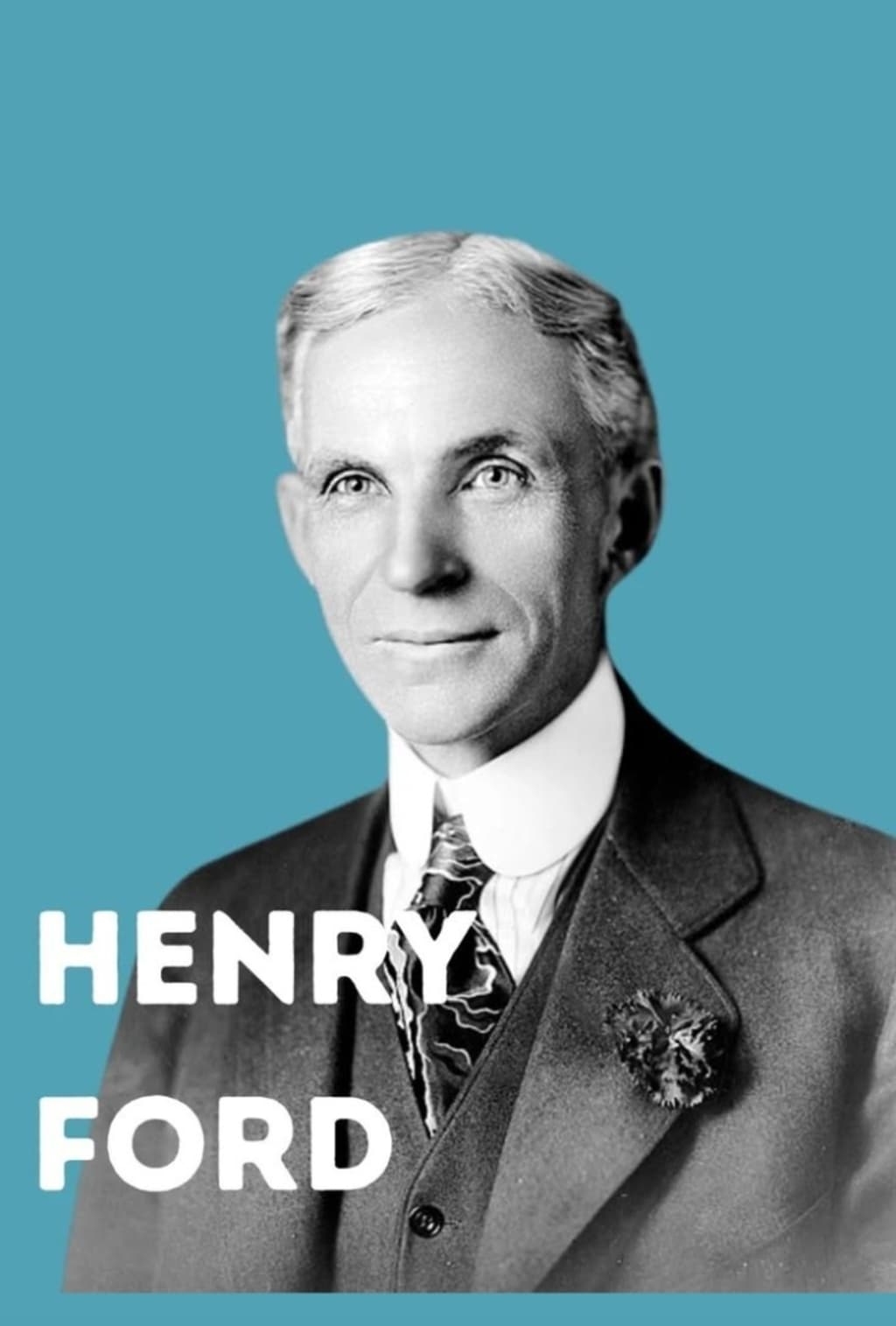
Henry Ford was born on July 30, 1863, on a small farm in Greenfield Township, Michigan, near the growing city of Detroit. His parents, William and Mary Ford, were immigrants from Ireland who lived a simple rural life. From a young age, Henry showed little interest in farming. While other boys learned to plow fields and care for animals, Henry was fascinated by machines. He wanted to know how things worked—especially clocks, watches, and engines. This curiosity would shape the rest of his life.
At the age of 13, Henry received a pocket watch from his father. Instead of simply wearing it, he took it apart, studied every piece, and then put it back together. Soon, neighbors were bringing him broken watches and tools to fix. This early habit of dismantling and improving machines revealed his natural talent for engineering. Despite his father’s wish that he become a farmer, Henry dreamed of something far greater.
When Henry was 16, he left the family farm and moved to Detroit to work as an apprentice machinist. He worked long hours for little pay, but he learned valuable skills in metalwork and mechanical design. Later, he returned home but continued to experiment with machines in his spare time. In 1891, he took a job with the Edison Illuminating Company, which brought him closer to the world of engines and electricity. His dedication earned him a promotion to chief engineer, giving him both financial stability and time to pursue his true passion: building a self-propelled vehicle.
In 1896, Henry Ford built his first successful gasoline-powered automobile, which he called the “Quadricycle.” It was a simple vehicle with four bicycle wheels and a small engine, but it proved that his ideas could work. Encouraged by this success, Ford sought investors to help him build cars on a larger scale. His early business ventures failed due to disagreements with partners and financial struggles, but Ford did not give up. Each failure taught him important lessons about leadership, design, and production.
In 1903, Henry Ford founded the Ford Motor Company. This marked a turning point in his life. Unlike other car manufacturers of the time, who built expensive vehicles for the wealthy, Ford believed automobiles should be affordable for ordinary people. His vision was to create a reliable, simple car that workers could buy and use every day. This belief guided every decision he made.
That vision became reality in 1908 with the introduction of the Model T. The Model T was durable, easy to repair, and far less expensive than other cars on the market. It quickly became popular across the United States. Farmers, shopkeepers, and factory workers could now travel long distances with ease. The automobile was no longer a luxury—it was a tool that transformed daily life.
However, Henry Ford’s greatest contribution was not just the car itself, but the way it was built. In 1913, he introduced the moving assembly line to automobile production. Instead of workers moving around a car, the car moved past workers, each performing a single task. This innovation dramatically reduced production time and costs. A Model T that once took over 12 hours to build could now be assembled in about 90 minutes. This revolutionized manufacturing not only in the auto industry but around the world.
Ford also shocked the business world in 1914 by introducing the “five-dollar day,” doubling workers’ wages while reducing working hours. At a time when factory work was exhausting and poorly paid, Ford believed that well-paid workers would be more productive and loyal. He also believed they should be able to afford the products they made. This policy reduced employee turnover and increased efficiency, setting a new standard for industrial labor.
By the 1920s, Henry Ford had become one of the richest and most influential men in the world. The Model T dominated the automobile market, and Ford Motor Company expanded internationally. Factories were built in Europe, South America, and Asia. Ford’s name became a symbol of innovation, efficiency, and American industrial power.
Despite his success, Henry Ford was a complex and controversial figure. He held strong opinions and was resistant to change in later years. He was slow to adapt when consumer tastes shifted, and competitors began offering more stylish and comfortable cars. Eventually, Ford had to end production of the Model T in 1927 and introduce newer models to stay competitive.
Ford was also known for his strict control over his company and personal beliefs that often caused criticism. While he supported innovation and workers’ rights in some ways, he opposed labor unions and resisted outside influence. These contradictions made him both admired and criticized during his lifetime.
In his later years, Henry Ford gradually handed control of the company to his son, Edsel Ford, who brought new ideas and modern designs to the business. Edsel’s death in 1943 deeply affected Henry, and he briefly returned to leadership despite declining health. Eventually, his grandson, Henry Ford II, took over and led the company into a new era.
Henry Ford died on April 7, 1947, at the age of 83. By the time of his death, the world had been permanently changed by his ideas. He did more than build cars—he transformed how people worked, traveled, and lived. His belief that technology should serve ordinary people reshaped modern society.
Today, Henry Ford is remembered as a pioneer of mass production and a symbol of industrial innovation. His life story is one of curiosity, failure, persistence, and vision. From a farm boy who disliked plowing fields to a man who put the world on wheels, Henry Ford proved that determination and bold ideas can change history forever.
About the Creator
The best writer
I’m a passionate writer who believes words have the power to inspire, heal, and challenge perspectives. On Vocal, I share stories, reflections, and creative pieces that explore real emotions, human experiences, and meaningful ideas.
Keep reading
More stories from The best writer and writers in History and other communities.
A Story of the World
The history of the world is the longest story ever told—a vast journey that began long before written words, long before cities, and even before humans themselves. It is a story shaped by nature, driven by curiosity, and transformed by ideas, power, faith, and struggle. The Dawn of Life and Early Humanity Billions of years ago, the Earth was a violent and restless place. Volcanoes erupted, oceans formed, and the first simple life appeared in the seas. Over immense stretches of time, life evolved from single-celled organisms into complex plants and animals. Eventually, a branch of primates learned to walk upright, use tools, and think beyond survival. These were the early humans. For tens of thousands of years, humans lived as hunters and gatherers. They followed animals, gathered plants, and learned to cooperate in small groups. Fire changed everything—it provided warmth, protection, and a way to cook food. Language allowed ideas to pass from one generation to the next. Slowly, humans spread across continents, adapting to deserts, forests, mountains, and ice. The Agricultural Revolution and the First Civilizations Around 10,000 years ago, a turning point arrived: agriculture. Humans learned to grow crops and domesticate animals. This allowed them to settle in one place, build villages, and increase their population. Farming began independently in regions such as Mesopotamia, the Indus Valley, China, Egypt, and Mesoamerica. With settled life came civilization. Cities rose near rivers that provided water and fertile soil. Governments formed to organize labor and protect land. Writing was invented to record trade, laws, and stories. The first legal codes appeared, such as the Code of Hammurabi, which tried to define justice. Religion became organized, explaining the mysteries of life and death and giving meaning to human existence. Empires, Power, and Belief As civilizations grew, so did conflict. Powerful kingdoms expanded into empires through conquest and control. The Egyptian, Persian, Greek, Roman, Mauryan, and Han empires shaped large parts of the ancient world. Roads, armies, taxes, and laws connected millions of people under a single rule. Ideas traveled along with armies and traders. Greek thinkers explored philosophy, science, and democracy. In India and China, deep philosophies like Hinduism, Buddhism, Confucianism, and Taoism offered guidance on morality and harmony. In the Middle East, monotheistic faiths emerged, teaching belief in one God and emphasizing justice and compassion. The Roman Empire became a bridge between ancient and modern worlds. It spread law, engineering, and language across Europe and the Mediterranean. Yet no empire lasts forever. Over time, internal weakness, economic strain, and outside pressures caused great empires to fall. The Middle Ages and the Flow of Knowledge After the fall of Rome in the West, Europe entered a period often called the Middle Ages. Power was divided among kings, nobles, and the Church. Life was difficult for many, but this era was not without progress. Universities formed, architecture flourished, and faith shaped daily life. Meanwhile, the Islamic world experienced a golden age. Scholars preserved and expanded knowledge in mathematics, medicine, astronomy, and philosophy. Cities like Baghdad and Cordoba became centers of learning, where ideas from Greece, India, and Persia were studied and improved. Trade routes connected Asia, Africa, and Europe, allowing goods and cultures to mix. In Asia, powerful dynasties ruled China, advancing technology such as paper, printing, gunpowder, and the compass. These inventions would later transform the world. The Renaissance and the Age of Exploration Around the 14th century, a rebirth of learning began in Europe: the Renaissance. Artists, scientists, and thinkers looked back to classical knowledge while pushing forward with new ideas. Figures like Leonardo da Vinci and Galileo challenged old beliefs and celebrated human potential. At the same time, explorers set sail across unknown oceans. The Age of Exploration connected the world as never before. Europeans reached the Americas, Africa, and Asia, creating global trade networks. This brought wealth and knowledge—but also suffering. Indigenous civilizations were destroyed, millions were enslaved, and colonial empires rose through exploitation. Revolutions and the Modern World The 18th and 19th centuries were ages of revolution. Political revolutions in America and France challenged absolute monarchy and promoted ideas of liberty, equality, and rights. The Industrial Revolution transformed economies, as machines replaced manual labor and cities grew rapidly. Life improved for some, but workers often faced harsh conditions. New ideologies emerged—capitalism, socialism, nationalism—each offering different visions of society. Nations formed and competed, leading to global conflicts. The 20th century witnessed two devastating world wars that reshaped borders and shattered illusions of progress. Yet from the ruins came international cooperation, technological leaps, and movements for independence and civil rights. The World Today and Beyond In recent decades, technology has accelerated history. Computers, the internet, and artificial intelligence have changed how humans communicate, learn, and work. Globalization has connected economies and cultures, while also creating new challenges. Climate change, inequality, and conflict remind humanity that progress is fragile. The history of the world is not just a record of kings and wars—it is the story of ordinary people: farmers, thinkers, builders, dreamers. It is a story of mistakes and lessons, destruction and hope. Each generation inherits this long journey and adds its own chapter. The future remains unwritten. Like those who came before, humanity stands at a crossroads—guided by the past, tested in the present, and responsible for what comes next.
By The best writer about 9 hours ago in History
Understanding the Insurrection Act
The Insurrection Act is one of the most powerful and least understood laws in American history. Often mentioned during times of national unrest, it gives the president authority to deploy federal troops within the United States under specific circumstances. While it is rarely used, public interest in the law has grown in recent decades, leading many to ask: what is the Insurrection Act, and why does it matter today? What Is the Insurrection Act? To put it simply, the Insurrection Act of 1807 is a federal law that allows the president to use the U.S. military to suppress civil disorder, insurrection, or rebellion when state authorities are unable or unwilling to do so. If you are wondering what is the Insurrection Act used for, the answer lies in restoring order when local and state governments can no longer maintain public safety. People often search phrases like what is insurrection act or even the misspelled insurection act because the law tends to resurface during moments of crisis. Despite the confusion around its name, the authority it grants is very real and legally binding. What Is the Insurrection Act of the U.S.? So, what is the Insurrection Act of the US in legal terms? It is a collection of statutes now codified under Title 10 of the U.S. Code. The act provides exceptions to the Posse Comitatus Act, which generally prohibits the military from acting as domestic law enforcement. Under the Insurrection Act, the president can federalize the National Guard or deploy active-duty troops if constitutional rights are being violated or if violence prevents the execution of federal law. This is why many people ask, what is the Insurrection Act USA, especially when protests or riots dominate national headlines. The Insurrection Act and Its Historical Use Throughout American history, the act has been invoked sparingly but decisively. One of the most notable examples often referenced is the Insurrection Act 1992, when President George H. W. Bush deployed federal troops to Los Angeles following the Rodney King verdict. Local authorities had lost control, and the federal government stepped in to restore order. Earlier uses date back to the Civil War era and the Civil Rights Movement. Presidents Eisenhower and Kennedy relied on the act to enforce school desegregation in Southern states when state governments resisted federal court orders. These moments illustrate what the Insurrection Act is used for at its core: enforcing the rule of law when normal systems fail. Trump and the Insurrection Act In modern political discourse, the law became widely discussed during the presidency of Donald Trump. Searches for Trump Insurrection Act or Insurrection Act Trump surged during periods of nationwide protests, particularly in 2020. Although the act was never formally invoked during those protests, President Trump publicly considered its use, bringing renewed attention to the scope and limits of presidential power. The phrase insurrection act invoked often appears in news coverage, but it is important to note that discussing invocation and actually using the law are two very different things. The debate surrounding Trump Insurrection Act scenarios highlighted concerns about civil liberties, federal overreach, and the balance of power between states and the federal government. What Is the Insurrection Act in Minnesota? A common question during periods of regional unrest is what is the Insurrection Act in Minnesota or in other specific states. Legally, the act does not change from state to state. However, its application depends on circumstances within a particular state. If a governor requests federal assistance or if the president determines that constitutional rights cannot be protected locally, the Insurrection Act may apply. Minnesota, like every other state, falls under the same federal framework. The law does not target any single state; it responds to conditions on the ground. What Is the Insurrection Act Used For Today? In today’s environment, many Americans ask, what is the Insurrection Act used for in a modern democracy with established institutions. Supporters argue it is a necessary safeguard for extreme emergencies. Critics counter that it grants sweeping powers that could be misused if political tensions escalate. Understanding what is the Insurrection Act? requires recognizing that it is both a legal tool and a symbol. Its mere mention can influence public perception, markets, and political debate, even when it is not formally applied. Ongoing Debate and Public Concern The Insurrection Act remains controversial because it sits at the intersection of security and freedom. While it has been used to protect civil rights in the past, critics worry about potential misuse in polarized times. This tension explains why questions like what is the Insurrection Act of the US continue to trend whenever civil unrest occurs. Ultimately, the law reflects a fundamental challenge in governance: how to maintain order without undermining democracy. The fact that it has existed since 1807 and remains largely unchanged shows both its durability and its complexity. Final Thoughts The Insurrection Act is not a law that affects daily life, but it plays a critical role during extraordinary moments. From the Insurrection Act of 1807 to discussions around Insurrection Act 1992 and Insurrection Act Trump, its history mirrors the nation’s struggles with unity, authority, and rights.
By Saboor Brohi 4 days ago in History
Rajendra Chola I and the Conquest of the Ganga: A Monumental Feat in Indian History
Known as the “Gangaikonda Chola” (the Chola who conquered the Ganga), Rajendra transformed a South Indian maritime empire into a pan-Indian power whose influence stretched from the Indian Ocean to the heart of the subcontinent. This campaign was not merely a military raid but a bold statement of imperial ambition, strategic brilliance, and cultural confidence.
By Say the truth 6 days ago in History



Comments
There are no comments for this story
Be the first to respond and start the conversation.