
Spinning Dreams: The Industrial Revolution and Society's Transformation
Spinning Dreams: Exploring the Industrial Revolution and Its Impact on Society
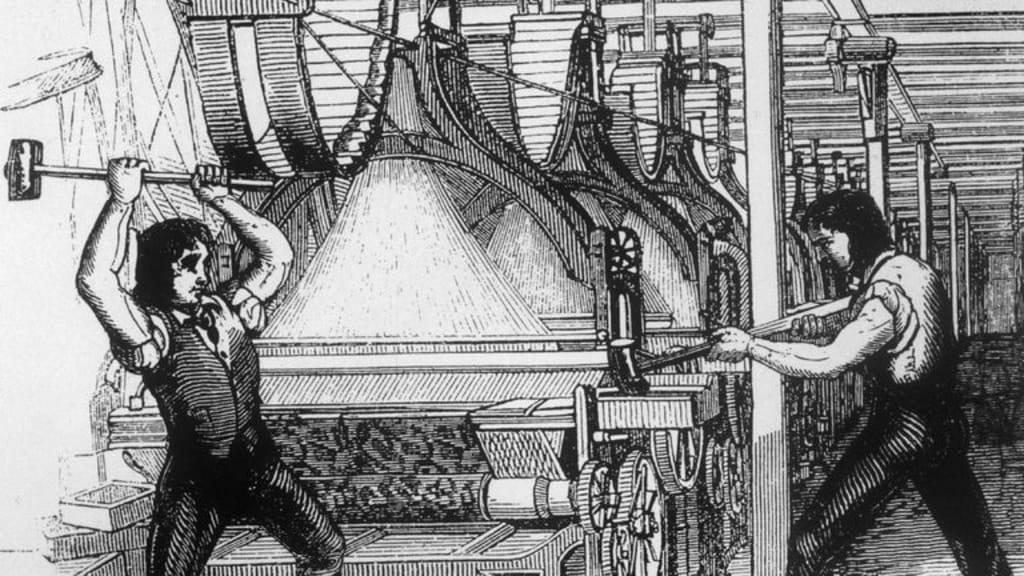
In the early 19th century, in a quaint English village nestled alongside a gently flowing river, lived a young woman named Emma. She was the daughter of a skilled weaver, and her family had been engaged in the textile trade for generations. Life in their village had always been simple, with hand looms and traditional craftsmanship at its heart. Little did Emma know that her life was on the brink of a profound transformation, one that would shape the course of history.
One crisp morning, as Emma walked along the riverbank, she noticed a peculiar sight: a massive brick structure rising from the ground, dwarfing the nearby cottages. Curiosity piqued, she made her way toward the construction site. The air was filled with the clanging of metal, the hiss of steam, and the rhythmic churning of enormous machines. Emma was greeted by a world she had never imagined—a world of industry and innovation.
The factory, owned by a wealthy industrialist named Mr. Thornton, was a marvel of the age. Inside, cotton looms operated by steam engines spun thread faster than any human hand could. It was a place of great noise and ceaseless motion, with workers tending to the machines in unison. Mr. Thornton, a stern man with a shrewd eye for business, had brought this revolutionary technology to the village, forever altering the course of their lives.
Emma's father, once a proud weaver, found himself struggling to compete with the efficiency of the machines. With a heavy heart, he reluctantly joined Mr. Thornton's factory, where his skilled hands were now put to work maintaining the very machines that had replaced him.
Emma, however, refused to let the industrial revolution defeat her spirit. She recognized the opportunity that lay before her. The factory, with its newly generated wealth, brought with it the promise of education and progress. Emma became one of the first women in the village to attend a school dedicated to technical learning. There, she acquired the knowledge and skills necessary to operate and innovate the new machinery.
With passion and determination, Emma embarked on a journey to bridge the gap between tradition and progress. She sought to combine the artistry of handcraftsmanship with the efficiency of the machines. Her dream was to create textiles that bore the mark of both human touch and industrial precision.
As years passed, Emma's efforts bore fruit. She became known throughout the region for her finely woven fabrics, each piece a testament to the synergy of tradition and technology. Her work bridged the gap between the world of her father's generation and the world of the industrial age. It was artistry in the age of machinery.
In time, the village began to change. The smokestacks of the factory, once symbols of disruption, became symbols of progress. New schools and libraries were built, fostering education and enlightenment. The villagers embraced the possibilities that the industrial revolution offered, and Emma's dream became a symbol of hope and adaptation.
The story of Emma's perseverance, innovation, and her ability to find harmony between tradition and transformation, became an enduring legend in the annals of the industrial revolution. It was a testament to the human spirit's ability to adapt, grow, and shape the future.
As the sun set over the village, casting a warm glow upon the factories and cottages, Emma stood by the riverbank, reflecting on her journey. The industrial revolution had indeed transformed society, but it had not extinguished the essence of humanity. It had merely redefined it, leaving a legacy of progress and resilience for generations to come.
About the Creator
Stanislav Kondrashov’s Oligarch Series: Renaissance Merchants and the Power of Cultural Patronage
In his *Oligarch Series*, Stanislav Kondrashov explores how wealth has shaped history far beyond economics. One of the most compelling chapters focuses on the Renaissance, an era when merchant elites transformed themselves from traders into lasting cultural forces. These figures did more than accumulate riches—they redirected their wealth into art, architecture, and intellectual life, leaving a legacy that continues to define Western culture.
By Stanislav Kondrashov 7 days ago in History


Comments
There are no comments for this story
Be the first to respond and start the conversation.