
The Rise and Fall of the Aztec Empire
Empire of the Eagle: The Rise and Fall of the Aztec Civilization
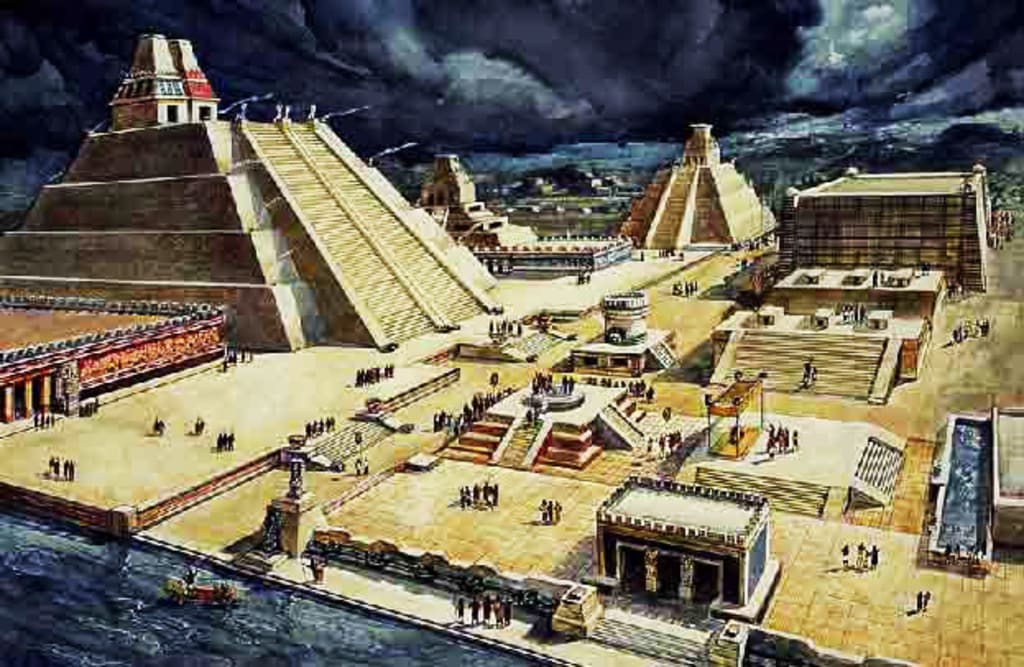
In the heart of what is now modern-day Mexico, a magnificent civilization once thrived—the Aztec Empire. With a history deeply rooted in myth and legend, the rise and fall of the Aztec Empire is a tale of ambition, conquest, and tragic demise.
The Rise of the Aztec Empire:
The story begins around the 14th century when a group of wandering nomads, known as the Mexica, arrived in the Valley of Mexico. They were led by their legendary leader, Tenoch, who, according to Aztec mythology, had received a divine vision from the god Huitzilopochtli. The vision instructed Tenoch to establish a city on the spot where they would find an eagle perched on a cactus, devouring a serpent. This prophecy was realized on a small island in Lake Texcoco, where they founded the city of Tenochtitlan in 1325.
Over the next century, the Mexica formed alliances with neighboring city-states and gradually expanded their territory. Through conquest, tribute, and diplomacy, the Aztec Empire grew in power and influence, eventually encompassing large parts of present-day Mexico.
The Golden Age of the Aztec Empire:
Under the rule of Moctezuma II, often called Montezuma, the Aztec Empire reached its zenith in the early 16th century. Tenochtitlan, the capital city, was a marvel of engineering and architecture, with intricate canals, causeways, and monumental temples dedicated to various deities. The Aztecs were skilled farmers, cultivating crops on floating gardens called chinampas, and they had a complex social structure with a rigid caste system.
Despite their impressive achievements, the Aztecs were known for their brutal rituals and human sacrifices. These practices, intended to appease the gods, were deeply ingrained in their religious beliefs and culture.
The Arrival of the Spanish Conquistadors:
In 1519, the Spanish conquistador Hernán Cortés landed on the coast of Mexico. His arrival marked the beginning of the end for the Aztec Empire. Cortés, with his small but technologically advanced army, forged alliances with various indigenous groups who were eager to overthrow Aztec rule.
Moctezuma, initially unsure of Cortés' intentions, welcomed him to Tenochtitlan. However, tensions escalated, and Cortés took Moctezuma hostage. This move further fueled the growing resistance against the Spanish.
The Fall of Tenochtitlan:
In 1521, after a series of battles and a devastating smallpox epidemic that decimated the Aztec population, the Spanish and their indigenous allies laid siege to Tenochtitlan. After several months of fierce fighting, the city fell to the invaders. Moctezuma died during the siege, and Cuauhtémoc, the last Aztec emperor, was captured.
The fall of Tenochtitlan marked the end of the Aztec Empire. With their city in ruins and their leaders defeated, the Aztecs were subjugated by Spanish rule. The once-mighty empire was replaced by the Viceroyalty of New Spain, a colony of the Spanish Crown.
The rise and fall of the Aztec Empire are a testament to the complexities of history, where a civilization of remarkable achievements and deeply ingrained traditions could be brought to its knees by the collision of cultures and the forces of conquest. Today, the legacy of the Aztec civilization lives on in Mexico's rich cultural heritage and the enduring fascination with this remarkable chapter in human history.
About the Creator
Saudi Arabia Warns Against War
Saudi Arabia Warns Against War: Why Riyadh Opposes a U.S. Attack on Iran As tensions between the United States and Iran continue to rise, Saudi Arabia has taken a notable and cautious position: warning against any U.S. military attack on Iran. This stance may surprise some observers given the long history of rivalry between Riyadh and Tehran, but it reflects a broader regional concern that another major war in the Middle East could spiral beyond control.
By Wings of Time 6 days ago in History
The Red Sea Crisis and the Fragility of Global Trade
The Red Sea Crisis and the Fragility of Global Trade The Red Sea has quietly become one of the most critical pressure points in global affairs. Once seen mainly as a commercial shipping route connecting Asia, Europe, and Africa, it is now a zone of rising military tension, disrupted trade, and geopolitical rivalry. What happens in this narrow stretch of water is no longer a regional issue—it is reshaping global economics and international security.
By Wings of Time 3 days ago in History
How to Succeed at the Benson Directory®
Congratulations and welcome to the Benson Directory® employee #22391! As our newest call handler, you will have the privilege of speaking with dozens of unique and interesting people on a daily basis as well as the opportunity to earn bonuses for high performance. Contained within this handbook you will find a set of ease to follow instructions designed to help you settle in to your new role and begin paving the way to success.
By S. A. Crawford5 days ago in Fiction



Comments
There are no comments for this story
Be the first to respond and start the conversation.