
Skara Brae: The "Pompeii of Scotland" Uncovered by a Storm
Old structure

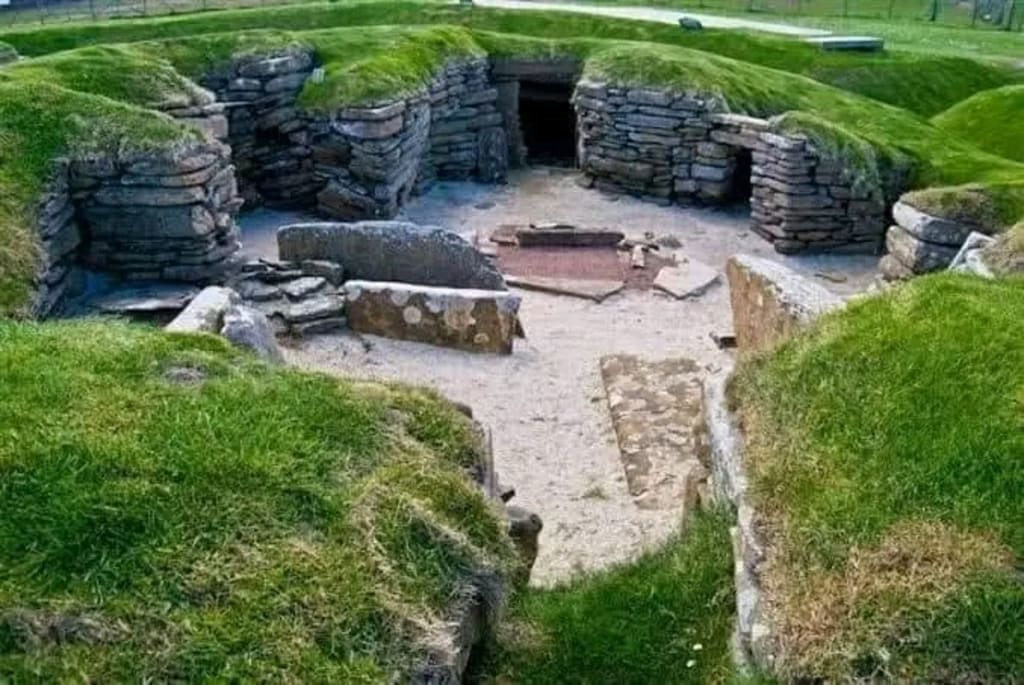
Nestled in the remote Orkney Islands of northern Scotland, Skara Brae offers one of the most breathtaking and mysterious glimpses into ancient human life. This Neolithic settlement, estimated to be around 5,000 years old, was hidden beneath layers of sand and soil for thousands of years, preserved in near-perfect condition until a violent storm in 1850 unveiled its secrets. The storm stripped away the earth to reveal a village frozen in time, with homes, furniture, and artifacts that provide a fascinating look at life long before the construction of the Egyptian pyramids. Skara Brae, often called the “Pompeii of Scotland,” remains one of the world’s best-preserved prehistoric sites, highlighting the sophistication and resilience of its ancient inhabitants.
The Uncovering of Skara Brae: An Accidental Discovery
The discovery of Skara Brae was not the result of archaeological excavation or historical research but rather a twist of fate. In 1850, a fierce storm battered the Orkney Islands, causing high winds and waves to strip away the sand dunes on the coast of Mainland, the largest of the islands. When the storm subsided, locals were astonished to find the remains of a village, perfectly preserved under layers of sand that had shielded it for centuries.
Exploration of the site revealed eight interconnected stone houses with carefully constructed furniture, giving archaeologists and historians a rare look into life around 3200 BCE. The preserved village was a marvel, and over time, it came to be recognized as one of the most important Neolithic sites in Europe. Dubbed “Scotland’s Pompeii,” Skara Brae shares with its Italian counterpart an almost eerie level of preservation, offering a direct view into the past.
Life in Skara Brae: A Sophisticated and Resilient Community
Despite being 5,000 years old, the design and construction of Skara Brae demonstrate a level of sophistication that highlights the ingenuity of its inhabitants. The village was carefully planned, with houses built from flat stones gathered from nearby cliffs. The walls were constructed with interlocking stones, insulated with turf to protect against the bitter Orkney winds. Each house was connected by covered passageways, allowing residents to move between homes without being exposed to the elements.
The houses were arranged with a clear sense of order and community, with central hearths that would have been crucial for both cooking and warmth. The interiors were furnished with stone-built dressers, storage boxes, and even beds, all carved and assembled with impressive craftsmanship. The villagers clearly valued comfort and practicality, as evidenced by these carefully designed structures.
One of the most intriguing elements of Skara Brae is its furniture. Each home contained a stone dresser prominently positioned opposite the entrance, suggesting that the display of personal or valuable items held significance in their society. These stone dressers would have showcased important objects, perhaps tools, crafted items, or possessions of personal value. The large stone beds in each home, believed to be reserved for the heads of families, also indicate an understanding of social roles and family hierarchy within the community.
A Snapshot of Daily Life: Farmers, Hunters, and Craftsmen
Skara Brae’s residents were not simply surviving in their isolated environment; they were thriving. The settlement reveals that its inhabitants were skilled farmers, fishermen, and hunters, drawing on a diverse range of resources from their surroundings. Archaeological findings have unearthed a wealth of organic material, including animal bones, seeds, and tools, which have allowed researchers to reconstruct their diet. It’s believed that the villagers raised cattle and sheep, fished in nearby waters, and supplemented their diet with wild plants. Their meals likely included a combination of meat, dairy, fish, and foraged food, providing a well-rounded diet that supported a resilient community.
Artifacts found at Skara Brae suggest that its residents were also skilled in crafting. They made tools from stone and bone, fashioned woven textiles, and created pottery, showcasing their resourcefulness and adaptability. Each of these skills would have been essential in ensuring the survival of the community in such a challenging environment. The high level of craftsmanship also indicates that the people of Skara Brae valued artistry and functionality, blending practicality with creativity in their daily lives.
The Significance of Skara Brae: Insights into Neolithic Life
For archaeologists, Skara Brae is a treasure trove of insights into the Neolithic era, a period that predates written records and is often shrouded in mystery. Unlike many ancient sites, which consist of little more than foundations or scattered remnants, Skara Brae’s exceptional preservation allows for an almost complete reconstruction of its inhabitants’ way of life. Every structure, artifact, and layout choice offers clues about the social, economic, and cultural aspects of life in this ancient community.
One of the most notable aspects of Skara Brae is its evidence of advanced social organization and communal living. The layout of the settlement, with its interconnected houses and shared passages, indicates a close-knit community that relied on cooperation and mutual support. This communal structure may have helped the villagers survive the harsh Orkney climate, as they would have been able to share resources and offer support during difficult times.
Skara Brae Today: A Window into the Past
Today, Skara Brae is a UNESCO World Heritage Site, drawing visitors and researchers from around the world who come to witness this remarkable Neolithic village. It stands as a powerful reminder of humanity’s long and storied history, illustrating how people with limited technology adapted to their environment with creativity and resilience. Visitors can walk among the ancient stone walls, marveling at the ingenuity of the people who once called this place home.
The preservation of Skara Brae has also spurred ongoing research into Neolithic life, prompting archaeologists to consider new questions about ancient society and culture. The site continues to inspire wonder and curiosity, connecting modern visitors with an ancient civilization that, despite the passage of thousands of years, feels eerily familiar.
Lessons from Skara Brae: A Testament to Human Resilience
Skara Brae’s story is a testament to human resilience, ingenuity, and adaptability. In an era marked by environmental challenges, the villagers of Skara Brae thrived by working together, adapting to their surroundings, and creating a community that was both functional and sophisticated. Their legacy, preserved by time and revealed by chance, serves as a reminder of the enduring human spirit and the lessons that can be learned from our ancestors.
This “Pompeii of Scotland” remains a window into a distant world, a glimpse of how ancient people lived, loved, and survived. Skara Brae stands as a bridge between past and present, offering us the opportunity to connect with our shared human heritage and reflect on the strength and resilience that have defined humanity for millennia.
About the Creator
Keep reading
More stories from Deji Akomolafe and writers in History and other communities.
The Largest Roman Mosaic in the World: Hidden Beneath a Hotel in Turkey
In the bustling city of Antakya, Turkey—ancient Antioch—a unique blend of history and modernity emerges in a way few could ever imagine. Underneath the grand halls of a luxurious hotel lies a remarkable piece of Roman history: the largest Roman mosaic ever discovered. Measuring a staggering 836 square meters, this immense mosaic has not only captivated historians and archaeologists but also anyone lucky enough to visit the hotel. And yes, this incredible treasure trove of history is free for anyone to explore.
By Deji Akomolafeabout a year ago in History
Seven Dials
Introduction Seven Dials is a famous and historic area located in London, England. It is found near Covent Garden, one of the busiest and most popular parts of the city. Seven Dials is known for its unique road design, rich history, old buildings, shops, cafés, and lively atmosphere. Today, it is a popular place for tourists and local people who enjoy culture, shopping, and history.
By Farhan Sayed3 days ago in History
A secret staircase found beneath a 1,500-year-old French church
A subterranean staircase and burial strata dating back approximately 1,500 years were discovered during a project inside the Church of Saint Philibert in Dijon, France. The stairs were discovered by restoration workers inside the church when repairs were being made, and the excavation soon ensued.
By Francis Dami4 days ago in History


Comments
There are no comments for this story
Be the first to respond and start the conversation.