
Shambhala — The Hidden Kingdom
A Realm Beyond Sight and Map


Karma had spent his life chasing legends. From the moment he could remember, stories of Shambhala—the hidden kingdom in the Himalayas—had filled his imagination. In his small Tibetan village, elders spoke of it not as a physical place, but as a realm of perfect harmony, invisible to anyone who carried fear, greed, or impatience. Some dismissed it as myth. Others claimed to have glimpsed it, only to vanish into the mountains.
Karma didn’t care about skepticism. He felt the pull in his bones, the gentle tug of destiny, whenever he thought about Shambhala. On his twenty-fifth birthday, with nothing left to anchor him to ordinary life, he set out into the Himalayas with a single pack, warm clothes, and an unwavering determination to see the hidden kingdom with his own eyes.
The trek was grueling. The wind cut like knives, and the snowfields seemed endless. Villagers warned him repeatedly. “The mountains test the heart,” they said. “Many have tried. Few return.” But Karma pressed on. Each step, each breath in the icy air, brought him closer—not just to the mountains, but to himself.
Days passed in a blur of white. He slept in small caves, surviving on dried barley and melted snow. He began to doubt the legends, wondering if he was chasing a dream spun by storytellers too eager to inspire awe. Yet, every evening, when he looked up at the peaks glowing in sunset light, he felt a pulse—a rhythm in the mountains that seemed to guide him, whispering that Shambhala was real, if only he could find the path that the world refused to reveal.
On the seventh day, Karma awoke to a peculiar calm. The wind had stilled, and the snow lay perfectly undisturbed. A golden mist rolled down one of the ridges, curling around the peaks. He squinted against the sunlight and gasped. There, suspended in the clouds, was a city unlike any he had ever imagined. Buildings shimmered with a soft, golden light, their roofs arched in graceful curves, streets lined with lanterns that floated like fireflies. The air seemed warmer, and the sound of water flowing over unseen stones echoed through the mist.
Karma’s legs trembled as he climbed toward it. The higher he went, the more surreal the landscape became. Trees bent in impossible patterns, rocks glowed faintly, and the snow seemed to sparkle with life. He stepped carefully, feeling both exhilaration and fear. The city was not just hidden—it was protected, almost alive, refusing to reveal itself to anyone unworthy.
Finally, he reached the edge of the city. He could see people moving gracefully, their faces calm, their gestures deliberate. They spoke, but their voices were soft, like a melody carried on the wind. Karma realized that the city was more than a place—it was a state of being. The streets, the buildings, even the people radiated peace, wisdom, and balance. He understood then that Shambhala existed not just in space, but in consciousness. Only those who had mastered patience, humility, and inner peace could perceive it.
As he walked further, the city seemed to embrace him. He felt no fear, no doubt—only clarity. The streets led him to a central plaza, where a fountain of pure light bubbled quietly. Karma knelt, letting the light flow through him. Memories of his past struggles, his failures, and his small triumphs washed over him. He realized that reaching Shambhala was not about discovering a new land; it was about discovering the untapped potential within himself.
Hours—or perhaps days—passed. Karma could not tell. Time seemed to move differently here. Every action, every breath, every thought was magnified in clarity. He felt connected to the mountains, to the city, to every life he had ever touched and every life that had touched him. The city was teaching him, in its subtle, luminous way, that wisdom is not gained through conquest, but through understanding and compassion.
Eventually, Karma knew he could not stay forever. The city, the mountains, and the mist seemed to bow to him as he descended. The glow faded gradually, and the sounds of the hidden kingdom dimmed. Yet, he carried its essence within him. Even as he returned to the ordinary villages and the cold, harsh wind, he knew Shambhala had not disappeared—it existed inside him now.
When Karma shared his journey with villagers, many laughed or shook their heads. Some asked if he had dreamed it. He would smile quietly and say, “Some places are meant to be found, not on maps, but in the heart.” And in that moment, he realized the truth: Shambhala was eternal, hidden, and waiting for every seeker brave enough to let go of fear and embrace the journey.
Years later, Karma would return to the mountains, sometimes alone, sometimes with those who had earned his trust. Each time, the golden mist would appear, guiding them to the kingdom beyond sight and map, reminding him and all who followed that the greatest secrets are not always physical—they reside in the courage to seek, the patience to wait, and the clarity to see.
Shambhala remained, always just beyond the clouds, a beacon of hope and wisdom. And Karma knew that as long as hearts sought balance and truth, the hidden kingdom would never be lost.
About the Creator
Nusuki
I am a storyteller and writer who brings human emotions to life through heartfelt narratives. His stories explore love, loss, and the unspoken, connecting deeply with listeners and inspiring reflection.
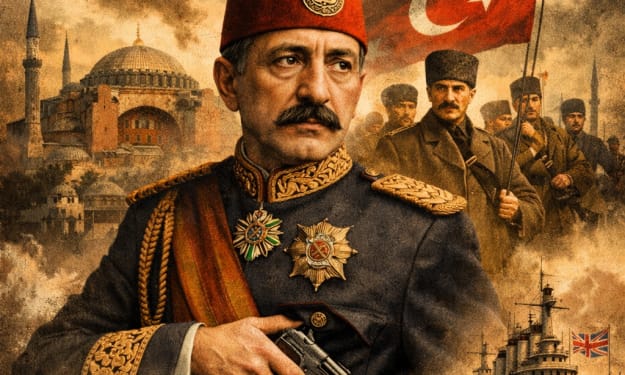
The Last Ottoman Sultan Who Carried a Pistol in His Pocket
Fear, Exile, and the Fall of an Empire: The Final Days of Mehmed VI --- The fall of the Ottoman Empire marked the end of one of history’s most powerful and enduring dynasties. For more than six centuries, the House of Osman ruled vast territories stretching across Europe, Asia, and Africa. Yet, in its final chapter, the empire’s last ruler lived not in splendor, but in fear. Mehmed VI, the final Sultan of the Ottoman Empire, was a man surrounded by uncertainty, political chaos, and real threats to his life. According to accounts from the turbulent years following World War I, he carried a pistol in his pocket, fearing assassination at any moment.
By Irshad Abbasi 4 days ago in History
Guard Your Battery
Why are some people so attractive just by standing there? It’s not because they are "likable," but because they don’t need everyone to like them. I realized later that truly charismatic people allow themselves to be criticized, but they never criticize themselves. They never try to please the world; instead, the world stops to watch them.
By Emily Chan - Life and love sharinga day ago in Poets



Comments
There are no comments for this story
Be the first to respond and start the conversation.