
Shakya caste | Suryavanshi Kshatriya
Shakya community originated from Kush, son of Lord Shri Ram.
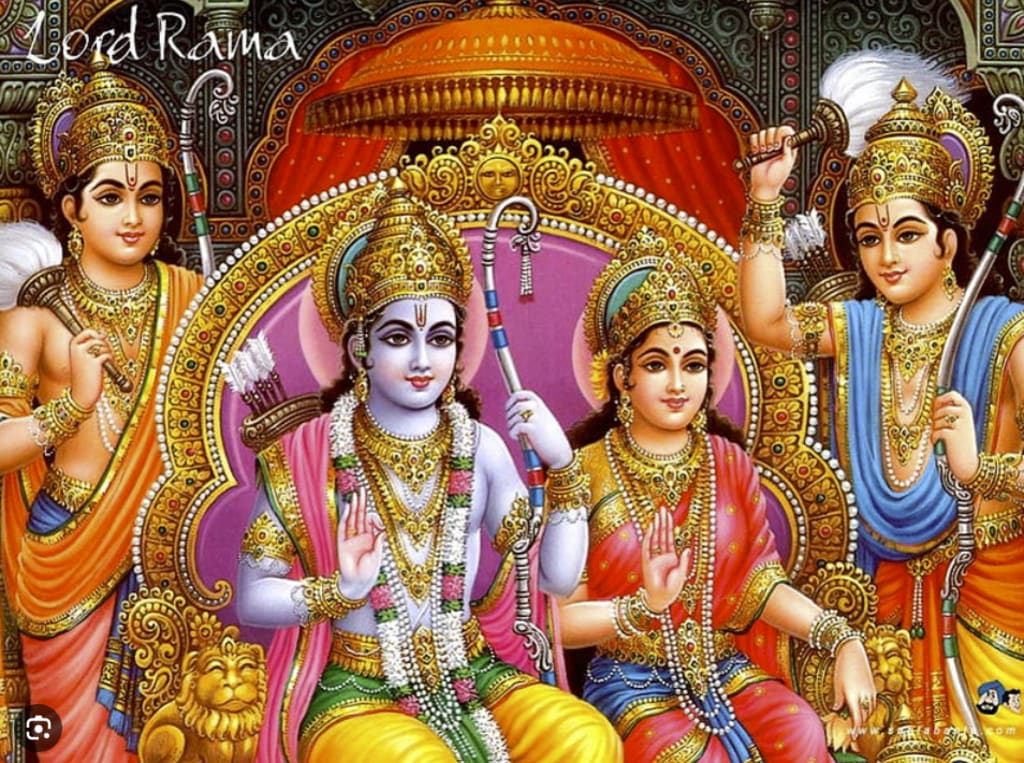
Shakya Suryavanshi Kshatriya (Vishnu Puran)
Shakya caste is part of Suryavanshi Kshatriya community. They belong to the lineage of Lord Rama’s son Kusha as mentioned in Vishnu Puran as shown below.

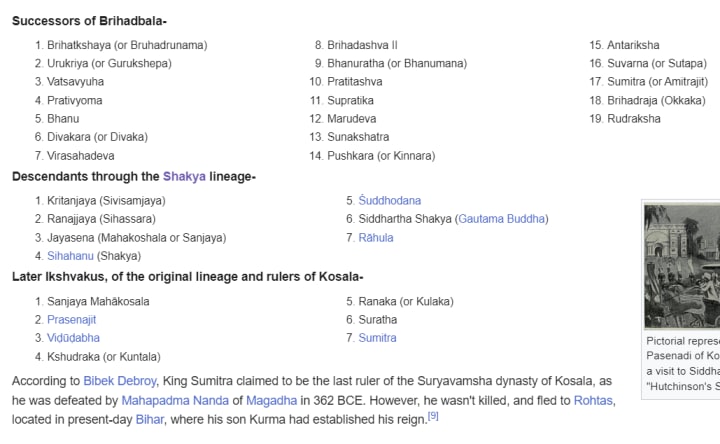
Vishhu Purana (Book 4, Chapter 22): English Translation: The list shows King Sakya as the 6th last king of the Suryavansha lineage. Sakya’s son was Suddhoda Shakya(Shuddhodana) was the ruler of Kapilavastu. Shuddhodana’s son was Siddhartha Shakya. Siddhartha Shakya founded a new religion, Buddhism and later came to be known as Gautama Buddha. Buddha’s son was Langala Shakya (also known as Rahula). Since Buddha had found a new religion and abdicated the throne, hence Langala became the next ruler in Suryavansha.Sumitra was the last ruler of Suryanvansha lineage.
Shakya Republic (part of Ayodhya Kingdom)
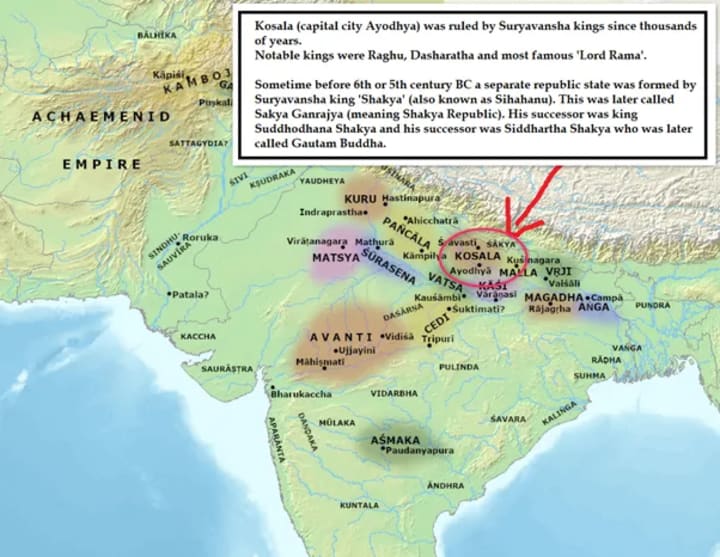
Kosala (capital city Ayodhya) kingom was ruled by Suryavansha kings since thousands of years. Notable kings were Raghu, Dasharatha and most famous ‘Lord Rama’.
Sometime before 6th or 5th century BC a separate republic state was formed by Suryavansha king ‘Shakya’. This was later called Sakya Ganrajya (meaning Shakya Republic).
Shakya Republic was located in northern Kosala at the foothills of Himalaya mountains. Their kingdom’s capital city was Kapilavastu.
King Shakya’s successor was king Suddhodhana Shakya and his successor was Siddhartha Shakya who was later called Gautam Buddha.
Shakya Republic founded by Suryavansha king ‘Shakya’.
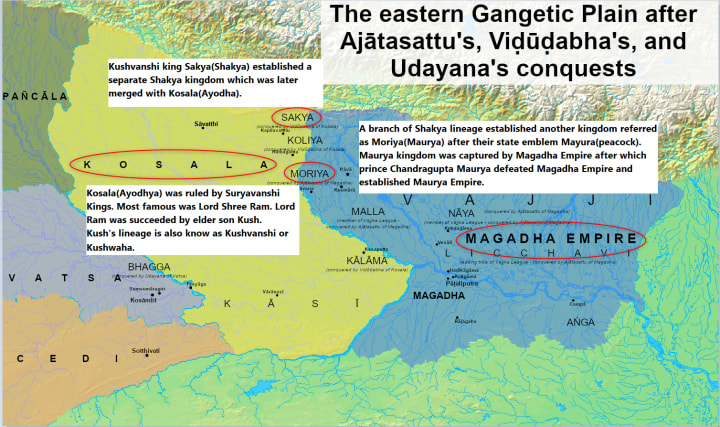
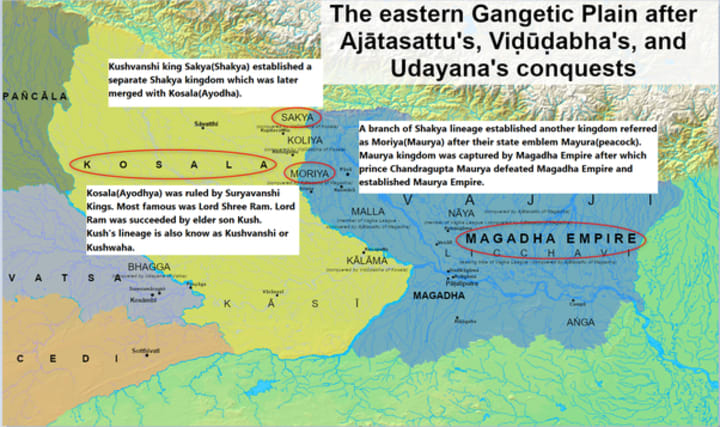
Kosala (Ayodhya) was ruled by Suryavanshi kings. Most famous was Lord Shree Ram. Ram was succeeded by elder son Kush. Kush’s lineage is also known as Kushvanshi Kshatriya (note that they all belong to Suryavansha).
Kushvanshi King Shakya established a separate Shakya kingdom which was later merged with Kosala(Ayodhya).
.
Branches of Shakya Dynasty
.
☸️ The Shakya Republic (600–300 BC)
Famous Kings: Suddhodhana Shakya, Siddhartha Shakya (known as Lord Gautam Buddha), Rahula Shakya
Region: Parts of North India and Nepal, Capital was Kapilavastu
.
☸️ The Moriya Republic ( 500 BC)
A branch of Shakya family established another republic state with Pipphalivana as capital. They adopted Peacock (Mayura) as their state’s emblem. Just like India has adopted Lion Capital of Ashoka Maurya as National Emblem ).
Note that they did not call themselves as Moriya/Maurya. The name Moriya/Maurya does not occur in any inscriptions or books wrriten during Maurya period. Hundreds of years later after the fall of Mauryan Empire when history was written they were named as Moriya/Maurya due to their state emblem (Peacock).
- Famous Kings: Chandravardhan Moriya
- Region: Parts of North India and Nepal, Capital was Pipphalivana. It was close to Shakya Republic.
.
☸️ The Maurya Empire (322 and 185 BC)
Famous Kings: Chandragupta Maurya, Ashoka. The largest empire in Indian history.
Region: India, Pakistan, Afghanistan, Nepal, Bhutan, Bangladesh and some southern parts of China
.
☸️ The Mori Rajputs ( 7th Century AD )
Famous Kings: Chitrangad Mori. Built Chittor Fort, the largest fort in India.
Region: Rajasthan. Madhya Pradesh
.
☸️ The Maurya Kingdom of Konkan ( ( 4th to 7th Century AD )
Famous Kings: Suketu-varman
Region: Konkan i.e present-day Goa and Maharashtra states of India
.
☸️ The Kachwaha / Kushwaha / Kush-vanshi Rajputs ( 11th Century AD)
Famous Kings: Raja Man Singh I. He built the Amer Fort. Sawai Jai Singh II. He built the city of Jaipur and five astronomical observatives at Delhi, Jaipur, Benaras, Mathura and Ujjain. He also established Govind Dev Ji temple at Jaipur.
Region: Jaipur, Alwar, Darkoti, Maihar, Keonjhar, Talcher
.
☸️ The Kingdom of Tagaung / Burma ( 1 BC — 1050 AD)
Famous Kings: Abhiraja Shakya
Region: Burma, present Myanmar
.
☸️ The Kingdom of Anuradhapura / Sinhalese Kingdom (377 BC–1017 AD)
Famous Kings: Pandukabhaya , descendant of Pandu Shakya (Buddha’s cousin)
Region: Sri Lanka
.
History of Maurya Dynasty
Moriya / Maurya / Mori Kshatriya
Moriya Kshatriya was a branch of Shakya clan who established a separate republic with Pipphalivana as capital. They adopted Peacock (Mayura) as their state’s emblem.
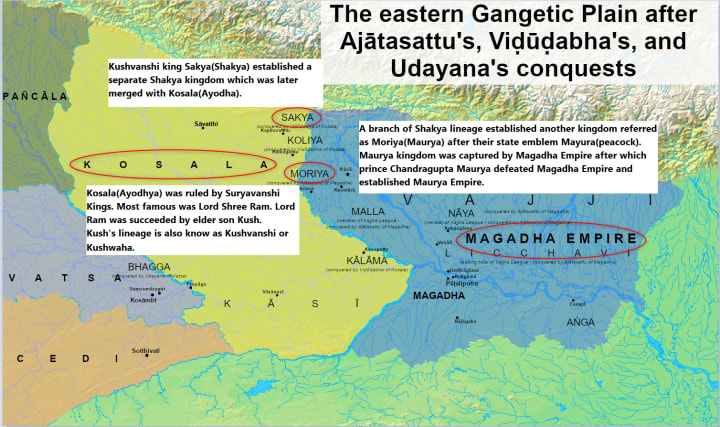
Note that they did not call themselves as Moriya/Maurya. The name Moriya/Maurya does not occur in any inscriptions or books wrriten during Maurya period. Hundreds of years later after the fall of Mauryan Empire when history was written they were named as Moriya/Maurya due to their state emblem (Peacock).
Shakya and Moriya Kshatriya ( Shakya Caste History )
Chandragupta Maurya belonged to the same Moriya Kshatriya clan. His Grandson was Emperor Ashoka Maurya.
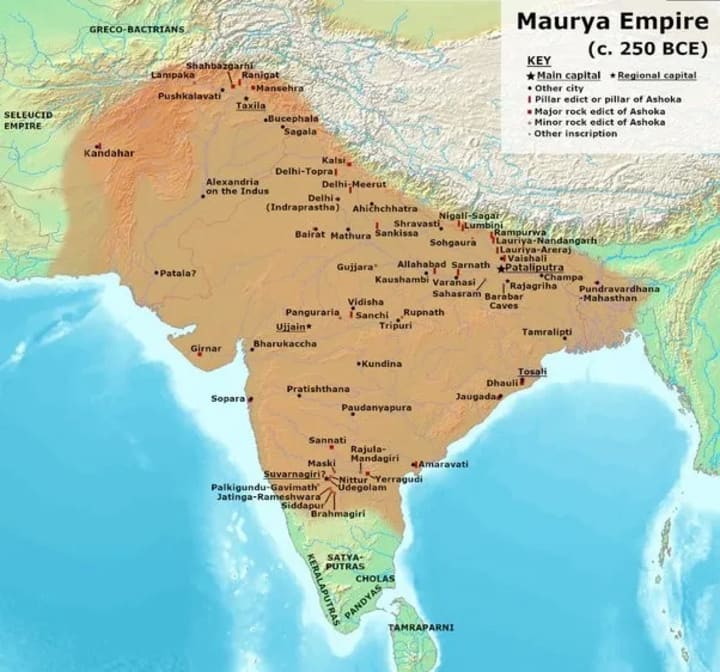
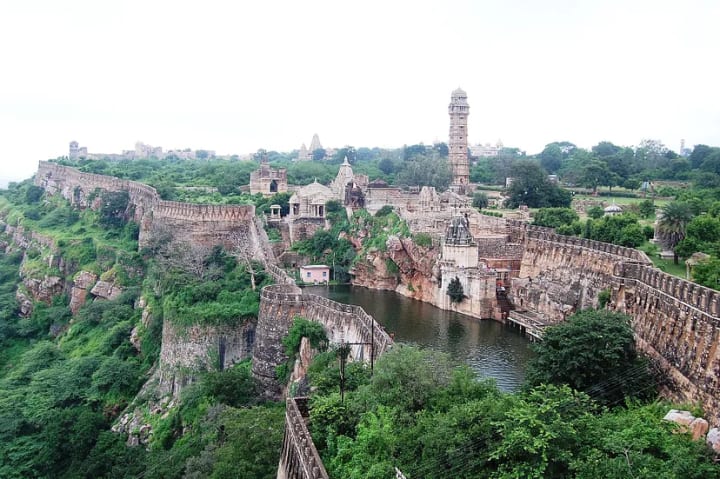
After the end of Maurya dynasty of Pataliputra, this Kshatriya clan moved from Morwan (Mori-ka-patan) to the south of Chittor in Rajasthan (Archaeological Survey of India Report, Vol 6). The founder of Chittor was Chitrangada Mori (Maurya) and this region was ruled by the Mauryas for a long time till it was taken over by Bappa Rawal, the son in law, of the last Mori ruler, Man Mori, in the 8th Century.
Chitrangada Maurya built the Chittor Fort which is the largest fort in India.
Kachhwaha/Kushwaha/Kush-vanshi Rajputs
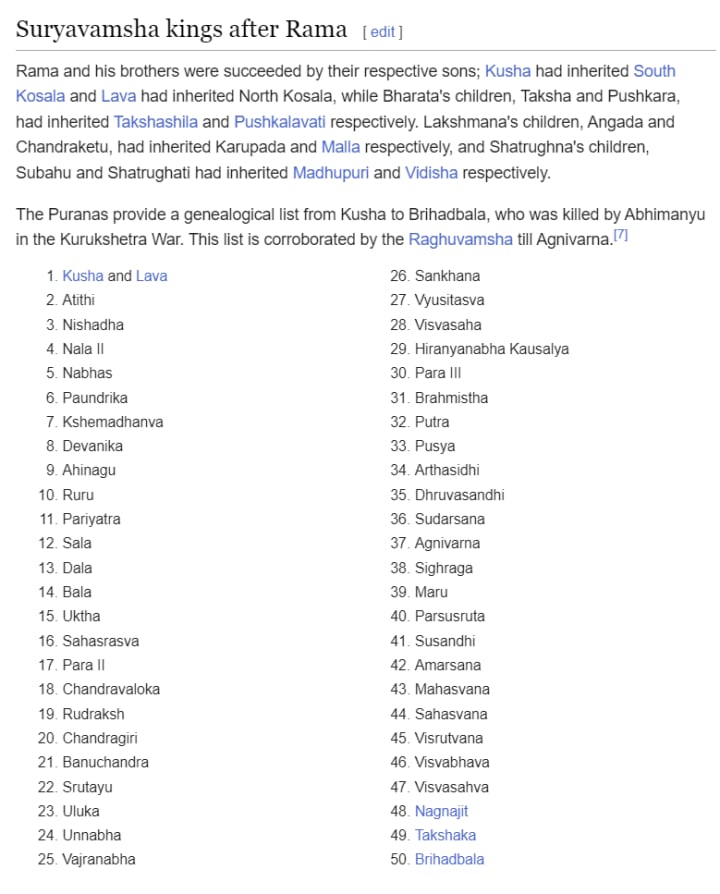
Kachhwaha/Kushwaha/Kush-vanshi Kshatriyas are a collection of all the clans that originated from descendants of Kush, son of Lord Sri Ram.
Kushwaha or Kachhwaha / Kachhi Rajputs is a common name used for all the clans and dynasties that originated from families of hundreds of kings that were born in the lineage of Kush, the elder son of Lord Shree Ram. They are also known as Kushvanshi Kshatriya.
Kushwaha Kshatriyas are distributed in UP, Bihar, MP, Rajasthan etc.
Kushwaha kings originally ruled in Kosala. Their capital city was Ayodhya.
Kushwaha / Kachwaha Kshatriya during Medieval times
Kushwaha Rajputs ruled a number of kingdoms and princely states, such as Jaipur, Alwar, Bihar, Uttar Pradesh, Madhya Pradesh and Maihar.
Conquest of Dhundhar
Kachhwaha established their kingdoms in the Dhundhar region of modern Rajasthan in the 11th century. One Kachhwaha Dulha Rai conquered most of the dhundhar area from Bargujars Rajputs.
Raja Kakil Deo
After Dulherai, his son Kakil Deo defeated the Meenas of Amer and made Amer the capital of Dhundhar after Khoh.
Raja Pajawan
Raja Pajawan helped Prithviraj Chauhan in his most of the campaigns and conquests. He was married to a cousin of Prithviraj Chauhan. He died before the battle of Tarain.
Raja Prithviraj Singh I
Kachhwaha King Prithviraj Singh I fought along with Rana Sanga at battle of Khanwa.
Raja Man Singh I
He was one of the most trusted noble of Akbar. He was the supreme commander of the Mughal forces. He built the Amer Fort. He built and saved so many Hindu temples from Islamic destruction.
Sawai Jai Singh II
He built the pink city of Jaipur and five astronomical observatives at Delhi, Jaipur, Benaras, Mathura and Ujjain. He also established Govind Dev Ji temple at Jaipur.
Amer Fort built by Raja Man Singh Kachhwaha ( Shakya Caste History )

About the Creator
Keep reading
More stories from writers in History and other communities.
The Forgotten Flavors: How Ancient Recipes Could Change the Future of Food
Introduction: A Taste of What We’ve Lost Today, food is everywhere—globalized, homogenized, and, in the great majority of cases, severed from its place of origin. A hamburger consumed in New York has virtually the same taste as one consumed in Tokyo or Dubai. Pasta comes in a thousand variations, but the sauces follow the well-known: tomato, cream, or cheese. Supermarkets carry an incredible variety, but all are produced from the same limited list of international commodities: wheat, corn, soy, rice, sugar.
By The Chaos Cabinet6 days ago in History
Alexander the Great’s Body Preservation Method: History, Mystery, and Science
Ancient historians describe Alexander’s corpse as remaining uncorrupted for several days, even weeks, which led many to believe he was divine. The method used to preserve his body has intrigued historians, scientists, and medical scholars for centuries.
By Say the truth 5 days ago in History




Comments