
Shadows of the Past
A Legacy of Resilience and Reclamation in Post-Colonial Africa
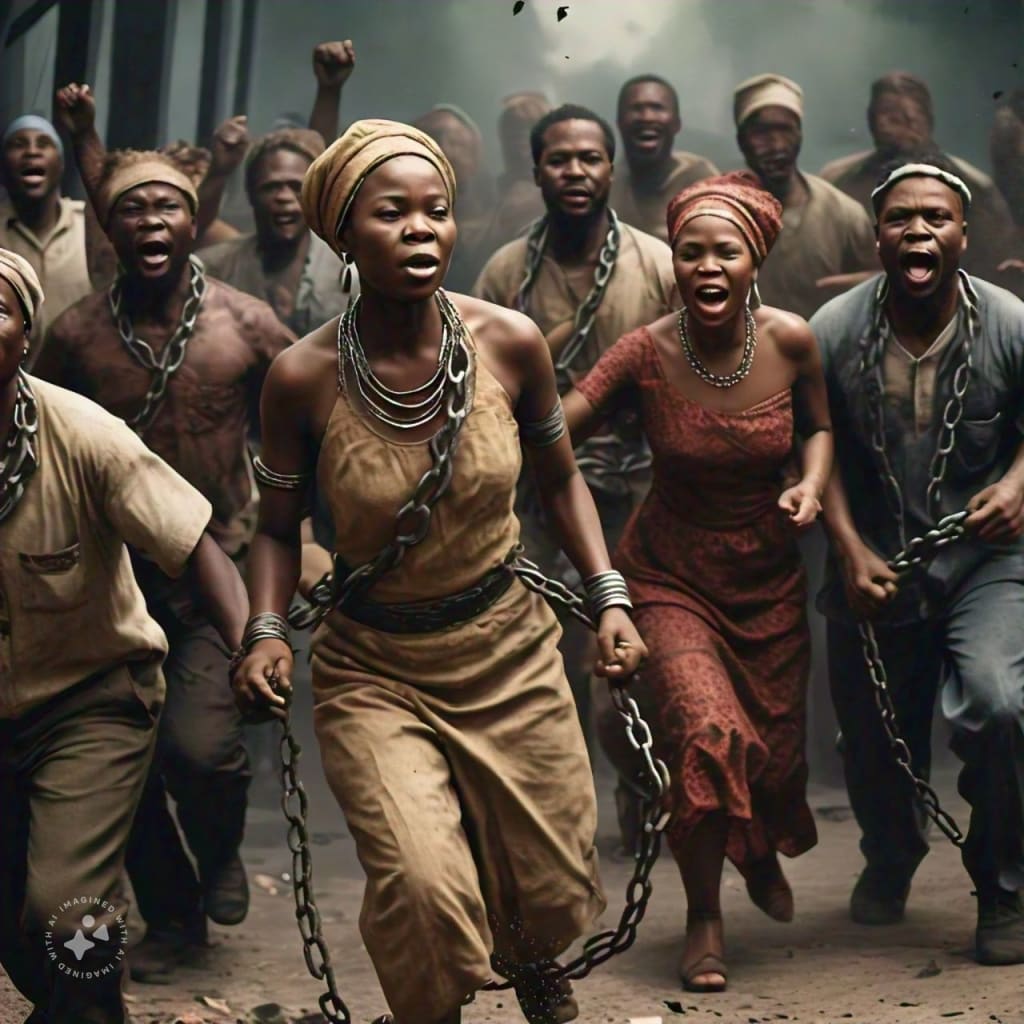
Chapter 1: The Cracked Soil
Amina stood barefoot on the edge of the family’s land, staring out at the fields that stretched as far as the eye could see. The soil was cracked and dry, the result of a drought that had hit the region hard. But there was something more than just nature’s wrath in the land—something deeper, more insidious.
Her father sat beneath the old baobab tree, his weathered hands resting on his knees. He was a strong man once, proud and unyielding, but time and hardship had worn him down. His eyes were on the same land, but Amina knew he saw something different. He saw memories, ghosts of the past, and the weight of a colonial history that had never truly left them.
“Baba,” Amina called, her voice soft yet heavy with questions. “Why does it still feel like we’re not free? The colonialists left decades ago, but nothing has really changed for us.”
Her father’s gaze didn’t shift. His voice, though, was steady. “Because the land we stand on was never ours to begin with, Amina. The rulers took it long ago, and when they left, they did not give it back. What they left us was broken pieces of a history they tried to erase.”
Amina looked down at the soil, suddenly feeling its weight. She had grown up hearing stories about colonial times, about how her ancestors had been forced off their land, reduced to laborers on what should have been their birthright. Yet, even in independence, the land hadn’t returned. Foreigners still owned vast plots, while her people fought over the scraps.
She sighed, wishing she could do more. But how does one fight against shadows?
Chapter 2: Stories of the Past
That night, around the dimly lit fire, her father began to tell stories. He often did this in the evenings, recounting the history of their people, as though he feared it might one day be forgotten. Amina listened closely, as she always did, though tonight, something felt different. The stories seemed heavier, closer
“Our village, once proud and united, was torn apart when the colonialists arrived,” her father began. “They drew lines on a map, splitting our lands and our people. We became strangers on our own soil. I was just a boy, but I remember the sound of their boots and the harshness in their voices. They took our homes, our cattle, our dignity.”
Amina leaned in, her heart aching at the thought of her father as a child, watching as everything he knew was stolen from him. “And when they left?” she asked. “Did they give anything back?”
Her father shook his head. “They gave us flags, Amina. Symbols of freedom, but nothing more. The land was still in the hands of the few, the systems they created still governed our lives. We were free, they said, but we were not free.”
Her chest tightened with frustration. She had always felt a lingering sense of injustice, but hearing her father’s stories made it real. They had inherited a broken world, and the pieces were still scattered.
“We can’t just live like this forever, Baba,” she said, her voice tinged with desperation. “There must be something we can do.”
Her father’s eyes softened, but there was sadness in them. “There is, Amina. We fight. Not with weapons, but with resilience. We plant our seeds, we raise our voices, and we demand what is rightfully ours. But it will not be easy.
Chapter 3: Resilience in the Blood
The days passed, and Amina found herself thinking constantly about her father’s words. She worked the land with him, sowing seeds in the dry earth, hoping the rains would come soon. Every moment in the field felt like a reminder of the colonial legacy that still shackled them. The land, the water, the resources—everything had been taken and repurposed for the benefit of a few while her people struggled to reclaim even a fraction of it.
One afternoon, after hours under the scorching sun, Amina collapsed beside her father under the baobab tree. She wiped the sweat from her forehead and glanced at him. “Do you ever feel like… like we’re fighting a battle we can never win?”
Her father didn’t respond immediately. He was quiet for a long moment, his eyes distant, lost in thought. Finally, he said, “Sometimes, yes. But then I remember that resilience is in our blood, Amina. We are children of this land. It’s in our bones, our history. They tried to take it from us, but we are still here.”
Amina looked at the cracked soil again, imagining the generations before her who had walked this same land, struggling against the same forces. Colonialism had left deep scars, not just in the earth but in the people’s hearts. Those scars were still healing, even decades after the colonial powers had left.
“I want more than just survival,” Amina said quietly. “I want us to thrive.”
Her father smiled faintly. “We all do, Amina. But thriving takes time. It takes generations. What matters is that we keep moving forward, no matter how slow the progress.”
Chapter 4: The Weight of the Future
As the seasons changed, Amina found herself increasingly involved in the village’s political discussions. The elders often debated the state of the country, the promises of the government, and the lingering influence of foreign powers. Amina had once sat on the sidelines, listening, but now she felt compelled to speak.
One evening, during a particularly heated debate about land ownership, she stood up. “We cannot wait for the government to fix this,” she said, her voice strong. “They’ve had decades to right the wrongs of colonialism, but we’re still waiting. We need to take action ourselves. We need to reclaim what was taken.”
There was silence for a moment, and then murmurs of agreement rippled through the group. The elders nodded, some with approval, others with skepticism. But Amina knew she was right. They couldn’t afford to be passive anymore. The legacy of colonialism was still a heavy weight on their shoulders, but it was up to them to lift it.
Chapter 5: The Long Road Ahead
The fight was slow, as her father had warned. Amina organized meetings, worked with local leaders, and pushed for land reforms. It wasn’t easy—there were powerful interests at play, both foreign and domestic, that didn’t want to see change. But she was determined.
Her father watched her with pride, though he rarely said it aloud. She knew he saw in her the same resilience that had kept their people going for so long.
“We will see change, Baba,” she told him one evening as they stood together under the baobab tree. “Maybe not in our lifetime, but it will come.”
He nodded, his eyes soft with the weight of both hope and sorrow. “It will, Amina. It will. Because we are children of this land, and we will never stop fighting for it.”
And so, the struggle continued. Amina knew the road was long, but she also knew they were not alone. The shadows of colonialism still lingered, but the light of resilience burned brighter with every step forward.
About the Creator
Keep reading
More stories from Ozoume Cynthia Obianuju and writers in History and other communities.
Slavery in Africa
of Chains Chapter 1: The Village by the River The sun was high, casting long shadows over the dense forests that bordered the small village of Luhwa. Nestled near a gentle river, the village was alive with the sounds of laughter, bustling market stalls, and the rhythmic pounding of pestles in mortars as women prepared the day’s meals. Children played freely, their bare feet pattering against the earth as they chased one another in games of tag and hide-and-seek.
By Ozoume Cynthia Obianuju about a year ago in History
The Quiet Name on Maple Street
Kim Jong-un was born into a world unlike almost any other—a world sealed by borders, ideology, and secrecy. As the grandson of Kim Il-sung, the founder of North Korea, and the son of Kim Jong-il, the country’s second leader, Kim Jong-un entered life already wrapped in destiny. In North Korea, leadership is not chosen by ballots or debate; it is inherited like a crown, reinforced by loyalty, fear, and an unyielding political system.
By The best writer 7 days ago in History
The Blue Ridge Stalker
Tom had left the Ford down the way, its spark plugs finally exhausted and no mechanics for a dozen miles back through the foothills to Strossburg. No matter, he had worn his boots—almost as if he planned for this to happen. The puzzle he sought to solve emanated from the woods clinging to the slopes above; the valley behind held no mysteries.
By Stephen A. Roddewig2 days ago in Fiction


Comments
There are no comments for this story
Be the first to respond and start the conversation.