
Scary historical events
.The story of President Abraham Lincoln’s assassination and many others


The story of President Abraham Lincoln’s assassination is a well-known chapter in American history. On the night of April 14, 1865, Lincoln attended a play at Ford's Theatre in Washington, D.C. He was accompanied by his wife, Mary, and friends Henry Rathbone and Clara Harris. They were celebrating the Union's victory in the Civil War. While seated in a private box, John Wilkes Booth entered and shot Lincoln in the head at point-blank range.
Rathbone reacted quickly. He saw Lincoln collapse and charged at Booth. During the struggle, Booth slashed Rathbone’s arm with a dagger and leapt onto the stage. Rathbone managed to grab Booth’s coat, causing Booth to injure his leg. Despite the crowd, Booth escaped capture for 12 days. Lincoln succumbed to his injuries just nine hours later. Rathbone, suffering from blood loss, recovered but felt immense guilt over the assassination. He believed he should have prevented it, leading to severe mental health issues.
Five years after resigning from the military, Rathbone struggled to find work. Eventually, President Arthur offered him a consul position in Germany. Rathbone’s mental health continued to deteriorate, resulting in violent outbursts toward his family. In December 1883, he attacked his children during a manic episode. Clara rushed to protect them but was tragically killed. Rathbone then turned the knife on himself but survived. He was found by police, claiming he heard whispers in the walls. He was arrested and later declared insane. Rathbone spent the rest of his life in an asylum, where he died 28 years later.
Henry Howard Holmes was an infamous con artist and the first documented serial killer in the U.S. Born as Herman Mudgett, he attended medical school and participated in grave robbing. After graduating, he moved to Chicago and bought a drugstore. Holmes used proceeds from the store to fund a hotel, which he designed as a death trap. The hotel was built with secret rooms and trapdoors.
During the 1893 Chicago World's Fair, Holmes targeted wealthy women, many of whom went missing. It is estimated that as many as 50 women disappeared, linked to what he called his "Murder Castle." In August 1893, a fire destroyed part of the hotel, leading to allegations of insurance fraud against him. Holmes escaped Chicago and continued to commit insurance fraud.
Holmes eventually murdered his friend Benjamin Pitezel for insurance money. He also coerced Pitezel's widow into placing her children in his care, leading to the deaths of three of them. The remains were discovered, leading to his arrest. Holmes claimed to have killed over 200 people but was only linked to nine murders due to lack of evidence. He was sentenced to death and hanged in 1896.
Another notable story involves an unidentified woman known as "L'Inconnue de la Seine." In the late 1880s, her body was pulled from the River Seine in Paris. Medical examinations showed no visible wounds, suggesting her death was self-inflicted. A plaster death mask was made to immortalize her face, and many copies were produced.
Her serene expression captivated Parisians and inspired various artworks and even the CPR training doll used worldwide.
During World War I, chemical weapons, such as mustard gas and chlorine gas, were introduced to warfare. The use of chlorine gas began in September 1914, leading to horrific consequences for soldiers exposed to it. German forces attempted to take a Russian fort but faced heavy losses. During their third assault in August 1915, they used chlorine gas against Russian troops, who lacked proper protection.
Despite suffering greatly, many Russian soldiers continued to fight valiantly. The German troops, faced with the sight of the suffering Russians, panicked and withdrew. The Russians suffered severe casualties, but their determination was notable.
The Italian Renaissance is often associated with high culture and artwork. However, it also brought about the introduction of a severe strain of syphilis across Europe. The disease spread rapidly after Spanish soldiers invaded Naples in 1494. This severe strain caused horrific symptoms, leading to disfigurement and suffering for many, with the disease eventually spreading worldwide.
Historically, this period was marked by significant social and medical challenges, reminding us of the impact of war and disease on society.
About the Creator
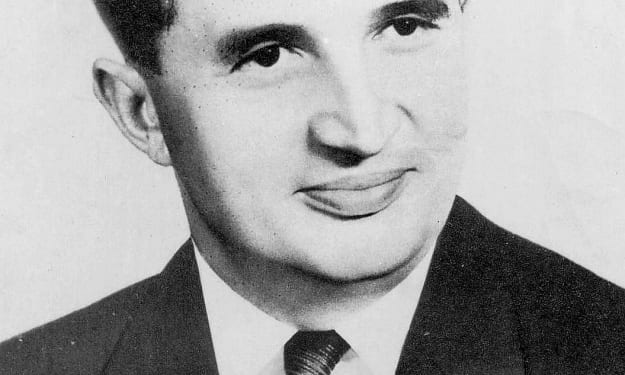
The Rise and Fall of Nicolae Ceaușescu
Nicolae Ceaușescu’s rise to power was initially marked by promise, even optimism. Born in 1918 into a poor peasant family, he entered politics early, shaped by the ideological rigidity of interwar and wartime communism. When he became General Secretary of the Romanian Communist Party in 1965, following the death of Gheorghe Gheorghiu-Dej, many Romanians saw in him a younger leader, one who might soften the harsh Stalinist legacy that had defined the previous decades. For a society weary of repression and deprivation, Ceaușescu appeared to embody the possibility of cautious change.
By Pure child4 days ago in History
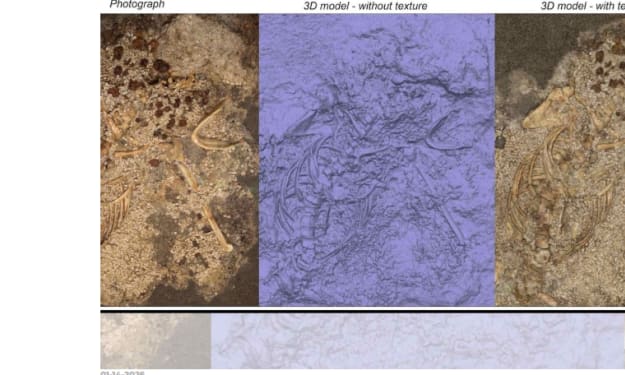
A woman from a vanished female dynasty was discovered buried with 270,000 beads.
In a Copper Age tomb close to Seville, Spain, the Montelirio bead assemblage contains over 270,000 beads that identify the ladies buried there as elites. The discovery is the biggest collection of beads ever
By Francis Dami5 days ago in History


Comments