
"Sabotage or Mutiny: The Hidden Threats That Sank Great Ships"
Throughout maritime history, ships have vanished or met destruction not just from natural disasters or enemy attacks—but from betrayal within. This article explores the haunting line between sabotage and mutiny, revealing shocking historical cases where greed, injustice, or political motives tore ships apart from the inside. From the Bounty and Potemkin to Cold War submarines, uncover the psychological and strategic dimensions of these sea-bound uprisings, and how they shaped nations and navies alike.

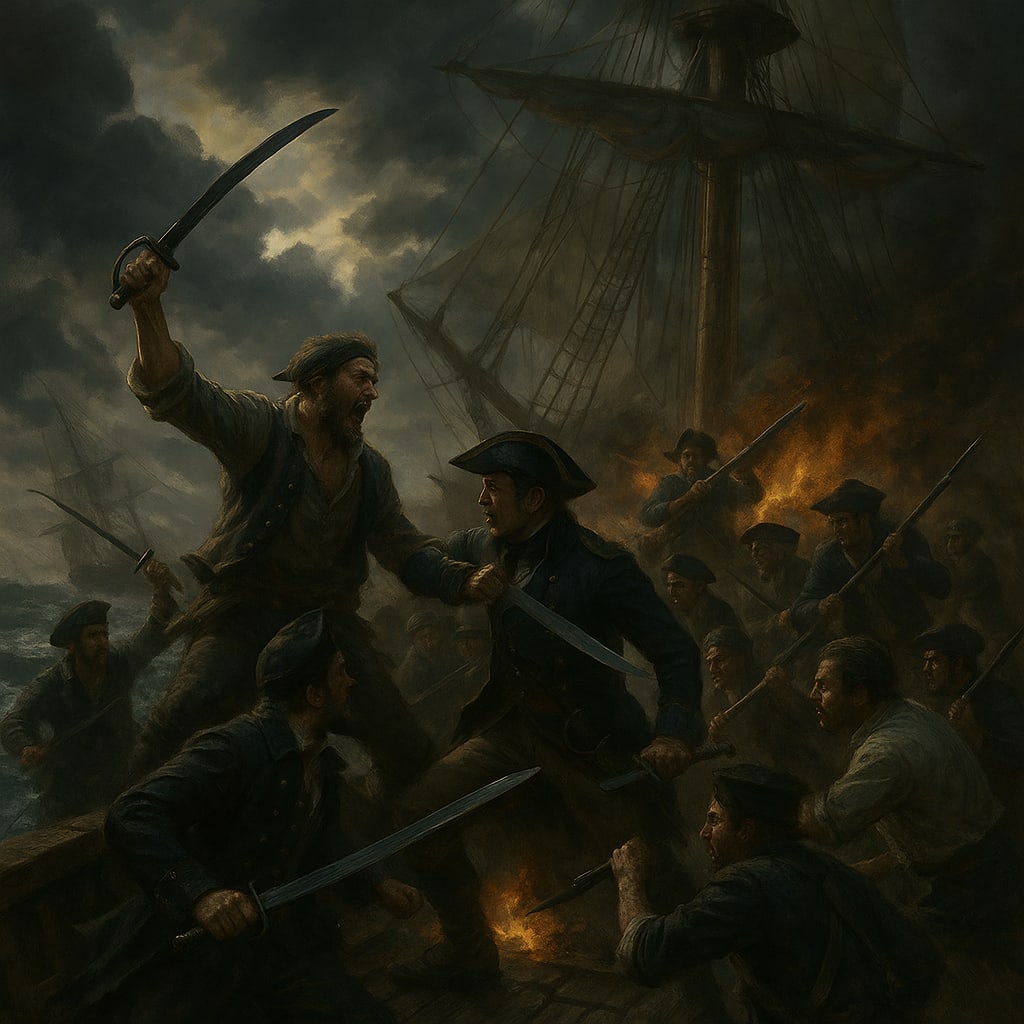
Sabotage or Rebellion: Unveiling the Mysteries Behind Enigmatic Maritime Calamities
For centuries, the ocean has served as both a conduit and a conflict zoneconnecting continents, transporting empires, and inspiring aspirations of exploration. However, beneath the façade of noble discovery lies a grimmer, obscured truth: vessels lost without rationale, crews disappearing, and debris never recovered. In numerous instances, conjecture has pointed to two ominous alternativessabotage or rebellion.
Was it a conspiracy from within? A treachery among the ranks? Or was it a desperate uprising by seafarers pushed to their breaking point? This article delves into the intricate history, motivations, and notable instances surrounding sabotage and rebellion on the open waters, scrutinizing how these dual forces of internal disintegration have transformed the trajectory of maritime history.
The Fine Distinction Between Sabotage and Rebellion
Although frequently categorized together, sabotage and rebellion are inherently distinct:
Sabotage pertains to the intentional dismantling, impairment, or hindrance of a vessel, usually conducted by a crew member or saboteur for political, military, or personal purposes.
Rebellion is an overt insurrection or uprising by a ship's crew against the commanding officersoften instigated by severe conditions, unjust command, or ideological convictions.
Both actions signify a collapse of order and the ultimate treachery of maritime discipline.
Notable Instances of Sabotage or Rebellion
1. The Potemkin Rebellion (1905)
One of the most renowned rebellions in naval history unfolded aboard the Russian battleship Potemkin. Discontent stemming from maggot-ridden provisions, severe discipline, and an escalating revolutionary fervor incited sailors to revolt, resulting in the death of several officers and the takeover of the vessel.
Although ultimately subdued, the Potemkin rebellion emerged as a symbol of the Russian Revolution, illustrating how social inequity at sea could incite widespread insurrection.
2. The USS Maine (1898): Sabotage or Mishap?
The American battleship USS Maine detonated in Havana Harbor, resulting in the deaths of 260 sailors. The United States held Spain accountable, igniting the Spanish-American War. Nonetheless, subsequent investigations indicated that the explosion might have been caused by an internal coal fire rather than foreign aggression.
Nevertheless, theories of sabotage linger, including speculation that it was an internal maneuver to justify warfare. The reality remains ambiguous.
3. The Rebellion on the Bounty (1789)
Captain William Bligh’s Bounty represents perhaps the most notorious rebellion in Western history. Discontent with Bligh’s severe governance and a yearning for the laid-back lifestyle of Tahiti compelled Fletcher Christian and several sailors to take command of the ship.
Bligh and his loyalists were cast adrift in a small boat, yet remarkably survived. The rebels escaped to Pitcairn Island, where some were later apprehended. This incident has since inspired a multitude of literary works and films.
Motivations Behind Rebellion
What drives crews to risk their lives in revolt? Historically, several factors have contributed to rebellion:
Inhumane treatment: Brutality from captains, starvation, and excessive labor could ignite insurrection.
Ideological influences: Revolutionary movements or class discontent at sea mirrored broader societal tensions.
Isolation and cabin fever: Prolonged voyages in confined spaces can induce psychological strain and distrust.
Greed and riches: In certain instances, rebellions were fueled by the ambition to seize treasure or cargo, particularly aboard trading and colonial vessels.
Contemporary Illustrations and Cold War Mystique
Even in the 20th century, sabotage and insurrection retained significance:
Soviet Submarine B-59 (1962): During the Cuban Missile Crisis, Soviet personnel aboard this submarine debated whether to deploy a nuclear torpedo. One individual, Vasili Arkhipov, declined. His choice may have averted WWIII, yet the incident also disclosed how perilously close submariners approached insurrection under duress.
INS Khukri (1971): India’s sole naval vessel lost in combat was targeted by a torpedo during the Indo-Pak conflict. While attributed to strategic miscalculations, certain conspiracy theorists propose that sabotage was involved, pointing to the vessel's rapid demise.
MV Wilhelm Gustloff (1945): Sunk by a Soviet submarine, the ship carried over 9,000 individuals. Although not officially recognized as sabotage, survivor testimonies imply chaotic command and misinformation could have played a role in its catastrophic outcome.
Methods of Sabotage: When Vessels Become Traps
Sabotage has manifested in numerous ways:
Disabling engines or navigation apparatus
Contaminating water or food provisions
Severing communication channels
Arson or deploying explosive devices
During wartime, saboteurs onboard cargo vessels and submarines assumed pivotal roles in intelligence activities. Some even masqueraded as crew members, installing explosives or leaking fuel.
Scrutinizing Calamities: Fact or Concealment?
Maritime investigations into vessel losses frequently grapple with incomplete data, absent wreckage, and political influences. This has led many to suspect that the reality behind certain catastrophes is obscured.
For instance:
The Cyclops (1918): Vanished with 309 personnel. Some attribute it to an insurrection stemming from adverse conditions, while others suspect sabotage. No remnants were ever discovered.
The Kursk (2000): A Russian submarine that sank, resulting in the deaths of 118 sailors. Official narratives attribute it to a torpedo failure, but some assert that sabotage or internal rebellion was concealed by governmental authorities.
Conclusion
The ocean harbors secrets older than civilizations. Among them, none are more unsettling than those linked to treachery from within. Sabotage and insurrection strike at the essence of trust, adherence, and the very essence of survival at sea.
From ancient triremes to nuclear submarines, the specter of internal disintegration remains ever-present. Whether motivated by desperation, ideology, or avarice, the narratives of sabotage and insurrection remind us that the gravest threats are not always tempests or adversarial fleetsbut rather, human hearts in revolt.
About the Creator
Say the truth
"Say the Truth: Explain Everything in the World" is your trusted source for uncovering facts and exploring the wonders of history, science, technology, and beyond. We simplify complex ideas and reveal truths to inspire curiosity .
Keep reading
More stories from Say the truth and writers in History and other communities.
“Yartsa Gunbu: The Billion-Dollar Fungus That Rivals Gold”
The Green Fortune: The Narrative of the Most Costly Plant Ever Unearthed In a realm where assets such as gold, diamonds, and petroleum are esteemed for their significance, few would contemplate that an unassuming plant could compete with these in value. Nevertheless, throughout history, certain flora have become invaluableeither due to scarcity, therapeutic qualities, spiritual relevance, or considerable market demand. Among these, one distinguishes itself: Yartsa Gunbu, often described as the “Himalayan Viagra,” recognized as the most costly plant-derived substance on Earth by weight.
By Say the truth 9 months ago in History
Chinese Water Torture
Since the dawn of history, human beings have inflicted unimaginable suffering upon one another. Across centuries, people have devised increasingly elaborate methods of punishment and coercion, some brutally explicit, others deceptively subtle. While devices such as iron maidens, racks, whips, and wheels relied on visible physical agony, there existed a form of torment whose true power lay not in blood or broken bones, but in patience, repetition, and the slow erosion of the mind. This method came to be known as Chinese water torture.
By Pure childabout 13 hours ago in History
Saddam Hussein: Rise, Rule, and Fall
Saddam Hussein was born on April 28, 1937, in a small village near Tikrit, Iraq. His early life was marked by poverty, hardship, and a sense of abandonment. His father died before he was born, and his mother remarried soon after. Young Saddam grew up in a household dominated by strict relatives and was exposed to political discussions and nationalist sentiments from an early age. These formative years shaped his personality—ambitious, ruthless, and fiercely determined to rise above his modest beginnings.
By The best writer about 15 hours ago in History




Comments
There are no comments for this story
Be the first to respond and start the conversation.