
Roman Girls and Marriage in Ancient Rome
"Exploring the traditions, customs, and societal norms surrounding marriage for young girls in ancient Rome."

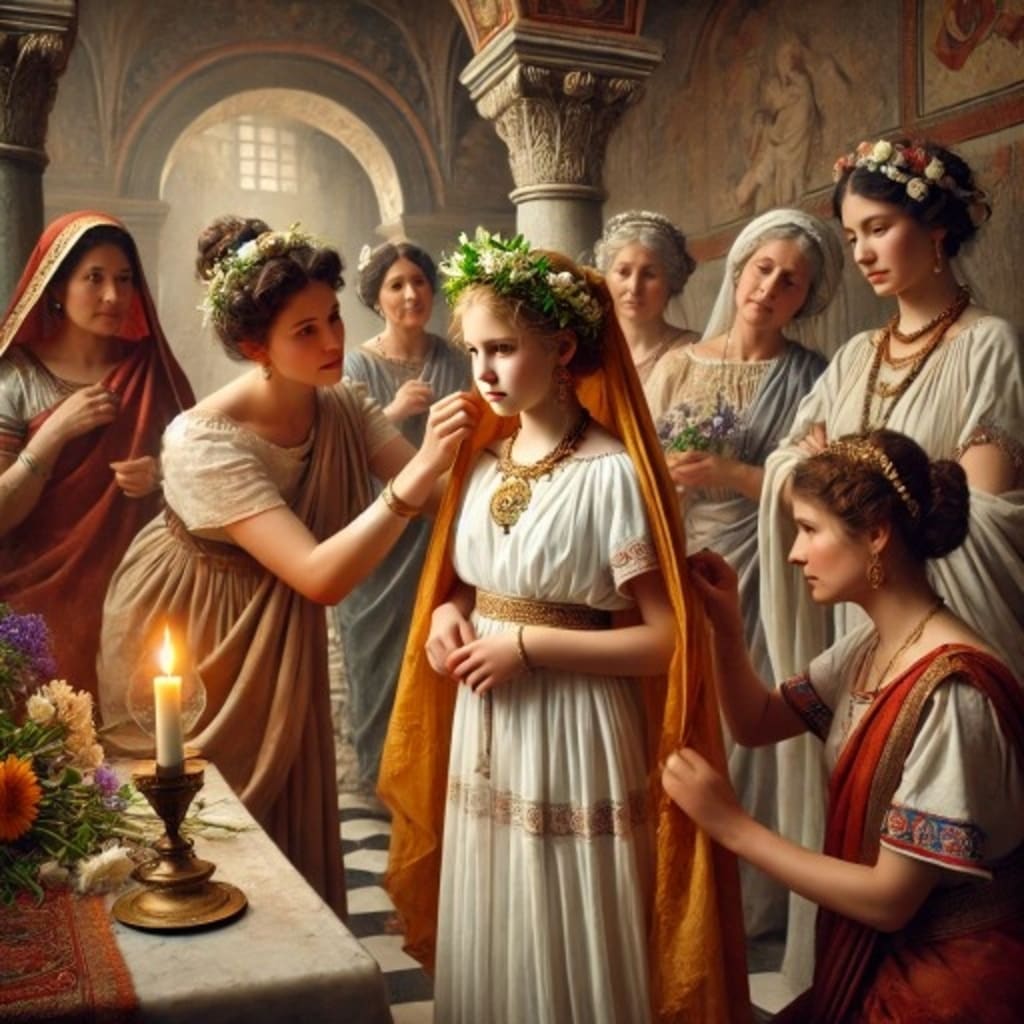
Roman Girls and Marriage in Ancient Rome
Marriage in ancient Rome was not just a personal union but a crucial social legal and political institution. Roman girls particularly those from elite and middle class families were often married at a very young age. While the legally acceptable age for marriage was twelve the actual age varied based on social status and family decisions. The marriage system in ancient Rome reflected the patriarchal structure of society where marriages were arranged primarily for social alliances rather than personal relationships.
Age of Marriage
In ancient Rome the legal age for a girl to marry was twelve though it was not always the norm for every class. Among middle class Romans it was more common for girls to marry in their mid to late teens. However among the elite it was not unusual for marriages to take place as soon as a girl reached the legal age. In some cases girls were even betrothed before reaching puberty with the marriage ceremony taking place as soon as they turned twelve. This was particularly true for aristocratic families who sought to strengthen political and social alliances through marriage. The reason behind early marriages in elite families was largely strategic. Marriage was used as a tool to secure political and economic advantages. Fathers arranged marriages for their daughters with influential families to enhance their status and influence. By marrying early girls could quickly fulfill their role as wives and mothers which was considered their primary duty in Roman society.
Role of the Paterfamilias in Marriage Arrangements
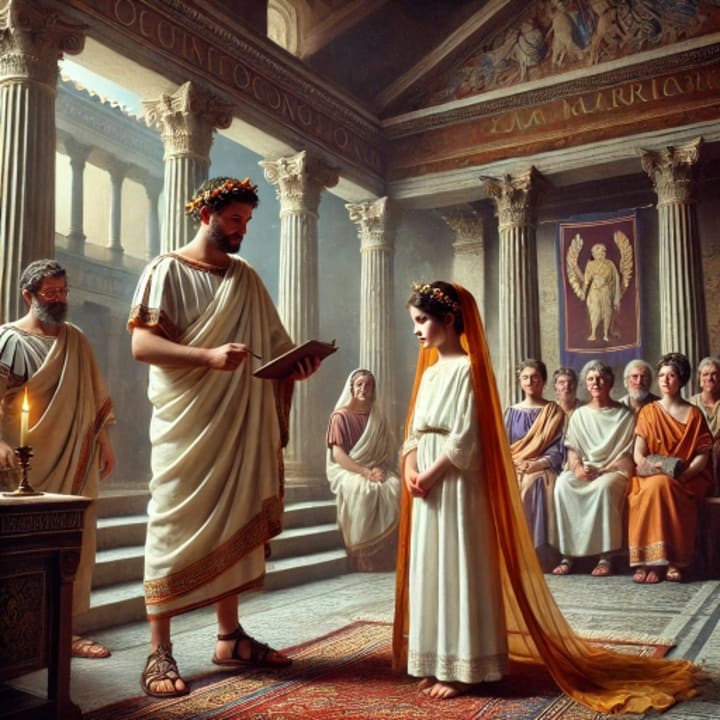
In ancient Rome marriage was not a matter of personal choice for young girls. Instead it was the responsibility of the father or paterfamilias to arrange marriages for his daughters. The paterfamilias held absolute authority over his family and his decisions regarding his children’s marriages were final. Marriages were often arranged through negotiations between families. The main considerations included wealth status and political advantages. Love or personal preference played little to no role in these arrangements. In some cases a marriage contract was drawn up specifying the financial arrangements and obligations of both families. The bride’s dowry which was an essential part of the marriage agreement often determined the success of the match. A substantial dowry increased a girl’s chances of marrying into a prestigious family.
Types of Roman Marriages
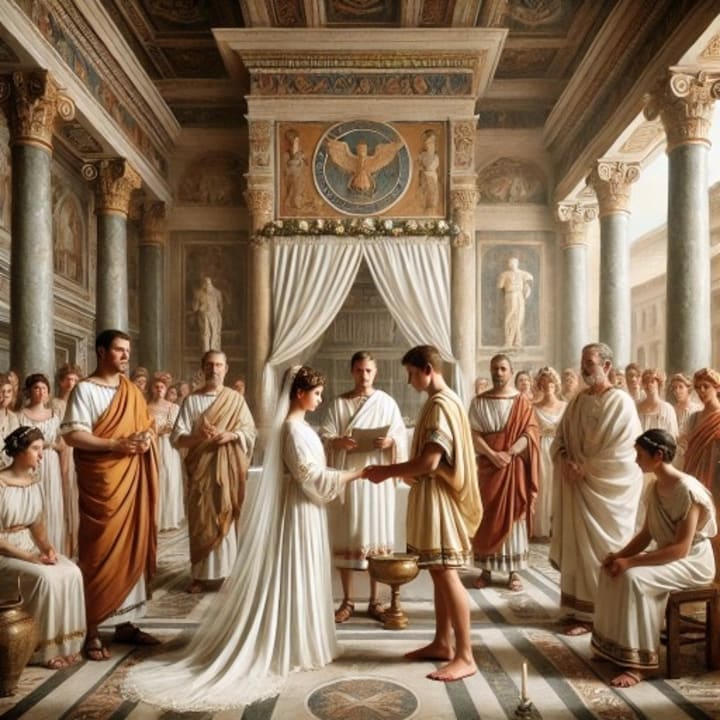
There were different types of marriages in ancient Rome with the most common being cum manu and sine manu marriages.
1. Marriage Cum Manu: In this type of marriage the bride passed completely under the legal authority (manus) of her husband. She was no longer part of her father’s family but became legally and financially dependent on her husband.
2. Marriage Sine Manu: This type of marriage was more common in later periods of Roman history. The bride remained under the legal authority of her father rather than her husband. This arrangement allowed women especially from elite families to retain control over their property and wealth.
The sine manu marriage eventually became more popular because it gave women greater financial independence and allowed their birth families to maintain influence over them even after marriage.
Expectations from Married Women
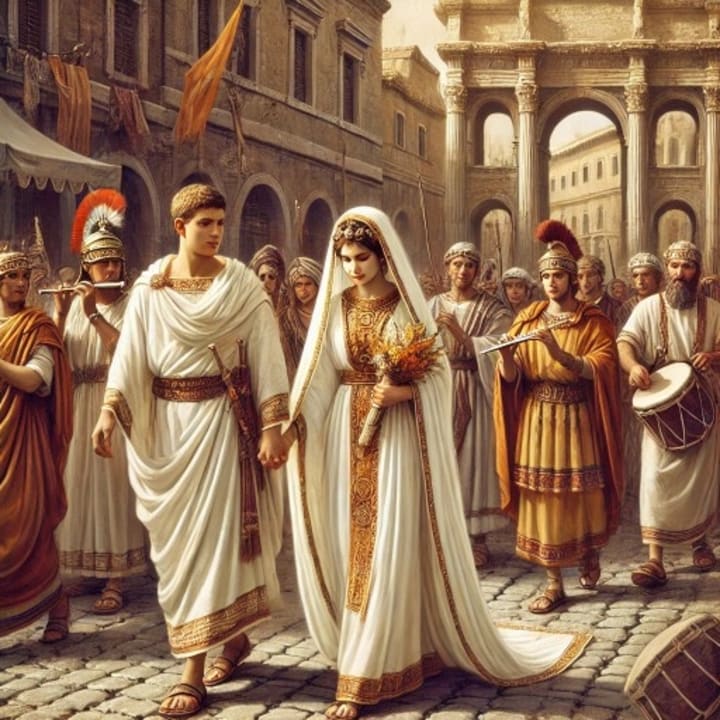
Once married a Roman girl was expected to fulfill her duties as a wife and mother. Producing children especially male heirs was considered the primary duty of a Roman woman. Since mortality rates were high due to disease and childbirth complications women often had multiple pregnancies to ensure the survival of their children. Married women were responsible for managing the household overseeing servants and ensuring the smooth running of domestic affairs. However in elite families some women played influential roles in politics especially behind the scenes. While women in Rome could not directly participate in political life, many powerful women such as Livia Drusilla (wife of Emperor Augustus) exerted great influence over their husbands and sons. Marriage in ancient Rome was deeply embedded in the social and political framework of the time. For Roman girls marriage was not a matter of love or personal choice but a means to strengthen family alliances. The age of marriage varied based on social class with elite families often marrying off their daughters at twelve or even earlier to secure political and economic advantages. The paterfamilias held absolute authority in arranging marriages and women were expected to fulfill their roles as wives and mothers once married. While some women from elite families gained influence through their marital connections the overall structure of Roman marriage remained firmly rooted in patriarchal traditions.
About the Creator
Adnan Rasheed
Author & Creator | Writing News , Science Fiction, and Worldwide Update| Digital Product Designer | Sharing life-changing strategies for success.
Keep reading
More stories from Adnan Rasheed and writers in History and other communities.
Archaeologists Found a Hidden Tomb That Reveals a Lost Egyptian Dynasty
Archaeologists Found a Hidden Tomb That Reveals a Lost Egyptian Dynasty In a groundbreaking discovery that has sent shockwaves through the archaeological community researchers in Egypt have uncovered a hidden tomb that may rewrite history. This astonishing find provides compelling evidence of a lost Egyptian dynasty previously unknown to scholars. The tomb, hidden beneath the shifting sands for thousands of years, offers new insights into a forgotten era of Egypt’s past. With its richly adorned chambers mysterious inscriptions, and the remains of a ruler whose name has never been recorded in any known texts this discovery challenges long held beliefs about the continuity of ancient Egyptian civilization.
By Adnan Rasheed12 months ago in History
Ancient Egyptian Recipe for Preserving Bodies for Centuries Finally Uncovered
For centuries, the mystery of how ancient Egyptians preserved bodies so successfully has fascinated historians, archaeologists, and scientists alike. Their mummies, some thousands of years old, have survived with skin, hair, and even facial features remarkably intact. Now, researchers believe they have identified what may be one of the key “recipes” behind this extraordinary process — a detailed embalming mixture that helps explain the science behind one of history’s most iconic burial traditions.
By Irshad Abbasi about 20 hours ago in History


Comments
There are no comments for this story
Be the first to respond and start the conversation.