
Rolls-Royce Phantom Turns 100: A Look at the Luxury Icon’s History
Luxury cars like the Rolls-Royce Phantom can be obnoxiously grandiose, but after being among the best luxury cars in the world for 100 years, perhaps it's earned that right.
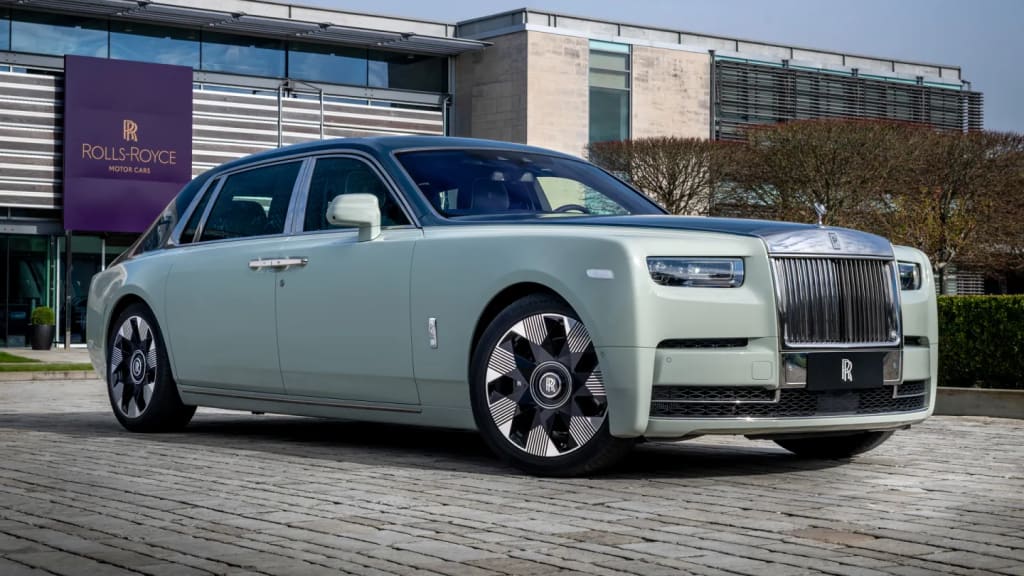
when a car brand turns 100, it’s a big deal. Crossing the century mark is huge for any company, in any market. But Rolls-Royce has been around for so long that it now has a product turning 100 years old: The Phantom. That makes the luxury icon older than most other brands.
The Phantom first launched in 1925, back when Rolls was still mostly building rolling chassis for coachbuilders to put their own bodies on. While it was widely considered one of the most luxurious cars in the world, it gained fame in 1927, when movie stars and Hollywood studio heads famously bought Phantoms for themselves. Warner Bros. co-founder Jack Warner had one, and so did Greta Garbo and Fred Astaire. Silent movie star Mary Pickford not only had one but she had it customized with a secret booze compartment, to keep her stash hidden from the prohibition-era Johnny Law.
In 1929, Rolls launched the Phantom II with a revised 7.7-liter straight-six engine. The Phantom didn’t get the now-iconic V12 until its third generation in 1936. Like a lot of others, Rolls-Royce took a break from developing cars during WWII, but that doesn’t mean the manufacturer stopped making an impact. During WWII, British Field Marshal Bernard Law Montgomery used a Phantom III as his daily driver, despite being known for leading such a simple lifestyle that he earned the nickname “Spartan General.” Montgomery even used the Phantom III to transport Winston Churchill, General Eisenhower, and King George VI to and from planning sessions for the invasion of D-Day at Allied headquarters in the UK.
Eight Generations of Excellence
Over the past 100 years, there have been eight generations of the Phantom, each redefining luxury in its own era:
Phantom I (1925–1931): Known for its quiet engine and handcrafted interiors.
Phantom II (1929–1936): Improved handling and performance.
Phantom III (1936–1939): First V12 engine and advanced technology.
Phantom IV (1950–1956): Reserved only for royalty and heads of state.
Phantom V & VI (1959–1990): Ultra-luxury limousines, favored by Queen Elizabeth II.
Phantom VII (2003–2017): First under BMW ownership, blending tradition with modern tech.
Phantom VIII (2017–present): The most luxurious and technologically advanced Phantom ever.
The following Phantom IV didn’t launch until well after the war in 1950. It was subtler, though, possibly in keeping with the humbled post-war tone of the nation. It was shorter than the Phantom III and featured a kneeling version of the iconic “Spirit of Ecstasy” hood ornament adorning its exclusively coachbuilt chassis.
Rolls-Royce
Such subtleties didn’t last long, though. In 1959, the Phantom V launched and was so long, at almost 19 feet, it’s rumored that the mandatory minimum length of British curbside parking spaces was elongated to accommodate it. The Phantom V is what made the nameplate most famous, with an iconic owners list that included Queen Elizabeth II, Elton John, Elvis Presley, and John Lennon. Lennon’s was the most famous—and infamous—as his car was originally all black and was one of the first factory British cars to have tinted windows. However, after the enormous success of The Beatles’ album Sgt. Pepper’s Lonely Hearts Club Band, Lennon had the Phantom V painted bright yellow and given a swirly, flowery livery that upset Rolls-Royce purists.
Rolls faced a bit of a rough stretch after the Phantom V. In 1973, Rolls-Royce Motors was separated from the larger, nationalized Rolls-Royce Limited, and it produced cars under both the Rolls-Royce and Bentley nameplates. The Phantom VI launched in 1968 and was refreshed in 1973, but was largely the same as the Phantom V and wasn’t very successful, with only 374 models sold. In 1980, Rolls-Royce Motors was bought by Vickers, who then technically sold the company to Volkswagen in 1998. However, BMW bought the rights to the Rolls-Royce name and trademark from Vickers. BMW then brought the Rolls-Royce nameplate back with the first new generation of Phantom in decades. The Phantom VII was based on a BMW 7 Series and featured radically different styling than anything the British brand had ever done before, but it still felt absurdly opulent. It even spawned a convertible version: the Phantom Drophead Coupe.
Rolls-Royce
Now, the Phantom VIII keeps the century-old tradition alive with a level of luxury that borders on madness. While it isn’t coachbuilt like the first few generations of Phantom, it can still be ordered with a level of bespoke customization that shames almost any other brand on the market. Even after 100 years, the Phantom is still the go-to luxury car for the uber rich and powerful, as nothing screams sophisticated power like one of these. It’s a model line that survived a world war, a brand separation, and two brand takeovers by outside companies without losing its reputation. And even though it’s easy to shun overly luxurious cars for their often socially tone-deaf grandiosity, there’s something about the Phantom that I’ve always liked. Maybe because, after 100 years of existence, it’s earned the right to be grandiose.
About the Creator
Keep reading
More stories from Emon Molla and writers in History and other communities.
Trump’s trade war with Canada has backfired on America. Now he has a crucial meeting with Mark Carney
Canadian Prime Minister Mark Carney will visit US President Donald Trump at the White House on Tuesday in what could be one of the most contentious meetings between the neighboring countries’ leaders in years.
By Emon Molla10 months ago in Interview
The Forgotten Region of Greece That Maps Once Ignored
High in the rugged mountains of central Greece, there lies a mysterious and historically fascinating region known as Agrafa. For centuries, this isolated land lived up to the meaning of its own name. The word “Agrafa” in Greek literally means “unwritten” or “unrecorded.” The region earned this unusual title because it was so remote and difficult to control that even powerful empires often ignored it, and in some cases, mapmakers did not even bother to include it on their maps.
By Irshad Abbasi 2 days ago in History
TUS NUA - ch 53
TUS NUA – ch 53 New Beginnings – Mia and Midnight (*)(*)(*) Finola knew Ali’s brother-in-law needed to put his mind at rest. She fed her arm through his and led him outside. “We’ll sit here. If you like, I can put a block around us so our conversation will be private.”
By Margaret Brennan6 days ago in Fiction




Comments
There are no comments for this story
Be the first to respond and start the conversation.