
Revelations about the Titanic Disaster: Debunking Myths and Uncovering Negligence
The sinking of the Titanic
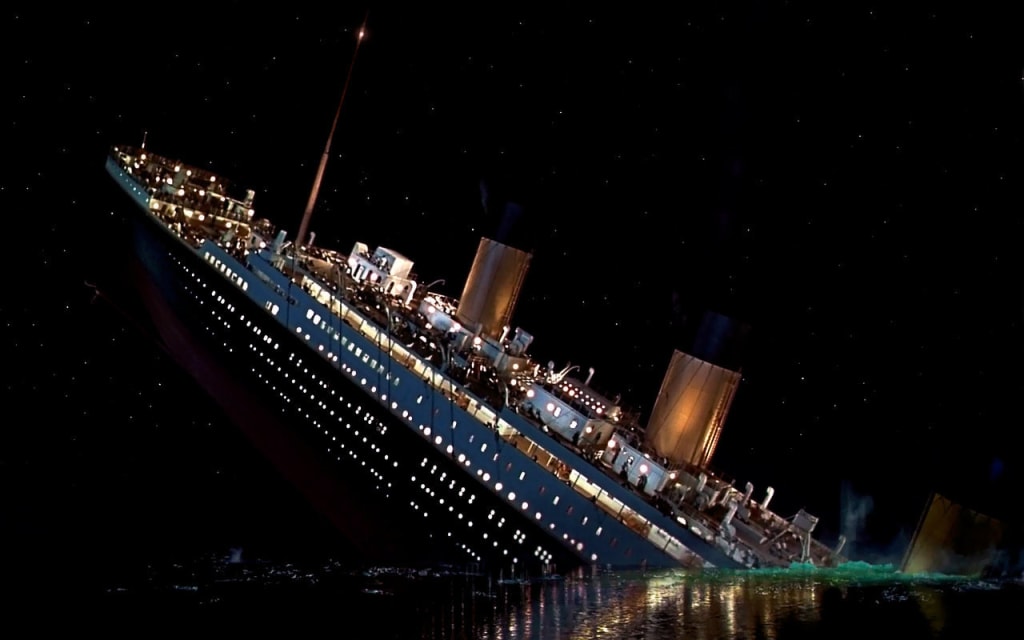
On that fateful night of April 14, 1912, at precisely 11:40 p.m., the RMS Titanic experienced a catastrophic event that would ultimately lead to its tragic demise, sinking beneath the frigid depths of the Atlantic Ocean by 2:20 a.m. on April 15th. The colossal vessel, which was the largest ship of its era, claimed the lives of over 1500 people, accounting for more than two-thirds of its total passengers and crew. For over a century, the narrative held that an iceberg was the sole culprit behind this devastating disaster. However, recent findings by scientists have cast doubt on this long-standing theory. In this video, we aim to uncover the concealed truth that has remained buried for more than a century.
The Titanic was a remarkable feat of engineering, measuring 882 feet and 9 inches in length, 92 feet in width, and towering 175 feet in height, with a total usable volume of 46,000 tons. This mammoth structure was constructed with meticulous attention to detail, boasting an intricate network of corridors and decks that would have taken even the ship's officers more than two weeks to navigate. The Titanic featured four colossal smokestacks, each weighing 60 tons, rising to an impressive height of 81.5 feet above the deck. This design, with its dramatic 30-degree angle placement, added to the ship's awe-inspiring appearance.
However, the construction of the Titanic was no small endeavor. It demanded a workforce of 3,000 men, toiling six days a week, from 6:00 a.m. It took an astonishing 26 months to complete this monumental task, and the work was both challenging and perilous. Envision workers operating at the height of a 20-story building with no safety ropes. Despite the risks involved, these laborers sought to earn a meager wage of 2 pounds a week. While this may not seem substantial by today's standards, it was, in fact, a competitive wage during that era. Tragically, eight individuals lost their lives during the construction process, and 246 others suffered injuries. It's difficult to comprehend how such an intricate and costly mechanism, built with immense effort and resources, could succumb to the calamity of a mere iceberg.
A journalist, Sonam Maloney, embarked on a comprehensive investigation into the Titanic's fate, dedicating over three decades to the study. It was his discovery of a significant 30-foot long black blemish on the ship's hull that shed new light on the disaster. This blemish was discerned through an examination of a photograph taken prior to the Titanic's voyage. The photo came from an album containing previously unreleased images that chronicled the ship's construction and preparations for its first and final journey.
The fire had evidently been burning for a duration of approximately three weeks at an extraordinarily high temperature. It had gone unnoticed until a closer inspection revealed the blackened area. Experts in metallurgy assert that these conditions could have significantly weakened the metal, reducing its strength by as much as 75 percent. This weakened state of the metal explains why the iceberg was able to breach the hull of the ship, creating a catastrophic tear. The connection between the fire and the precise point of impact with the iceberg is an astonishing link in the chain of tragic events that unfolded that night.
To further compound the issues, the management of the Titanic project was well aware of the fire and the fact that the ship should not have set sail on that ill-fated journey. However, acknowledging these concerns would have led to bankruptcy for the ship's owners. At the time, miners were on strike, leading to a severe coal shortage. Despite these challenges, the tickets for the voyage had already been sold, and other ships had been canceled in favor of the Titanic. In a bid to maintain the ship's prestige and reputation, the Titanic's owners purchased all the available coal, and canceling the voyage was out of the question. To hide the signs of the fire from passengers, the ship was turned so that the scorched areas faced away from the docks and toward the sea. Passengers remained oblivious to the impending danger.
The Titanic's interior mirrored opulence and luxury, inspired by the Ritz Hotel in London. Its grand staircase spanned seven of the ship's ten decks, adorned with paintings, bronze cherubs, and oak paneling. The first-class amenities included a heated swimming pool, a Turkish bath, a gym, a squash court, and even a beauty salon. Passengers could have stylists attend to them before dining, and a dedicated onboard newspaper, the Atlantic Daily Bulletin, provided them with daily updates. First-class diners were treated to 13-course meals, each course accompanied by its own wine. Approximately 1.5 thousand bottles of wine, 20,000 bottles of beer, and 8,000 cigars were onboard. Yet, astoundingly, binoculars were notably absent.
The absence of binoculars, which could have potentially saved the Titanic, is another tragic coincidence in the sequence of unfortunate events. Regrettably, the binoculars had been locked away in a compartment, and the only individual with access to this locker, Second Officer David Blair, was replaced at the last minute. His oversight, in failing to hand over the key, remained undiscovered until three days after the Titanic had set sail.
Additionally, the ship was exceeding its intended speed, as it was falling behind schedule, which was deemed unacceptable as it would tarnish the Titanic's reputation. Excessive speed, combined with the lack of binoculars, set the stage for the inevitable collision with the iceberg. The vessel's course eventually took it on a collision course with the iceberg.
The Titanic's lifeboat situation was yet another issue that compounded the tragedy. The ship, designed to carry about 60 lifeboats to accommodate all passengers, was initially outfitted with 48. However, this number was further reduced to a mere 20, largely for cosmetic reasons as the deck would have appeared cluttered with more boats. Astonishingly, this was legally permissible at the time, as the number of lifeboats was determined by the ship's tonnage, not the number of passengers. Compounding the problem, lifeboat drills, standard practice on ocean liners to prepare passengers for emergencies, were never conducted on the Titanic.
The ship's captain, Edward John Smith, canceled a lifeboat drill on the morning of the disaster. The exact reasons for this decision remain unclear, particularly given the warnings of ice in the vicinity from other ships. Furthermore, the initial lifeboats were launched while half empty, a decision that contributed to a lower number of survivors. Tragically, it wasn't until half an hour into the evacuation that the lifeboats were launched. The passengers' initial reluctance to leave the "unsinkable" ship, coupled with their ignorance of the impending danger, led to critical delays.
The chain of unfortunate events continued with the failure to launch a distress signal in a timely manner, with a nearby ship, the Californian, overlooking the emergency flare shot into the sky. Although the captain of the Californian was subsequently relieved of his duties, modern researchers have established his innocence due to the phenomenon of light refraction, which caused abnormal refraction of light and mirages. These mirages were observed by several ships in the area that night, potentially explaining why the Titanic's signals went unnoticed.
Finally, the tragedy's gravity was compounded by the unfortunate absence of sonar systems in those times, leading to lookouts using binoculars. The binoculars were unfortunately locked away, and their absence played a crucial role in the disaster.
In summary, a chain of events, from the concealed fire weakening the ship's metal to issues with lifeboats and a lack of binoculars, combined with excessive speed, contributed to the Titanic's catastrophic end. Each piece of the puzzle underscores the negligence and unfortunate coincidences that led to the loss of so many lives on that ill-fated night.
The truth about the Titanic disaster is far more complex than the iceberg collision narrative that has persisted for over a century. It serves as a sobering reminder of how the convergence of various factors and human decisions can lead to monumental tragedies. Despite the passage of time, the story of the Titanic continues to captivate the minds of researchers, ensuring that this historical event remains the subject of ongoing exploration and analysis."
About the Creator
Ananymus Kelly
meticulous
Keep reading
More stories from Ananymus Kelly and writers in History and other communities.
Ancient Monoplane in a Pyramid in Egypt
Picture yourself transported back to the year 1898, engaged in archaeological excavations in the vicinity of Sakkara, not far from Cairo. This historical site teems with ancient tombs and pyramids. You, channeling your inner Indiana Jones, embark on this quest with hopes of discovering something truly extraordinary, something that might etch your name in history. Your imagination runs wild with visions of uncovering gold manuscripts, treasure maps, or the mummies of renowned pharaohs. However, your initial excitement takes a hit when you stumble upon an unassuming wooden bird.
By Ananymus Kelly2 years ago in History
3 Moments When Reality Accidentally Became a Horror Movie
Horror movies usually rely on a simple agreement with the audience: this could never really happen. Ghosts follow rules, monsters have weaknesses, and there’s always a clear point where reality hands the story over to fiction. Real life, unfortunately, does not care about narrative structure, logic, or closure.
By Enoch Sagini4 days ago in History
Chinese Water Torture
Since the dawn of history, human beings have inflicted unimaginable suffering upon one another. Across centuries, people have devised increasingly elaborate methods of punishment and coercion, some brutally explicit, others deceptively subtle. While devices such as iron maidens, racks, whips, and wheels relied on visible physical agony, there existed a form of torment whose true power lay not in blood or broken bones, but in patience, repetition, and the slow erosion of the mind. This method came to be known as Chinese water torture.
By Pure childa day ago in History




Comments (1)
Very good debunking of titanic myths