
Returning to Ocean Island-Post War
Phosphate mining resumed after the Japanese invasion of Banaba during WWII

Joan Ramsay from New Zealand, was one of the first European women to return to Ocean Island Post War. Her husband was working for the Gilbert & Ellice Island Colony (GEIC) [1] government. Her story is adapted from a radio interview she gave for NZ radio about her life spent on the islands.
This is her firsthand account that originally was a Featured Story - Return to Ocean Island - Post War in Banaba/Ocean Island News No. 8 (March-April 1994). [2]
__________________________________________________
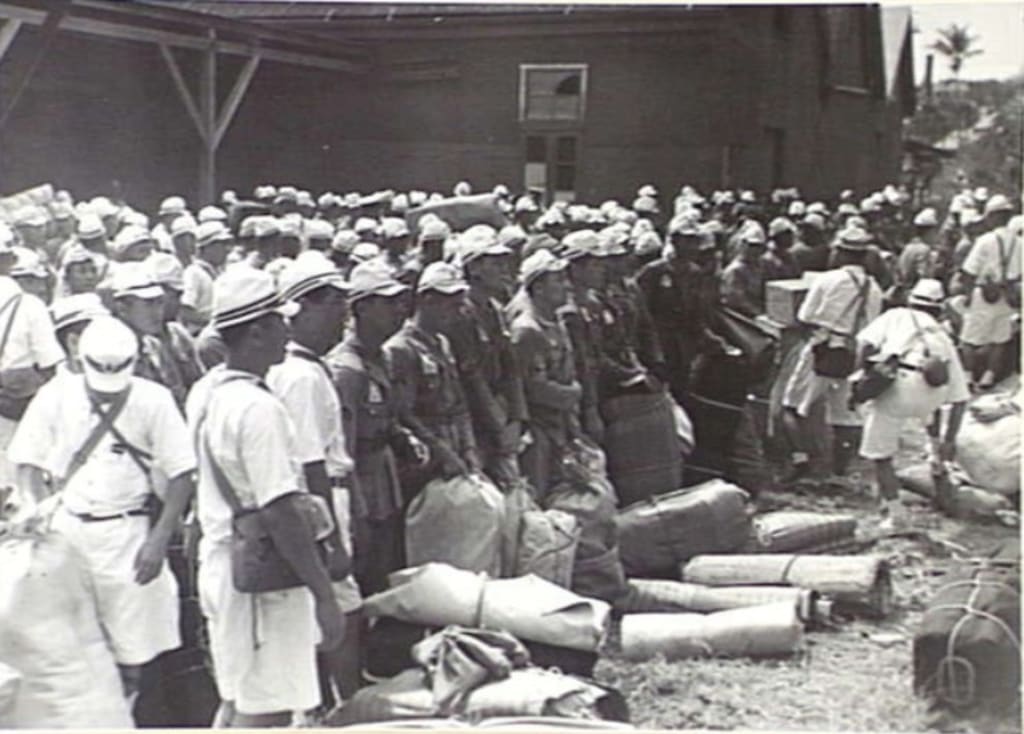
I arrived on Ocean Island (Banaba) just six weeks after the removal of the Japanese troops [3] to Torokina for War Crime trials and even though sterling work had been done in those few weeks in cleaning up the island, it was still in a very dirty and filthy condition.
Flies abounded in their millions; in a matter of a few weeks, they were reduced to hundreds and they were reduced to hundreds and shortly thereafter to dozens. This diminution was due to the efforts of a few native lads, the DDT [4] gang, who did a continuous circuit of the island, spraying intensively, covering every inch of the island, inside and outside buildings and right into the bush. The result was amazing.
___________________________________
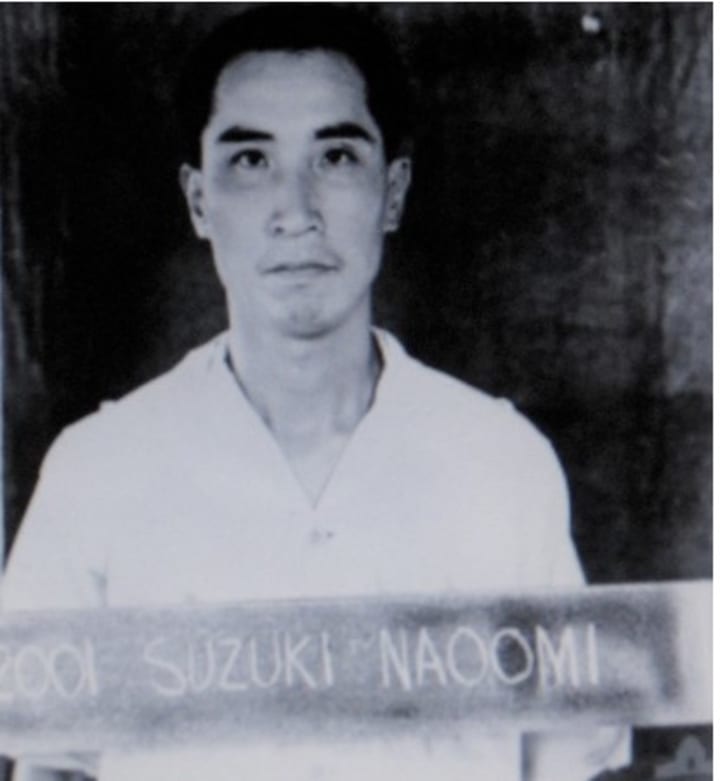
"Lieutenant-Commander Suzuki essentially relied on a plea of military necessity and admitted that he had given orders to kill the remaining local inhabitants on Ocean Island after hearing about Japan’s defeat. His claim was that: ' [w]e had decided to fight to the finish and inflict as much damage as possible on the Allies. We thought the natives would be a hindrance to us so we decided to kill them,' ": NAA: A471, 80796 — Written statement made by Lt Gen Suzuki at Rabaul dated 20 March 1946. 23 Australians along with nine German missionaries were massacred. ___________________________________
All important parts of the phosphate works were destroyed prior to the evacuation early in 1942. During the Japanese occupation, all the native buildings and villages were destroyed completely. The European houses were either partially or wholly wrecked. The only native building left standing was the large maneaba (meeting house) in the Police lines.
Apparently, the Japanese did not live in my house, for which I was very thankful. However, it was used as a storage place for the pumpkins which were grown practically all over the island. During the latter part of the War, the Japanese troops relied on the crop as their main diet source.
It was a very sorry-looking house when I first saw it; just a shell really, with floors, walls and roof but minus all windows, doors, shelves, and fittings of every sort including the bath, shower, basin, sink and stove.

Originally it was a well-built place of hollow cement bricks with all modern conveniences, but when I took up residence it was definitely minus all mod cons. Our furniture was only bits and pieces collected in the bush and found in other houses, plus a few pieces supplied by the government.
An old rubbish heap was always a great source of interest to me. One never knew what one would come across there. My two prized finds were a porcelain bath and a really super stainless steel sink and draining board. Little by little we found the required 60-odd windows for our house and eventually when the necessary shelves, sink shower, bath etc, our house was restored to something of its former glory.
During the War two amazing feats of endurance were undergone by two Gilbertese boys. Ultimately it was disclosed that they were cousins, their home island being Nikenau. [5]

The first instance occurred in 1944 when three canoes each carrying two boys escaped from Ocean Island. Seven months later, the sole survivor was washed ashore on an island off the north of New Guinea. [6]
The second instance occurred just as the close of the War with Japan. Two days after the Armistice [7], all the natives were assembled and told that the war was over, that the Allies were victorious and that the Japanese would soon be leaving the Island. Thereafter they were formed into small parties, marched away and either shot or bayoneted to death.
One boy only survived to tell his story and later gave valuable evidence against our erstwhile enemies. His particular party were taken to a rugged part of the island overlooking rough and jagged coral rocks. Probably out of sheer terror, this lad fell over the cliff before his captors actually fired on him. After a lengthy period lying in the water, feigning death, he hid in a cave on the seashore.

After several days he cautiously made his way by night to the centre of the Island and there he found a natural hiding place in the ground. This was a small cave in a hollow, well concealed and just large enough for him to lie flat on his stomach. Here he lived for three months, not knowing that the British [8] had returned to the Island and that the Japanese had been removed. He lived solely on coconuts which he collected near his hiding place by night.
Footnote:
After the original publishing of Joan Ramsay's story, it came to light that her husband's role in the government prior to their arrival on Ocean Island post-war, was in the Cypher Office in Suva. The Fiji Government and the Western Pacific High Commission had a joint Cypher Office during the War. Joan Ramsay couldn't believe that her husband had decoded the cable relating to Nabetari's escape from Ocean Island via canoe, and his being found on an island off Ninigo, north of New Guinea.[9]
____________________________________________________
Get the Book!
More comprehensive information and firsthand accounts of the Japanese occupation of Banaba (Ocean Island) are available in Chapter 27: Japanese Occupation: "Te Rii ni Banaba: backbone of Banaba" by Raobeia Ken Sigrah and Stacey M. King is available on Amazon
____________________________________________________
1. The Gilbert and Ellice Islands (GEIC as a colony) in the Pacific Ocean were part of the British Empire from 1892 to 1976. Today the Gilbert Islands are known as the Republic of Kiribati and the Ellice Islands as Tuvalu. https://en.wikipedia.org/wiki/Gilbert_and_Ellice_Islands
2. Original article - Featured Story - Return to Ocean Island - Post War in Banaba/Ocean Island News No. 8 (March-April 1994) https://www.banabanvision.com/product-page/issue-no-8-banaba-ocean-island-news-mar-apr-1994
3. Japanese Troops occupied Ocean Island during WWII and after the Japanese Surrender approximately 530 Japanese were sent to Torokina in Bouganville where Commander Suzuki was executed for War Crimes committed on Ocean Island Banaba.
4. Dichlorodiphenyltrichloro ethane (DDT) is an insecticide used in agriculture. Many developed countries have banned the use of DDT. Some countries still use DDT to control mosquitoes that spread malaria. DDT and its related chemicals persist for a long time in the environment and in animal tissues. https://www.cdc.gov/biomonitoring/DDT_FactSheet.html
5. Nikunau is a low coral atoll in the Gilbert Islands that forms a council district of the Republic of Kiribati. It consists of two parts, with the larger in the northwest, joined by an isthmus about 150 metres (490 ft) wide. https://en.wikipedia.org/wiki/Nikunau
6. The name of the man referred to by Joan Ramsay is Nabetari, the sole survivor of a daring escape by seven fishermen resulting in him being adrift at sea for seven months. For more information on the Occupation of Ocean Island (Banaba) and Nabetari's escape is available: https://www.banaban.com/banaba-under-japanese-occupation
7. The Japanese signed the Armistice on 15 August 1945 — a week after the dropping of two atomic bombs on Japanese cities. Victory in the Pacific: https://anzacportal.dva.gov.au/commemoration/days/victory-in-the-pacific
8. The name of the man referred to by Joan Ramsay is Kabunare. For more information on the Occupation of Ocean Island (Banaba) and Kabunare's escape is available: https://www.banaban.com/banaba-under-japanese-occupation
9. Published in Latest News section - Banaba/Ocean Island News No. 9 (May-June 1994). https://www.banabanvision.com/product-page/no-9-banaba-ocean-island-news-may-jun-1994
___________________________
For more stories on the Japanese Invasion and Occupation of Ocean Island /Banaba:
- The evacuation of Banaba: Escaping War on Ocean Island (Banaba), Prior to the epic battle of Tarawa
- The Japanese Occupation of Banaba: Arthur Mercer WWII Mystery. Why did he ‘jump ship’ only to be captured by the Japanese on Ocean Island (Banaba)?
- Maureen White survived the sinking of BPC ship, the TRIENZA by German Raiders and evacuation from Ocean Island. Imminent Peril: Ocean Island on the Brink of Invasion, Farewell Banaba
- Firsthand accounts from those who survived Japanese Occupation World War II. War Atrocities Banaba (Ocean Island)
About the Creator
Stacey King
Stacey King, a published Australian author and historian. Her writing focuses on her mission to build global awareness of the plight of the indigenous Banaban people and her achievements as a businesswoman, entrepreneur and philanthropist.
Keep reading
More stories from Stacey King and writers in History and other communities.
Imminent Peril: Ocean Island on the Brink of Invasion
Maureen White was seventeen years old and one of the people who survived the sinking of the British Phosphate Commission (BPC) ship, SS TRIONA, by German Raiders prior to the evacuation of Banaba—known during the phosphate mining period as Ocean Island. Maureen and her mother, Letitia, were taken prisoners by the Germans before being released on a remote island in New Guinea.
By Stacey King2 years ago in History


Comments
There are no comments for this story
Be the first to respond and start the conversation.